Should You Keep Your Cadillac EV Plugged In While Pre-Conditioning in Extreme Cold?
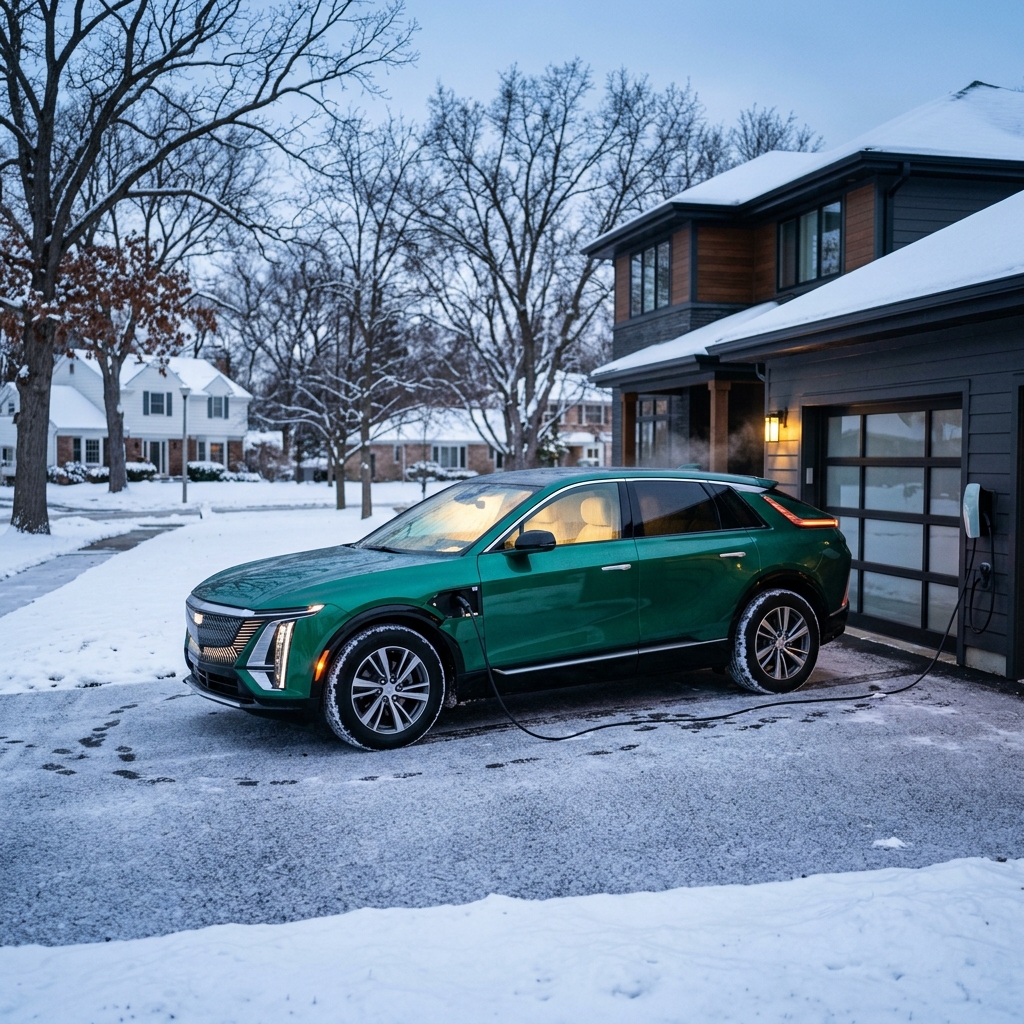
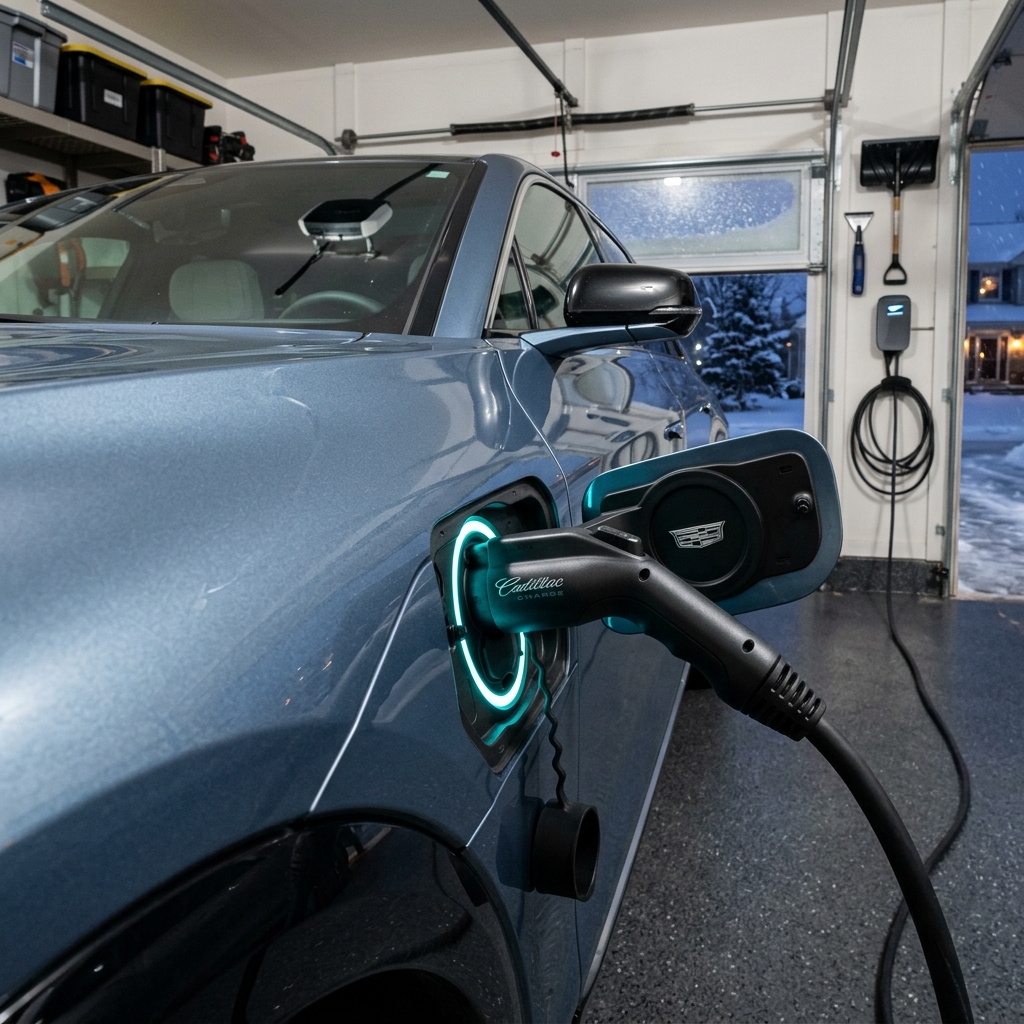
Direct Key Takeaway: Yes, your Cadillac EV should always remain plugged in to a Level 2 or Level 1 charger while pre-conditioning during extreme cold weather. When plugged into grid power, your Cadillac LYRIQ or OPTIQ intelligently draws electrical energy directly from your home outlet or charging station to heat both the high-voltage Ultium battery pack and the interior cabin to optimal operating temperatures. By sourcing this high thermal energy demand from wall power rather than stored electrochemical energy, you preserve 100% of your battery pack's capacity for actual driving. This simple habit protects your maximum estimated driving range for frigid morning commutes along Interstate 55, Interstate 80, and throughout Northern Illinois.
When sub-zero temperatures hit Will County and the greater Chicago metro area, electric vehicle efficiency faces a dual challenge: cold lithium-ion chemical dynamics and heavy HVAC cabin heating requirements. When you initiate pre-conditioning while disconnected from a charger, the vehicle's battery management system must drain stored power to heat the battery modules up to their optimal operating window (around 65°F to 75°F) while simultaneously running the electric cabin heater and heated seats. On a -10°F morning in Joliet, this off-grid thermal preparation can consume anywhere from 5% to 12% of your total state of charge before your tires even roll off the driveway. By keeping your Cadillac EV connected to electrical grid power, the automated Ultium energy management system bypasses the high-voltage storage cells for heating tasks. Grid power energizes the onboard heating elements and coolant loops, effectively bringing the entire powertrain and interior cabin up to ideal temperature. As a result, you step into a warm, defrosted, comfortable luxury cabin with a fully conditioned battery and maximum available range. For personalized assistance or to explore our current electric vehicle lineup, feel free to Browse New Inventory at Hawk Cadillac.
How Extreme Cold Weather Affects the Battery Range of a Cadillac EV
To understand why extreme winter weather impacts electric driving range, it helps to examine the electro-chemical processes occurring inside your Cadillac's Ultium battery cells. Lithium-ion batteries generate electrical power through the movement of lithium ions between the anode and cathode through a liquid electrolyte solution. As ambient temperatures drop below freezing, the viscosity of this liquid electrolyte increases, significantly slowing down ion mobility and increasing internal electrical resistance. This elevated internal resistance during cold starts creates two distinct effects. First, it temporarily restricts the rate at which energy can be extracted from the cells, resulting in a temporary loss of usable energy capacity. Second, cold battery cells accept regenerative braking energy much less efficiently, leading the vehicle's automated control systems to limit regenerative braking performance until the battery pack warms up to operational threshold temperatures.
Cadillac's advanced Ultium platform addresses these cold-weather challenges through active thermal management. Every Cadillac EV is equipped with an integrated heat pump and liquid thermal regulation circuit that actively circulates warmed coolant through the battery module structure. When the thermal management system detects sub-freezing temperatures, it automatically diverts heat generated by power electronics, electric drive motors, and auxiliary heating elements directly into the battery pack. Once the battery chemistry reaches its target thermal equilibrium, internal resistance drops back to normal baseline levels, restoring full energy output and standard regenerative braking efficiency. Understanding these physical principles highlights why active pre-conditioning while plugged in is so vital for preserving optimal range and performance during Illinois winters. If you have questions about battery health checks, you can Schedule Your Service Today with our certified technician team.
What Winter Pre-Conditioning Features Are Built into Cadillac Vehicles?
myCadillac App & Schedules
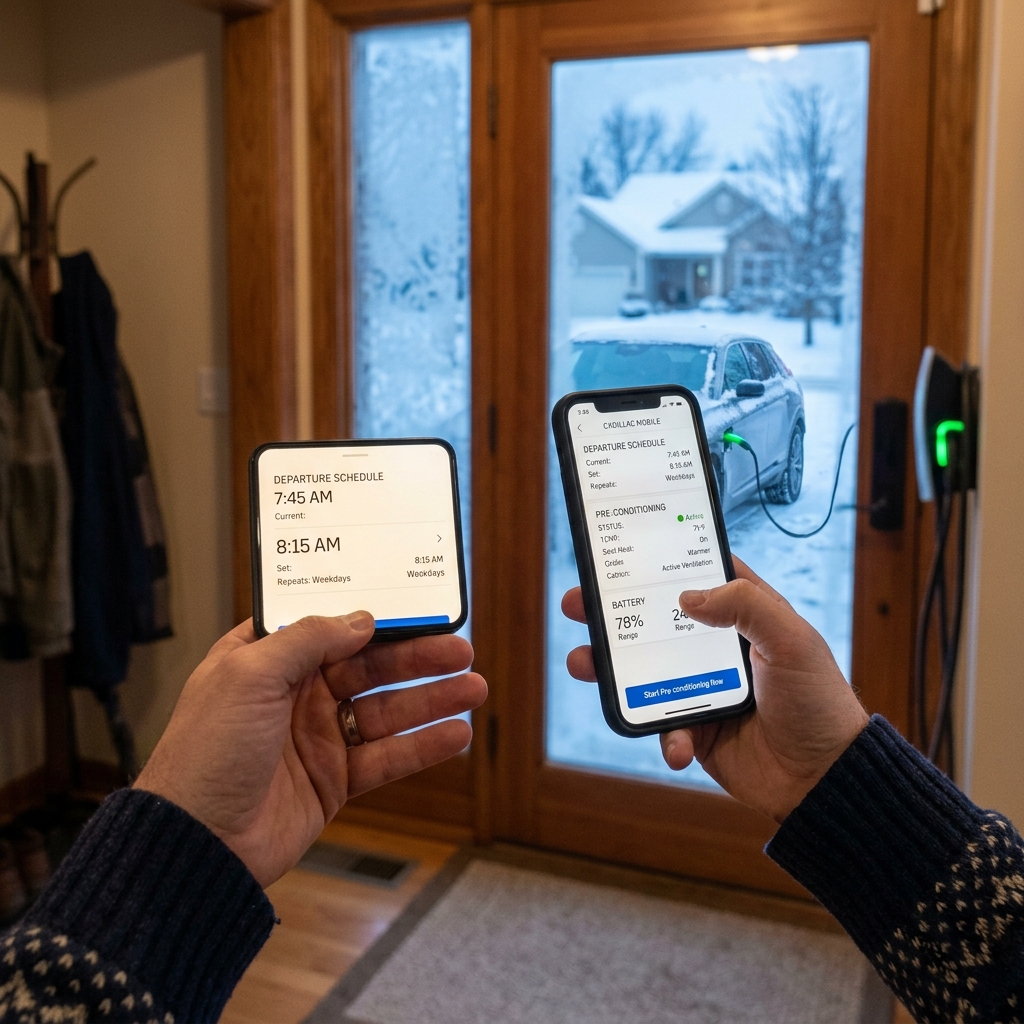
Through the intuitive myCadillac Mobile App, drivers can initiate remote vehicle start from anywhere or establish recurring daily Departure Times. Setting departure routines enables the vehicle to calculate precisely when to start thermal preparation so both the cabin and battery reach exact ideal temperatures right when you are ready to head out for your morning drive in Joliet or Plainfield.
Cabin & Contact Warming
Cadillac pre-conditioning doesn't just warm air; it activates direct conductive contact heaters including heated front seats, heated steering wheel, and heated wiper park zones. Radiant contact heat consumes significantly less energy than forced hot air, providing immediate tactile warmth while optimizing overall energy efficiency during cold morning getaways.
Fast-Charge Route Prep
When navigating to a DC Fast Charging station via Google Maps built into the infotainment system, your Cadillac automatically engages fast-charge pre-conditioning. The thermal management system brings the Ultium battery cells to the ideal temperature window prior to arrival, allowing maximum charge acceptance rates from the moment you plug in.
Why Plugging In During Cabin Pre-Conditioning Preserves Your Driving Range
Heating an EV cabin and battery pack from sub-zero temperatures requires significant initial thermal energy input—often peaking between 6 kW and 10 kW during the first 15 to 20 minutes of heating. If your vehicle is unplugged, every kilowatt-hour consumed during this initial heating curve comes straight out of your battery pack. In freezing weather, this initial thermal load can easily reduce your usable highway range by 20 to 30 miles before you ever pull out of your driveway. When plugged into a standard 240V Level 2 home charger (capable of delivering 7.6 kW to 11.5 kW or more), grid electricity supplies 100% of this heavy initial energy load. The Level 2 charger absorbs the high thermal power spike, warming the cabin air, glass surfaces, steering wheel, seats, and battery liquid coolant loop entirely on utility power.
Once the cabin and battery reach steady-state target temperatures, maintaining that temperature while driving requires only a fraction of the energy (typically 1.5 kW to 2.5 kW). Because grid power performed the heavy thermal lift prior to departure, your Cadillac EV begins its journey with a 100% full state of charge and a pre-warmed battery that is immediately ready for efficient energy delivery and maximum regenerative energy recovery. To ensure your home charging infrastructure is optimized for severe winter performance, our team at Hawk Cadillac can assist with Level 2 charger consultation and professional accessories. Feel free to explore options to Order Genuine Cadillac Parts or schedule an installation checkup with our team.
How Much EPA-Estimated Range Does the 2027 Cadillac OPTIQ AWD Offer in Winter?
The stylish 2027 Cadillac OPTIQ AWD delivers an impressive manufacturer-estimated EPA range of approximately 300 miles under ideal testing conditions, powered by its advanced dual-motor Ultium platform. However, Will County and Joliet drivers navigating Northern Illinois winter conditions should understand how real-world seasonal variables modify daily range expectations. During severe sub-zero cold snaps, un-preconditioned electric vehicles across the automotive industry can experience a temporary range reduction of roughly 20% to 30%. In the 2027 OPTIQ AWD, an un-preconditioned start in 10°F weather might yield a practical winter driving range of approximately 210 to 230 miles. However, by practicing consistent plug-in pre-conditioning, keeping tire pressures properly inflated, and utilizing targeted seat and steering wheel heat, drivers can recover significant range loss—routinely achieving 250+ miles of usable range even during cold Midwest winters.
Operating Condition
Est. Usable Range
Efficiency Impact
Key Recommendation
Ideal Weather (70°F Ambient)
~300 Miles
100% Baseline
Standard Charging (80% Daily)
Cold Start (10°F, Unplugged)
~210 - 230 Miles
-25% to -30%
Cabin pre-conditioned from battery
Winter Commute (10°F, Plugged Pre-Conditioned)
~250 - 270 Miles
-10% to -15%
Plugged into Level 2 before departure
How Cadillac's Dual-Motor All-Wheel Drive System Operates on Icy Illinois Roads
Independent Front & Rear Drive
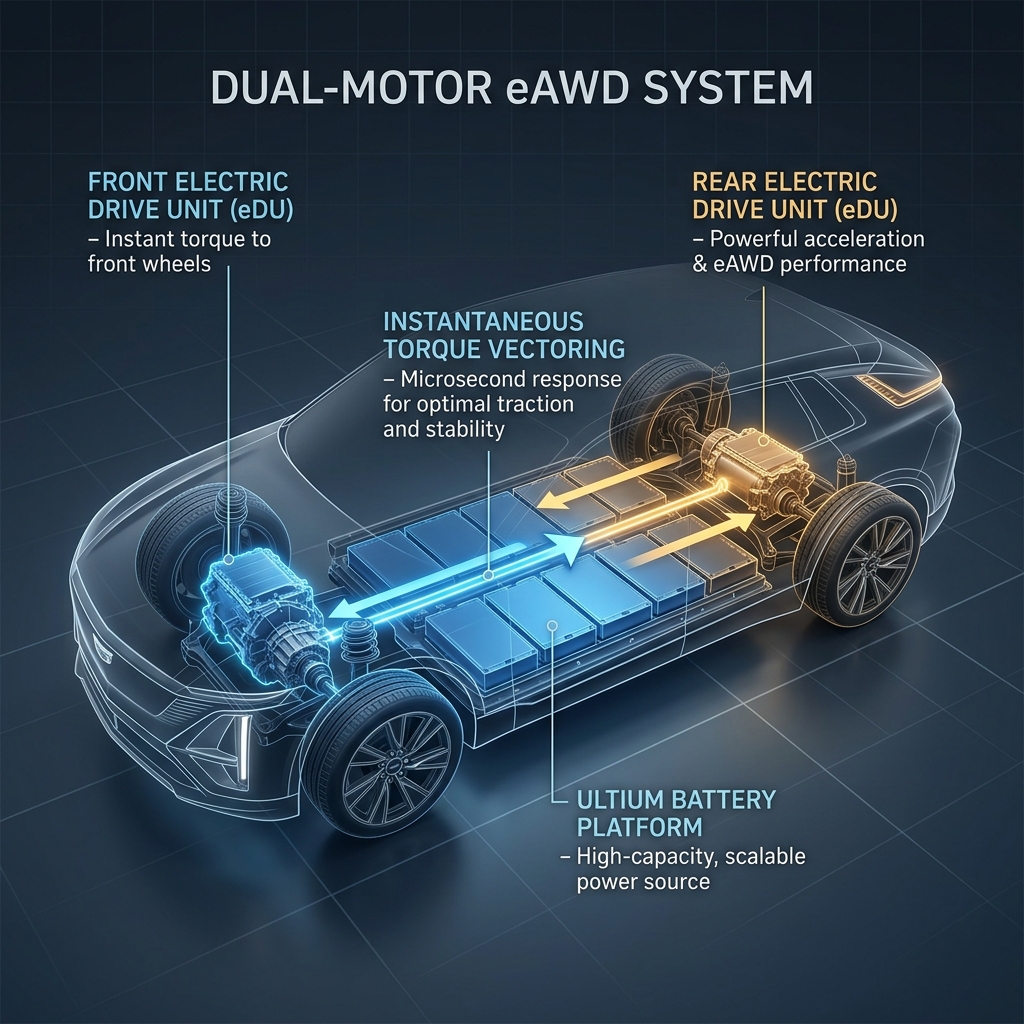
Unlike conventional combustion AWD vehicles that rely on heavy mechanical driveshafts, transfer cases, and central differentials, Cadillac's Ultium AWD system utilizes completely independent electric motors dedicated to the front and rear axles. Eliminating mechanical links removes friction drag and enables instantaneous power delivery.
Precision Torque Vectoring
The central vehicle control module monitors wheel rotation speed, steering angle, and chassis yaw rates thousands of times per second. Power can be modulated down to individual wheel needs, instantly transferring torque away from slipping tires toward the wheels with firm traction on icy patches.
Seamless Traction Control
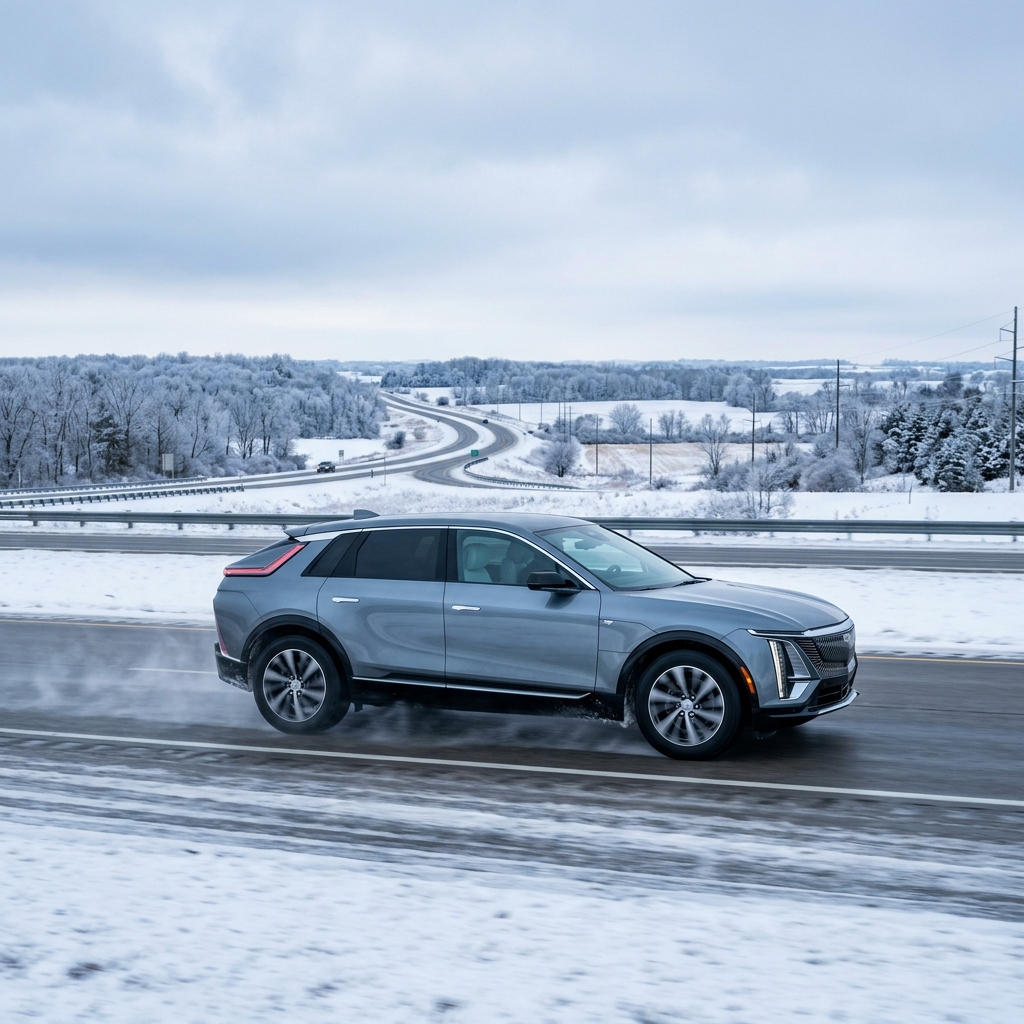
On slick slush or black ice along I-55, electric torque management operates without the harsh shuddering or hesitation of traditional mechanical traction systems. Torque output is adjusted continuously in tiny micro-increments, preserving steering control and confidence during unpredictable winter weather.
Do Electric AWD Motors Respond Faster to Slip Than Mechanical AWD Differentials?
Yes, electric AWD motors respond vastly faster than traditional mechanical AWD differentials. In a conventional gasoline-powered vehicle, detecting and correcting wheel slip requires a mechanical sequence: the wheel slips, sensors detect speed differentiation, liquid hydraulic pressure builds in a center clutch pack, and mechanical clutches press together to transfer torque to the secondary axle. This entire mechanical process takes anywhere from 100 to 300 milliseconds. By contrast, electric motors in Cadillac's Ultium drive units respond in milliseconds—often in as little as 10 to 20 milliseconds. Because motor torque is governed purely by electronic software signals sent directly to the motor inverter, power distribution adjustments happen almost instantaneously, long before the driver even perceives loss of traction on black ice in Naperville or Plainfield.
What Capacity Loss Threshold Is Covered Under Cadillac's 8-Year EV Battery Warranty?
Cadillac backs its luxury electric lineup with exceptional warranty coverage engineered to grant complete long-term peace of mind. Every new Cadillac EV comes with an 8-Year / 100,000-Mile Electric Vehicle Component Limited Warranty. This coverage specifically guarantees the health of the high-voltage Ultium battery pack against excessive degradation. Under the terms of this warranty, Cadillac covers battery capacity loss exceeding 30% during the warranty period. If diagnostic testing confirms that your battery pack has degraded beyond this 30% threshold due to component defect, Cadillac will repair or replace necessary battery components or modules free of charge. It is worth noting that seasonal range drops caused by cold Illinois winter temperatures are temporary electro-chemical phenomena and do not represent permanent battery capacity degradation. Practicing routine pre-conditioning while plugged in protects long-term cell health by avoiding severe thermal shocks to cold battery chemistry. If you are interested in exploring our current vehicle selection, you can Browse New Inventory or Get Pre-Approved for Financing today.
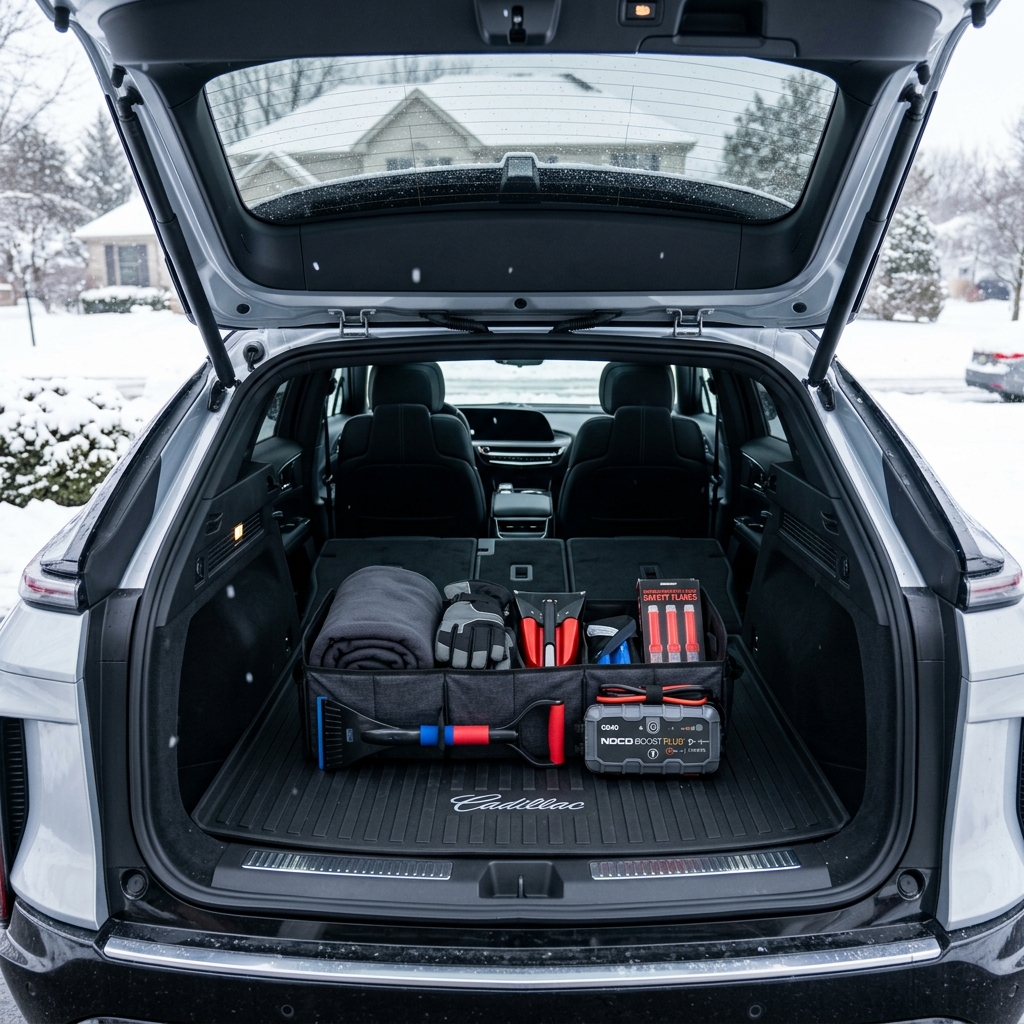
What Winter Emergency Gear Should Be Kept in a Cadillac Trunk for Chicago-Area Commutes?
Safety & Warmth Essentials
Keep heavy wool or thermal blankets, insulated waterproof gloves, extra winter headwear, and high-visibility LED emergency flares stored in your cargo trunk organizer. Having immediate access to protective thermal gear ensures you remain safe and warm during unexpected winter highway delays.
Traction & Recovery Gear
Pack compact traction mats, a heavy-duty ice scraper with a brass or reinforced blade, a small collapsible snow shovel, and a portable lithium-ion jump starter pack for 12V auxiliary battery boost support if ever needed on icy secondary roads.
GM Accessories & Care
Equip your vehicle with genuine GM all-weather floor liners, fitted cargo liners, and tire pressure digital gauges. You can easily Order Genuine Cadillac Parts through Hawk Cadillac to outfit your vehicle with official, factory-certified winter accessories.
Preparing Your Cadillac All-Wheel Drive and Battery for Northern Illinois Winter Commutes
Step 1: Test 12V Auxiliary Battery Health Even advanced electric vehicles rely on a standard 12V auxiliary battery to power door locks, safety computers, and initial high-voltage contactor switches. Sub-zero temperatures strain 12V batteries significantly; inspect terminals and run a quick diagnostic check before winter arrives. Step 2: Set Up Recurring myCadillac Departure Schedules Automate your routine by programming your typical morning departure time in the myCadillac app. This ensures the vehicle automatically initiates thermal pre-conditioning on grid power 30 minutes before you leave. Step 3: Check Winter Wiper Blades & Washer Fluid Replace worn wiper blades with beam-style winter blades that resist ice buildup along the frame. Fill washer reservoirs with sub-zero rated windshield de-icing fluid.
Step 4: Monitor Cold Weather Tire Pressure Drops For every 10°F drop in outside temperature, tire inflation pressure drops by approximately 1 PSI. Cold weather under-inflation increases rolling resistance, reducing driving range and unevenly wearing tread. Check tire pressures weekly to match recommended door jamb ratings. Step 5: Inspect AWD & Suspension Components Have certified Cadillac technicians perform a multi-point inspection checking boot seals, brake pads, steering linkages, and alignment settings to guarantee responsive AWD power distribution. If you'd like an expert inspection or wish to upgrade your ride, feel free to check your options to Value Your Trade at Hawk Cadillac.
Best Charging Practices for Plainfield and Naperville Cadillac EV Owners During Sub-Zero Snaps
Adopting smart charging habits during Northern Illinois winter months protects long-term battery health while maximizing everyday driving convenience: 1. Maintain an 80% Daily Target: Set your target daily charge limit to 80% for everyday commuting, reserving 100% charges specifically for long highway road trips. This optimizes lithium-ion battery cell lifespan over years of service. 2. Park Indoors When Available: Parking in an attached garage shields the vehicle from harsh wind chills, reducing the thermal energy required to warm the battery and cabin. 3. Keep Plugged In Whenever Parked at Home: The cardinal rule of EV winter care is 'A plugged-in EV is a happy EV.' Even when charging is complete, being connected lets the vehicle draw small maintenance bursts of grid power to prevent thermal dropping in extreme sub-zero snaps.
Schedule Your Winter EV Inspection or Test Drive at Hawk Cadillac in Joliet
At Hawk Cadillac, we are dedicated to serving as your premier EV authority in Joliet and surrounding Will County communities. Whether you need expert winter maintenance checks, app setup guidance, or want to experience the exhilarating dual-motor AWD performance of the Cadillac LYRIQ and OPTIQ firsthand, our specialized electric vehicle team is here to assist. Visit our state-of-the-art facility located at 2001 W Jefferson St in Joliet, IL 60435. Click here to Get Directions to Hawk Cadillac or Call us at (815) 600-7027 to speak with a dedicated specialist today. Ready to get started? Explore our site resources to Browse New Inventory, examine options for pre-owned models via Browse Used Inventory, or take the first step toward ownership by applying to Get Pre-Approved for Financing.