Where in Joliet Can You Get a Fall Battery, Tire Tread, and Vehicle Inspection?
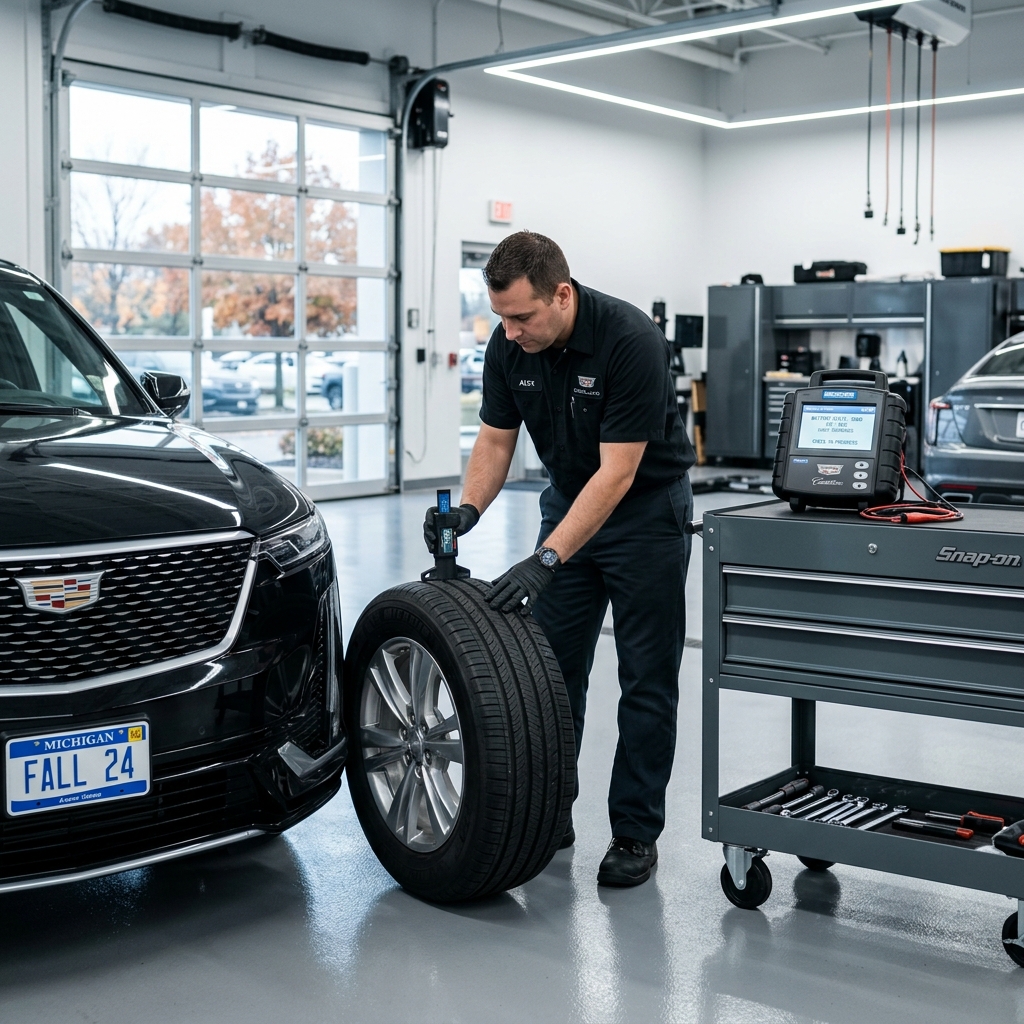
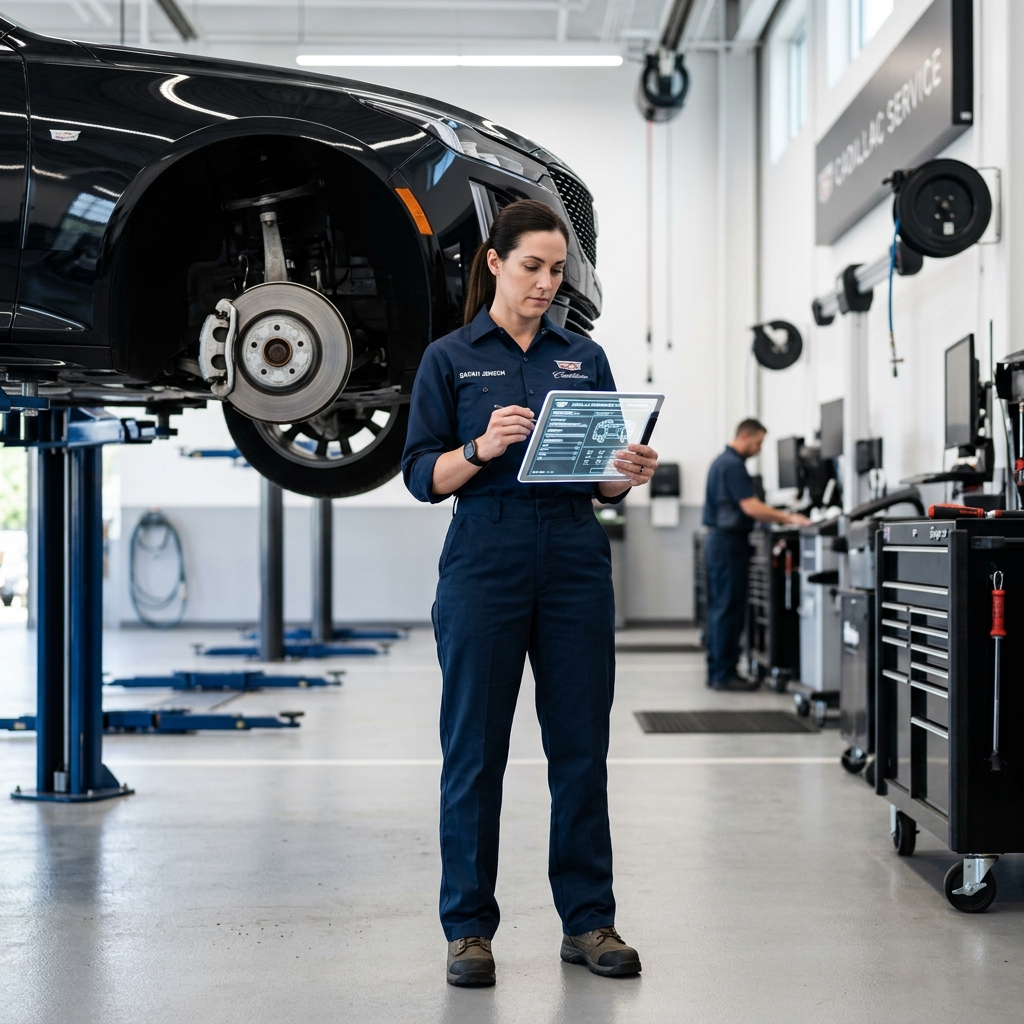
As autumn transitions into winter across Will County, temperature drops present real challenges for modern luxury vehicles. Drivers searching for a reliable, comprehensive, and fall vehicle check in Joliet, IL can rely on Hawk Cadillac, located at 2001 W Jefferson St. Our dedicated service center provides Northern Illinois motorists with a professional, zero-cost multi-point fall inspection engineered specifically to catch seasonal vulnerabilities before severe weather hits.
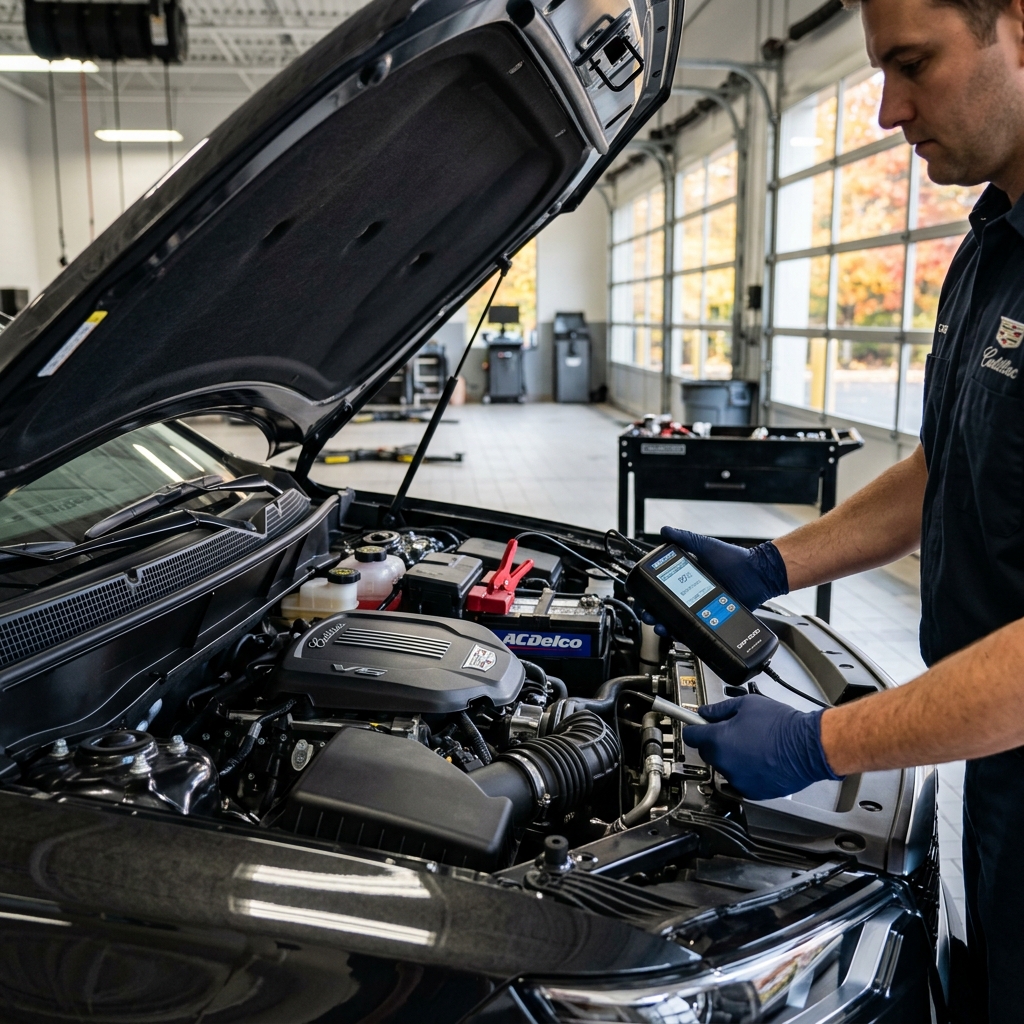
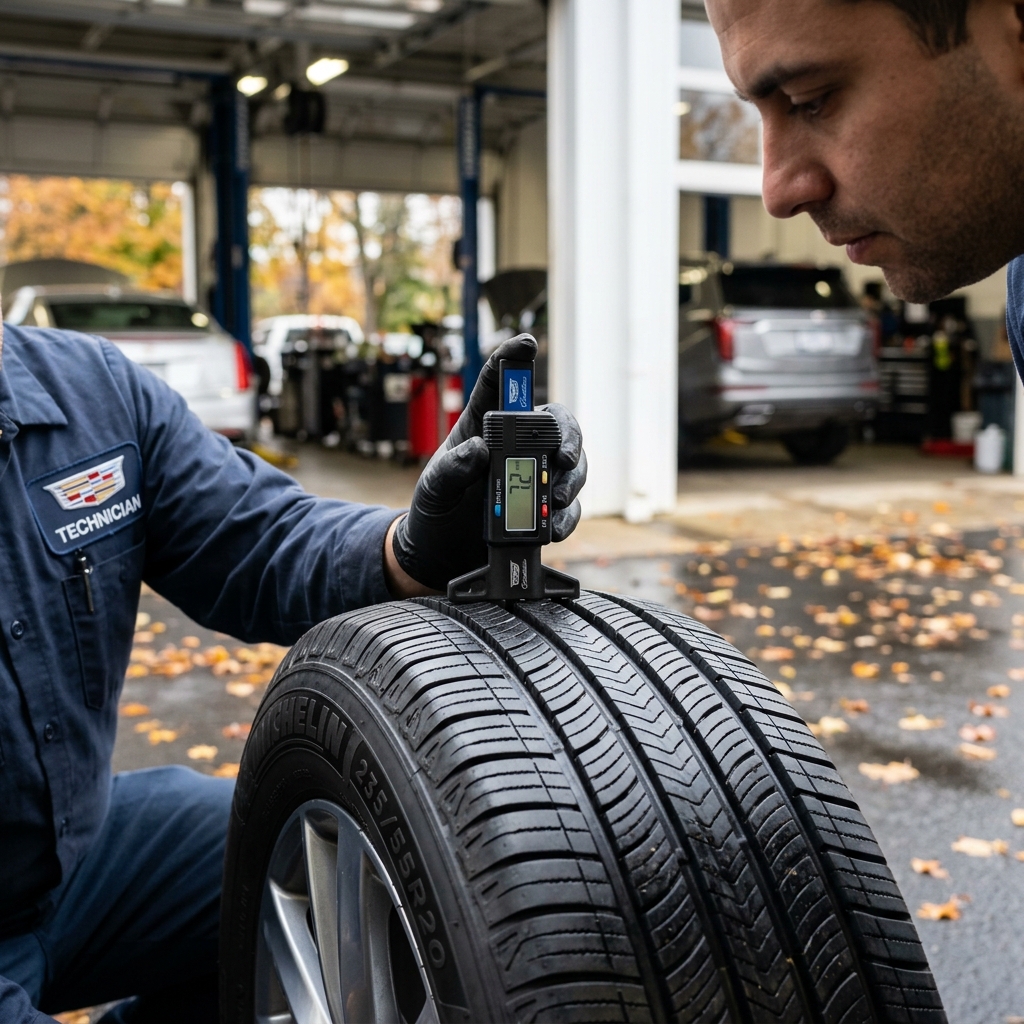
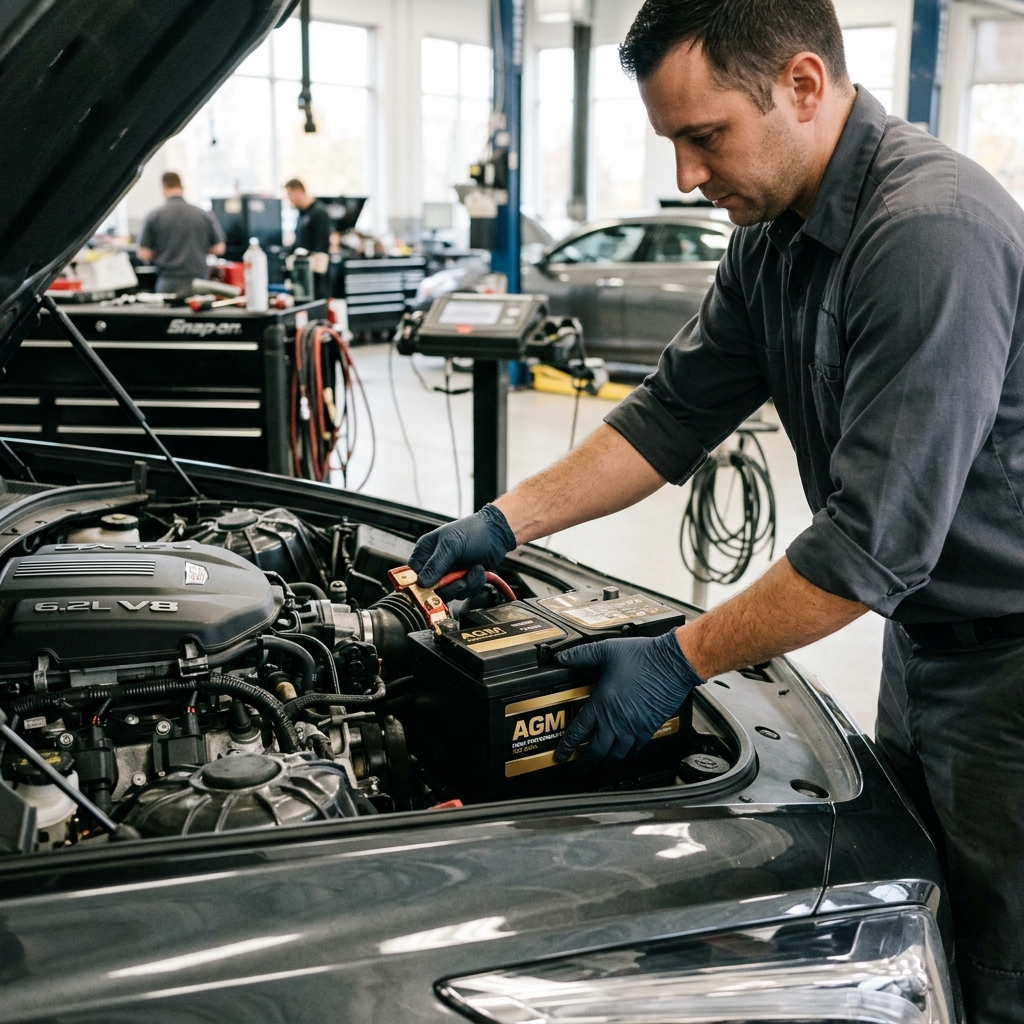
During this fall check, factory-trained service technicians thoroughly evaluate your vehicle's essential cold-weather components. We test battery cold-cranking capacity under load, measure digital tire tread depth across all four tires, inspect wiper blades for micro-cracks, evaluate brake pad thickness, and verify essential fluid freeze points. Whether you are commuting daily along I-55 toward Naperville or navigating local roads around Plainfield and Joliet, starting the season with a certified check ensures your Cadillac maintains optimal safety, luxury, and performance. Stop by our service facility or Get Directions to Hawk Cadillac today.
Why Does Your TPMS Light Turn On During Cold Chicagoland Autumn Mornings?
If you wake up on a crisp October morning in Joliet or Plainfield and notice the low tire pressure warning indicator illuminated on your dashboard, you are experiencing the basic physics of thermal contraction. For every 10-degree Fahrenheit drop in ambient temperature, air pressure inside a sealed tire decreases by approximately 1 PSI (pound per square inch). Sudden temperature drops—common during Northern Illinois autumn weather shifts—can easily reduce cold tire pressure by 3 to 5 PSI overnight.
Cadillac Tire Pressure Monitoring Systems (TPMS) track individual tire pressures in real time. When ambient temperatures drop from 65°F down to 35°F overnight, tires calibrated precisely at room temperature drop below the vehicle's factory threshold, instantly illuminating the low-pressure dashboard icon.
Ignoring autumn TPMS warnings can lead to improper tread wear, reduced fuel efficiency, and compromised traction on wet autumn foliage. As tires warm up while driving down Route 59 or I-55, friction causes the internal air to expand, which may temporarily extinguish the warning light. However, this daytime friction heat masks a true static cold pressure deficit.
During Hawk Cadillac's check, our technicians inspect tire pressure when the rubber is completely ambient, adjusting inflation levels to Cadillac factory spec to prevent morning TPMS warning false alarms.
Preparing Your Cadillac for Autumn and Early Winter: Battery, Tread Depth, and AWD Service
1. Battery & Electrical Check
Cold temperatures increase engine oil viscosity, requiring significantly more electrical power to crank the engine. Concurrently, low temperatures decrease battery chemical efficiency. Testing health now ensures reliable starts during freezing Chicagoland mornings.
2. Tread Depth & Traction
Autumn rainfall combined with fallen leaves creates hazardous, slick driving conditions across Will County roads. Adequate tread depth is essential for evacuating water and leaf debris to maintain continuous rubber-to-asphalt contact.
3. AWD & Drivetrain Fluids
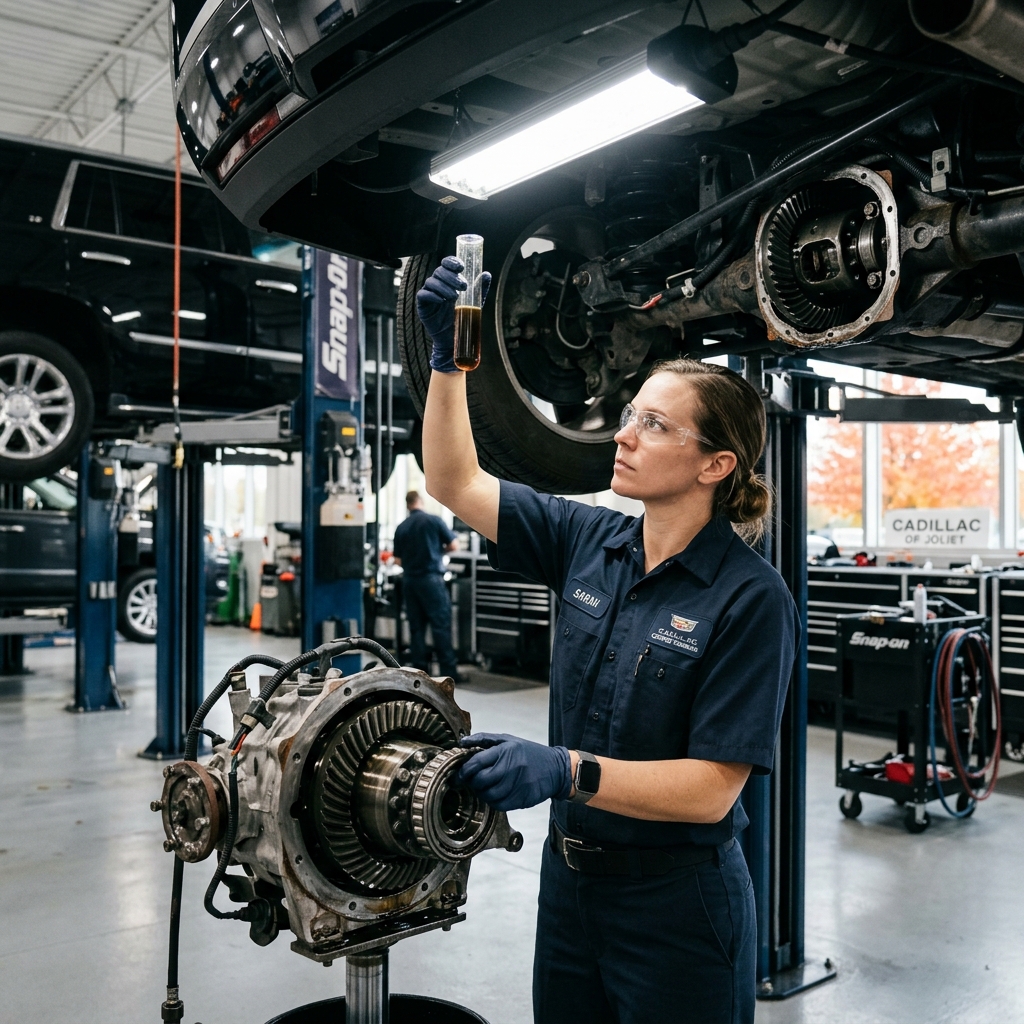
Cadillac's advanced twin-clutch all-wheel drive systems depend on clean, un-degraded fluid to distribute torque seamlessly between axles. Inspecting differential fluid levels prevents shuddering and maintains sharp cornering grip.
What Are the Warning Signs That Your Battery Is Failing Before Winter Arrives?
Automotive batteries rarely fail without warning. Luxury vehicles packed with sophisticated onboard electronics—such as executive infotainment screens, heated seating, adaptive suspension modules, and driver assistance sensors—demand stable, uninterrupted voltage.
Key indicators that your battery is nearing the end of its useful lifespan include a sluggish engine starter response ('sluggish crank'), flickering interior ambient lighting, delayed power accessory operation, or erratic touchscreen behavior during initial engine startup.
At 32°F, a standard vehicle battery loses approximately 30% of its available starting power; at 0°F, available capacity drops by over 60%. If your battery is more than three to four years old, summer heat stress has likely compromised internal lead plates, making early autumn cold snaps the trigger for sudden failure.
A comprehensive conductance and load test at Hawk Cadillac measures conductance and reserve capacity, giving you exact numerical proof of battery health. To book your check, you can easily Schedule Your Service Today online.
What Tread Depth Should You Maintain Before Joliet’s Winter Weather Begins?
While Illinois law dictates a minimum legal tread depth of 2/32 of an inch, driving on Chicagoland roads in late autumn and winter at this minimal limit poses serious safety risks. At 2/32 inch, tire tread grooves are nearly flush with the tread blocks, drastically reducing their capacity to channel away standing rain, wet leaves, or heavy slush.
For safe cold-weather operation across Will and DuPage counties, automotive experts and Cadillac certified technicians strongly recommend maintaining a minimum tread depth of 5/32 to 6/32 of an inch prior to winter weather onset. The data below highlights stopping distance differences on wet and slushy pavement from 60 MPH:
|
Tread Depth (Inches)
|
Tread Status
|
Wet Stopping Distance (60-0 MPH)
|
Slush Traction Level
|
|
10/32 - 8/32
|
New / Excellent
|
~140 feet
|
Optimal Water Evacuation
|
|
6/32 - 5/32
|
Recommended Winter Min.
|
~175 feet
|
Good Slush Channeling
|
|
4/32
|
Caution Recommended
|
~210 feet
|
High Hydroplaning Risk
|
|
2/32
|
Legal Minimum (Unsafe)
|
~290+ feet
|
Severe Loss of Control
|
What Is the Difference Between Standard All-Season and 3PMSF Certified Tires?
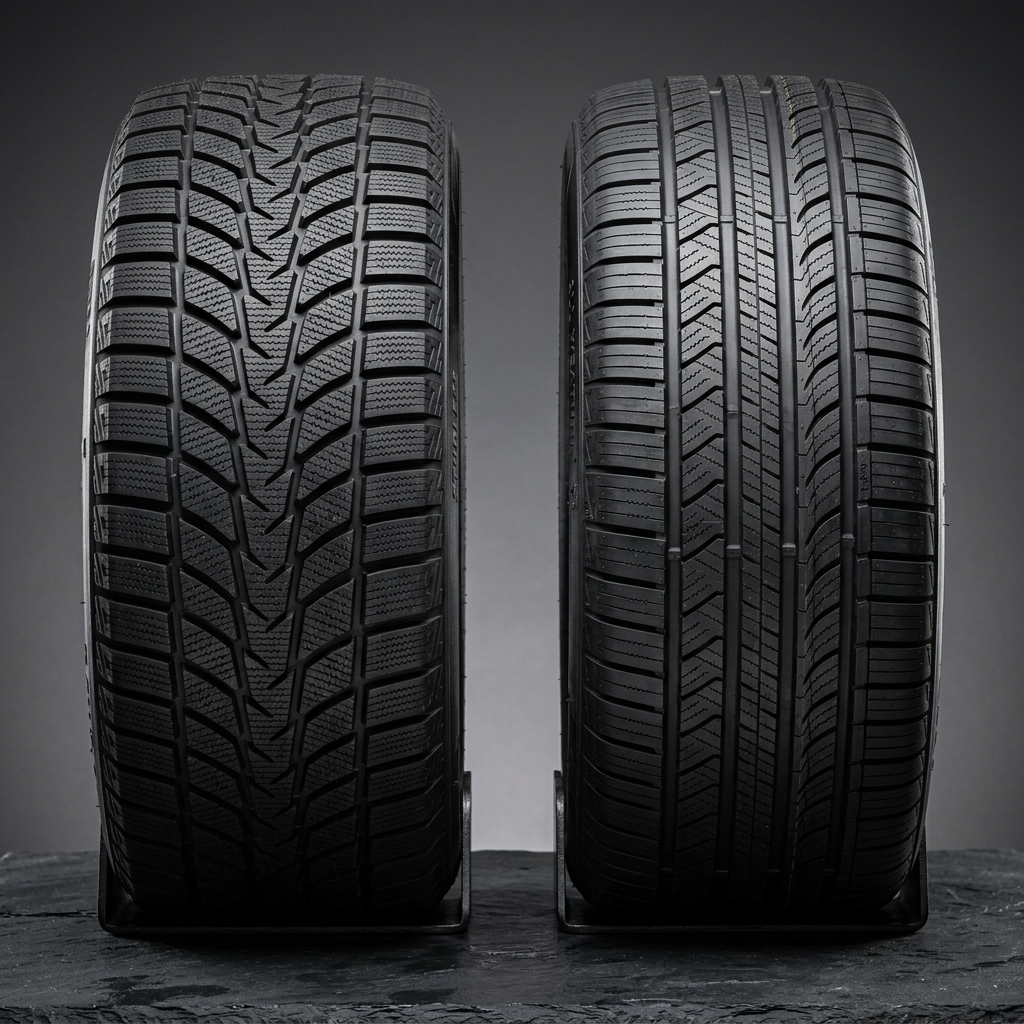
Standard All-Season (M+S)
Standard All-Season tires carry an M+S (Mud and Snow) rating based strictly on tread geometry—specifically having a 25% open tread surface area. However, traditional rubber compounds begin hardening ('glass transition stage') when temperatures drop below 45°F. Once rigid, the tire cannot conform to minor surface imperfections in asphalt, leading to compromised grip even on dry, cold pavement.
3PMSF Certified Tires
Tires featuring the 3-Peak Mountain Snowflake (3PMSF) symbol pass rigorous objective safety testing on packed snow, delivering at least 10% greater acceleration traction than standard baseline reference tires. Utilizing specialized silica-rich rubber compounds and high-density micro-siping, 3PMSF certified tires remain pliable in sub-freezing temperatures for superior biting edge traction.
Is It More Cost-Effective to Buy Dedicated Winter Tires or All-Weather Tires in Chicagoland?
Option A: Two-Set Strategy
Owning dedicated summer and winter tire sets requires initial investment in two sets of rubber and extra wheels. However, overall wear is split evenly, effectively doubling total tread lifespan. Dedicated winter tires deliver unmatched braking performance on hard-packed ice along rural Will County highways.
Option B: All-Weather 3PMSF
All-Weather tires combine flexible cold-weather rubber chemistry with year-round durability. They eliminate bi-annual dismounting, balancing, and off-season garage storage. For commuters along Route 59, they offer severe snow rating safety without twice-yearly service appointments.
The Expert Verdict
If your commute involves early morning unplowed county backroads, dedicated winter tires provide maximum peace of mind. For standard suburb-to-highway commuting in Joliet and Naperville, modern All-Weather 3PMSF tires offer the most cost-effective balance of safety and convenience. You can Order Genuine Cadillac Parts through Hawk Cadillac.
How Does Snow/Ice Mode Alter Throttle Response and Traction in a Cadillac?
Selecting Cadillac's integrated 'Snow/Ice Mode' via the Drive Mode Selector fundamentally re-maps vehicle control systems to maintain traction on slippery pavement. Rather than relying solely on driver pedal modulation, the Engine Control Module (ECM) relaxes pedal sensitivity, dulling initial throttle response to prevent sudden torque spikes.
Additionally, automatic transmission shift schedules are adjusted to launch the vehicle in second gear whenever possible. Launching in second gear reduces rotational torque delivered to the drive wheels, allowing your Cadillac to smoothly move forward over slick autumn leaves or early morning black ice without spinning tires.
StabiliTrak electronic stability control algorithms also shift into heightened awareness when Snow/Ice Mode is active. The system proactively drag-brakes individual wheels and redistributes drive torque across the active all-wheel drive differential long before lateral skid occurs.
Understanding how your Cadillac's electronic driver aids function in cold weather ensures confidence when navigating unpredictable Chicagoland weather changes. If your vehicle feels unaligned or hesitates during mode changes, schedule an inspection at Hawk Cadillac.
What Symptoms Indicate That Your Cadillac AWD Differential Needs Service?
Cadillac's intelligent All-Wheel Drive systems rely on transfer cases and rear differential assemblies to seamlessly transfer power to wheels with grip. Over thousands of miles, fluid inside these sealed gear units breaks down due to heat and mechanical friction. Cold autumn weather causes degraded fluid to thicken, hindering fluid flow and protection.
Key warning symptoms of differential fluid breakdown or mechanical wear include:
• Whining or Humm Sounds: High-pitched gear pitch noise rising in frequency with vehicle speed, noticeable along highway cruising speeds.
• Low-Speed Binding or Hopping: A chatter or shuttering sensation while executing tight parking lot turns or pulling out of driveways.
• Delayed Engagement: Sudden clunking or hesitation when accelerating hard as power shifts between front and rear axles.
Navigating I-55 and Route 59: Seasonal Driving Challenges for Plainfield and Naperville Drivers
High-Speed Highway Corridors (I-55)
Commuters traveling daily on Interstate 55 between Joliet, Bolingbrook, and Chicago encounter severe seasonal hazards. Open agricultural fields surrounding Will County allow strong crosswinds to blow ground moisture across cold lanes, creating flash black ice patches. Bridge decks crossing over the Des Plaines River freeze long before elevated land roads.
Suburban Arterials (Route 59 & Jefferson St)
Heavy stop-and-go traffic along Route 59 and West Jefferson Street demands prompt braking performance. Slick wet leaves accumulating at intersections combined with sudden autumn rainstorms require responsive anti-lock brakes and healthy tire tread to avoid rear-end collisions. Proactive vehicle maintenance is your best line of defense.
What Is Included in Hawk Cadillac’s Fall Multi-Point Vehicle Check?
Battery & Starting
• Digital battery health & CCA load test
• Starter draw & alternator output test
• Terminal post corrosion inspection
Tires & Alignment
• Tread depth measurement (inner/center/outer)
• Wear pattern alignment verification
• TPMS sensor check & cold pressure set
Brakes, Fluids & Wipers
• Brake pad wear & rotor condition check
• Coolant freeze-point refractometer test
• Wiper blade check & washer fluid top-off
Why Choose Certified Service and ACDelco Gold Batteries for Your Vehicle?
Modern Cadillac vehicles are sophisticated performance machines containing dozens of interconnected computer control modules. Entrusting your luxury vehicle to generic repair shops can result in inaccurate diagnostics or improper aftermarket battery installations that lack necessary AGM (Absorbent Glass Mat) power profiles.
At Hawk Cadillac in Joliet, our GM-Certified technicians utilize specialized GM GDS2 diagnostic scan tools and install genuine ACDelco Gold and AGM batteries designed engineered specifically for GM electrical architectures. ACDelco Gold AGM batteries offer superior cycling endurance, high vibration resistance, and exceptional cold-cranking performance backed by nationwide warranty coverage.