Why Pre-Winter Battery Testing Is Essential for Cadillac Owners in Chicagoland
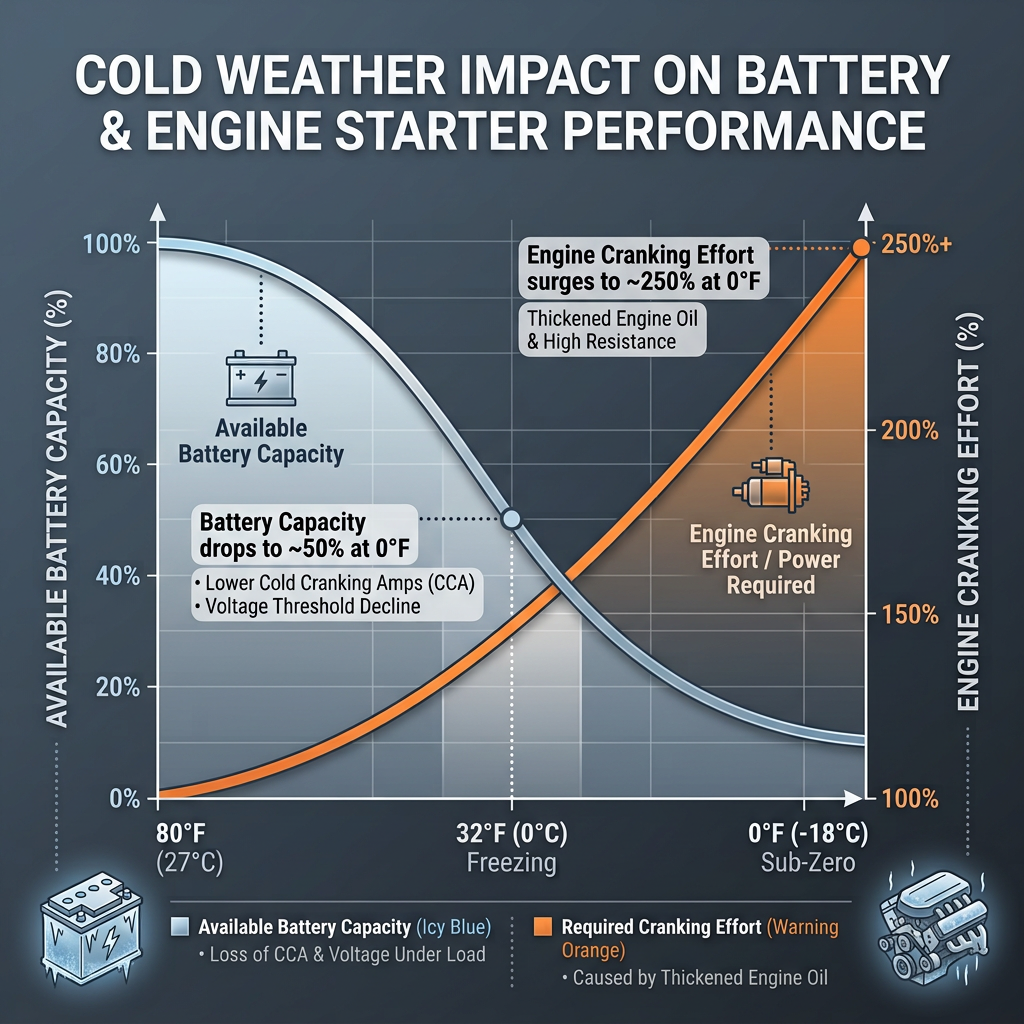
As autumn leaves blanket Will County and the crisp breezes off Lake Michigan give way to northern Illinois' severe winter chill, local drivers face one of the most demanding driving environments in the country. For owners of modern Cadillac vehicles—from the versatile XT4, XT5, and XT6 crossovers to the flagship Escalade and revolutionary LYRIQ—autumn is not merely a transitional season; it is a critical diagnostic window. Sub-zero northern Illinois temperatures can reduce battery chemical capacity by up to 50% while simultaneously doubling the electrical power required to turn over cold luxury engines. Conducting a pre-winter battery test is the single most effective maintenance step you can take to prevent sudden failure and avoid being left stranded in freezing conditions.
Cadillac vehicles represent the pinnacle of modern automotive technology, equipped with high-draw electronics including Super Cruise driver assistance, UltraView sunroof actuators, multi-zone automated climate management, adaptive suspension sensors, and 33-inch diagonal LED display screens. These advanced systems demand an unwavering baseline of stable 12V direct current. When extreme cold snaps hit Plainfield, Naperville, and Joliet, a weakened or aged battery cannot maintain the precise voltage thresholds needed by these sophisticated microprocessors. Pre-winter battery testing identifies internal cell degradation, subtle terminal corrosion, and hidden parasitic electrical draws long before cold weather leaves you searching for a jump-start during your morning commute along I-55 or I-80.
How Cold Chicagoland Winters Affect Cadillac Battery Voltage and CCA
Inside every Cadillac 12V Absorbed Glass Mat (AGM) battery, electrical current is generated through an electrochemical reaction between lead plates and a liquid/gel electrolyte. When ambient temperatures drop toward zero degrees Fahrenheit during severe Chicagoland deep freezes, these chemical kinetics slow dramatically. At 32°F, a battery loses roughly 20% of its total cranking power; at 0°F, available capacity plummets by 50% or more. Paradoxically, as battery output plunges, engine oil thickens to a syrup-like viscosity, requiring significantly higher Cold Cranking Amps (CCA) to turn over high-compression V6 and V8 engines.
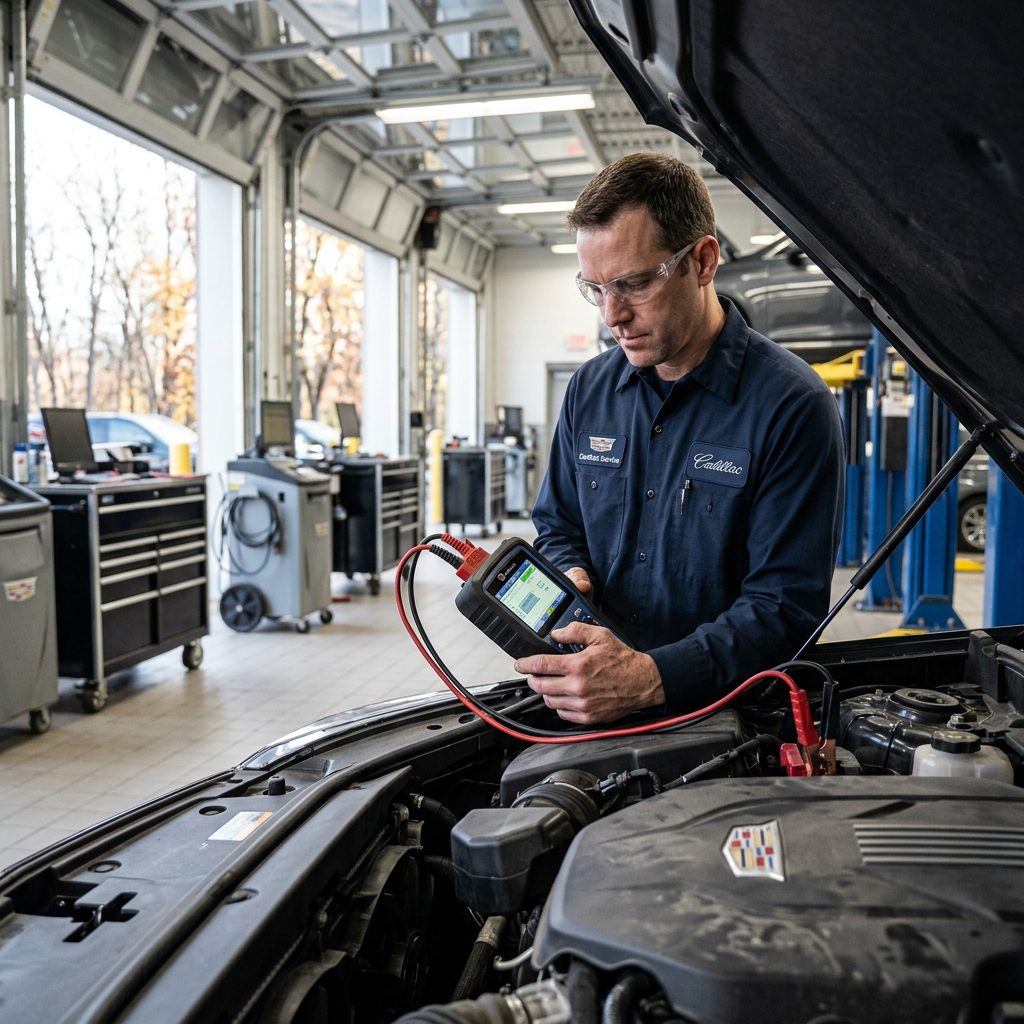
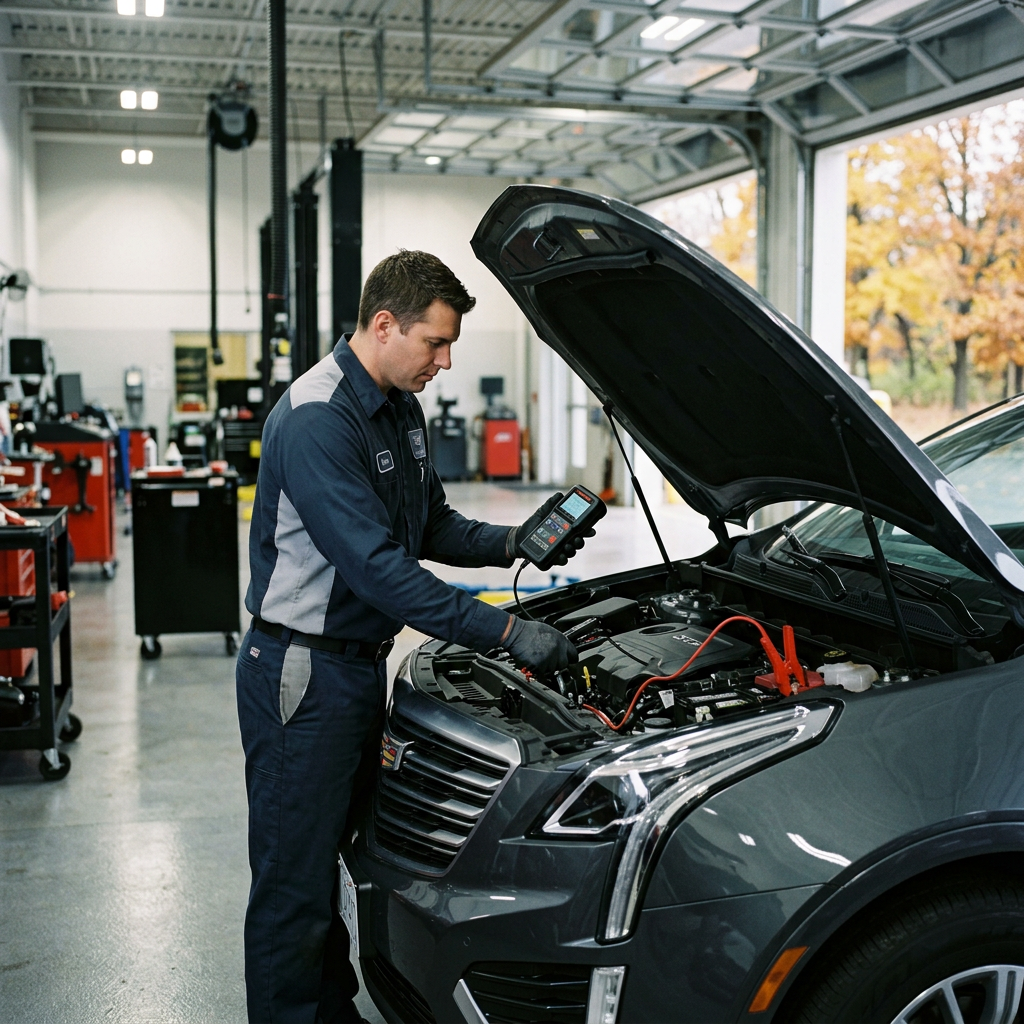
A standard handheld voltmeter might read a healthy-looking 12.6 volts across battery terminals at rest, but voltage under load tells the real story. During an engine start in freezing weather, system voltage must remain above 9.6 volts. If cold-depressed capacity drops below this critical threshold, sensitive onboard modules may reset, throw false diagnostic error codes, or fail to engage the starter motor entirely. Comprehensive computerized testing at Hawk Cadillac evaluates true dynamic load delivery to ensure your battery maintains voltage stability during harsh Illinois cold snaps.
|
Temperature (°F)
|
Battery Output Capacity
|
Engine Cranking Effort Required
|
|
80°F (Ideal)
|
100%
|
100% (Baseline)
|
|
32°F (Freezing)
|
80%
|
130%
|
|
0°F (Deep Freeze)
|
50%
|
210%
|
|
-20°F (Polar Vortex)
|
30%
|
350%
|
How Does Cadillac AWD Work in Winter Weather Conditions?
Cadillac's advanced All-Wheel Drive (AWD) engineering is specifically designed to master unpredictable Midwestern winters. On models like the XT4, XT5, and XT6, Cadillac utilizes an intelligent Twin-Clutch AWD system. Rather than relying on power-robbing brake intervention, this system uses twin electronic clutch packs at the rear differential to independently vary torque distribution between the left and right rear wheels. When accelerating onto a slush-covered ramp on Route 59 or navigating unplowed suburban side streets, the system instantly directs up to 100% of available rear torque to the wheel with the most grip.
On full-size luxury SUVs like the Escalade, Cadillac employs an electronic 2-speed transfer case coupled with an Electronic Limited-Slip Differential (eLSD). Combined with StabiliTrak traction control and Magnetic Ride Control or Air Ride Adaptive Suspension, the system monitors wheel speed, steering angle, and vehicle yaw hundreds of times per second. If black ice is detected under one wheel during an icy commute through Joliet or Plainfield, the control unit redistributes engine torque in milliseconds, maintaining vehicle tracking without jarring driver input.
What Is the Fuel Economy Penalty of Running a Cadillac in AWD Mode Constantly?
Driveline Resistance
Engaging AWD routes power through the propshaft, transfer case, and rear differential. Rotating these additional mechanical components creates continuous parasitic drag on the powertrain, consuming extra energy even when road conditions are dry.
1 to 2 MPG Impact
Operating in continuous full-time AWD typically incurs a 1 to 2 MPG fuel consumption penalty compared to Front-Wheel Drive (FWD) disconnect mode. Over a full winter driving season in Chicagoland, this adds up to several extra fill-ups at the pump.
Selective Driver Modes
Cadillac's selectable AWD system allows drivers to switch back to Tour (FWD) mode on dry, clear highways to maximize efficiency, switching to AWD or Snow/Ice mode only when wintry precipitation begins to fall.
What Is Cadillac Vehicle Preconditioning and How Does It Help in Winter?
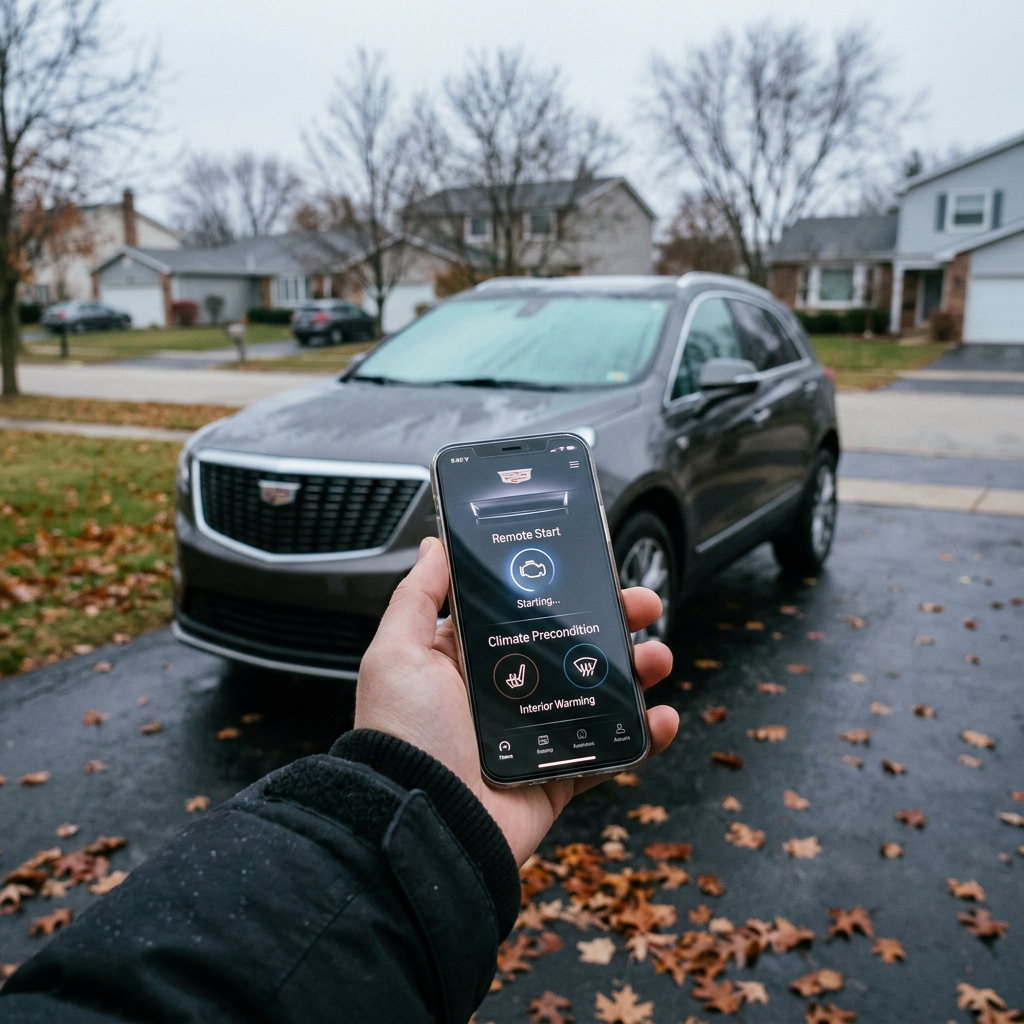
Cadillac vehicle preconditioning is an intelligent thermal management feature accessible directly via your key fob or the MyCadillac mobile application. When activated, preconditioning initiates remote engine or EV power start while keeping vehicle doors securely locked. The system automatically senses ambient outdoor temperatures and configures the interior climate settings—warming the cabin to a comfortable temperature, turning on heated seats, activating the heated steering wheel, and engaging front windshield and rear window defrosters before you even step outside.
For internal combustion engine (ICE) Cadillacs, preconditioning allows engine oil to warm and circulate thoroughly, reducing initial mechanical friction and engine wear upon driving off. For electric vehicles like the Cadillac LYRIQ, preconditioning while connected to a Level 2 home charger warms the high-voltage EV battery pack to its optimal electrochemical operating temperature using grid power rather than stored battery energy. This preserves precious driving range during frigid Chicagoland mornings while ensuring full power delivery from the moment you hit the road.
What Freeze Protection Level Should Engine Coolant Have for Illinois Winters?
Engine coolant (antifreeze) does far more than keep your Cadillac engine cool in summer—it prevents catastrophic freezing of the engine block, heater core, and radiator during deep Midwestern freezes. GM factory specifications require genuine Dex-Cool Extended Life Coolant diluted to a precise ratio. For standard winter conditions in northern Illinois, a 50/50 mixture of Dex-Cool and deionized water provides freeze protection down to -34°F (-37°C) and boil-over protection up to 265°F (129°C).
If water is added during summer top-offs without proper coolant concentrate, the freeze protection point degrades. Water expands by roughly 9% when freezing; if unmixed fluid freezes solid inside your Cadillac engine block, the hydraulic force can crack the engine block, split internal heater cores, or burst radiator seams—resulting in thousands of dollars in repairs. During pre-winter service at Hawk Cadillac, our certified technicians use refractometers to measure precise freeze point protection.
|
Dex-Cool Ratio (Coolant/Water)
|
Freeze Protection Point
|
Boiling Protection Point
|
|
40 / 60 Ratio
|
-12°F (-24°C)
|
259°F (126°C)
|
|
50 / 50 Ratio (Factory Standard)
|
-34°F (-37°C)
|
265°F (129°C)
|
|
60 / 40 Ratio (Severe Cold Option)
|
-62°F (-52°C)
|
270°F (132°C)
|
What Is the Recommended Tire Tread Depth Before Entering a Chicagoland Winter?
Tread Depth Thresholds
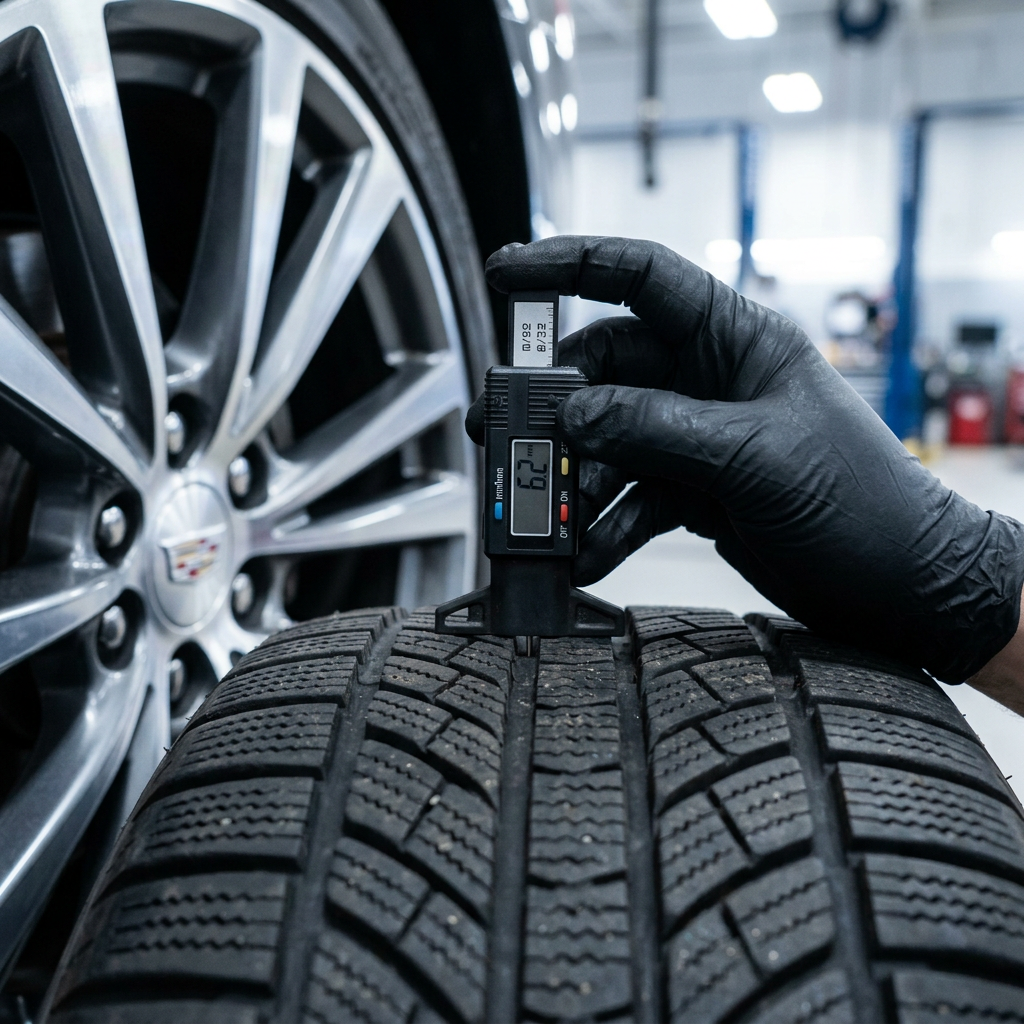
While Illinois legal limits allow tire tread down to 2/32 inches, winter driving requires significantly deeper tread. A minimum tread depth of 5/32 inches is essential to clear slush, push away water, and allow sipes to bite into packed snow.
Compound Hardening
Standard summer and performance tires undergo a glass transition below 45°F, causing rubber to turn stiff and lose adhesion. All-season and winter compounds retain flexibility in freezing temperatures for reliable grip.
Stopping Distances
On wet or slushy pavement at 50 mph, tires with 3/32 tread require up to 80 additional feet to stop compared to tires with 6/32 tread. Deep tread provides the margin of safety needed during sudden highway stops.
Are Winter Tires Necessary on a Cadillac AWD Vehicle in Joliet, Illinois?
A common misconception among luxury vehicle owners is that All-Wheel Drive replaces the need for winter tires. In reality, AWD and winter tires perform entirely different functions. Cadillac AWD systems manage engine torque distribution to accelerate and maintain traction in slippery conditions. However, AWD cannot generate grip where none exists—it provides no benefit when braking or making emergency evasive turns on snow and ice.
Dedicated winter tires feature silica-rich rubber compounds that remain soft below 45°F, alongside thousands of high-density sipes designed to pack snow against snow for maximum friction. On ice-coated roads in Joliet and Will County, an AWD Cadillac equipped with dedicated winter tires can stop up to 35% shorter than the same AWD vehicle on standard all-season tires—making winter tires a valuable upgrade for uncompromising safety.
Chicagoland Winter Readiness: Cadillac AWD System and Battery Testing Before First Snowfall
Comprehensive autumn preparation connects all critical vehicle sub-systems into a unified cold-weather defense strategy. A healthy battery powers the electric pumps, transfer case actuators, and electronic control units that govern Cadillac AWD torque distribution. Concurrently, fresh driveline fluids, calibrated tire pressures, clear headlight assemblies, and sub-zero washer fluid work together to maintain vehicle control and driver visibility when sudden Chicagoland lake-effect snowstorms strike.
By scheduling a complete multi-point inspection before November's first severe frost, Cadillac owners ensure that every sensor, fluid reservoir, and heating element is primed for peak performance. Proactive maintenance at Hawk Cadillac eliminates cold-weather surprises, preserving luxury driving comfort and ensuring reliable starts all winter long.
Step-by-Step Cadillac Winter Maintenance Checklist for Plainfield Commuters
1. Electrical & Engine
• Perform conductance battery test & terminal cleaning • Verify 50/50 Dex-Cool coolant freeze level (-34°F) • Inspect serpentine accessory drive belt tension • Check alternator charge voltage under electrical load
2. Tires & Driveline
• Measure tire tread depth (ensure 5/32" minimum) • Adjust cold tire pressures (TPMS drops 1 PSI per 10°F) • Inspect AWD transfer case and differential fluid levels • Verify wheel alignment for even tread wear
3. Cabin & Emergency
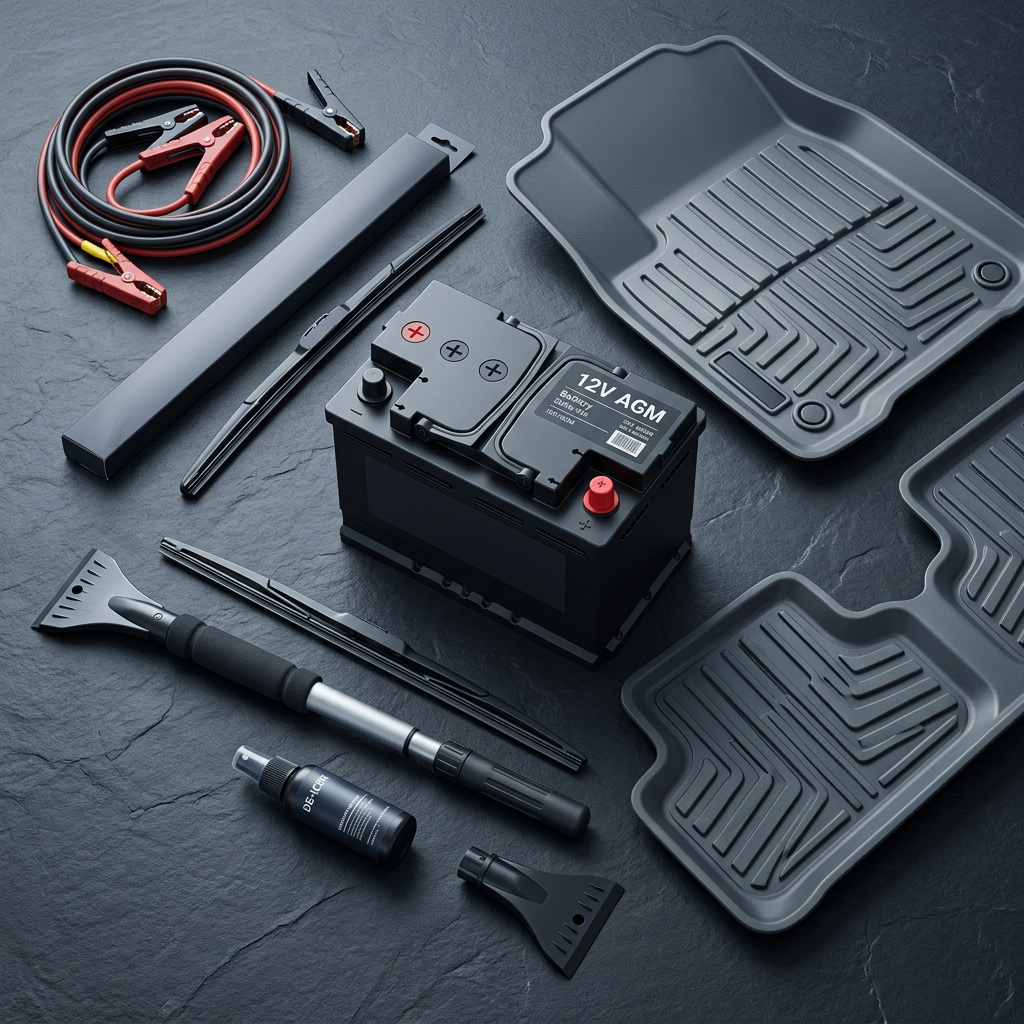
• Install premium silicone beam wiper blades • Fill washer reservoir with -20°F rated de-icing fluid • Lubricate weatherstripping door seals with silicone lube • Pack emergency trunk kit (jumper cables, blanket, flashlight)
Essential OEM Cadillac Batteries and Cold-Weather Accessories
When replacing your Cadillac battery, installing an OEM ACDelco Gold Absorbed Glass Mat (AGM) battery guarantees factory-exact fitment and electrical performance. ACDelco AGM batteries feature high-density glass mat separators that absorb electrolyte, offering up to three times the cycle life of conventional flooded batteries, exceptional resistance to cold vibration, and rapid recharge acceptance during short suburban commutes.
Complement your battery upgrade with genuine GM cold-weather accessories designed specifically for your model. Custom-molded Cadillac all-weather Premium Floor Liners protect interior carpet from melted slush and road salt, while factory engine block heaters ensure smooth starts during sub-zero polar vortex events in northern Illinois.
Schedule Your Cadillac Pre-Winter Battery & Safety Inspection at Hawk Cadillac in Joliet
Don't wait for the first severe freezing snap to test your Cadillac battery's health. At Hawk Cadillac in Joliet, our factory-trained and GM-certified technicians utilize computerized diagnostic tools to evaluate your vehicle's entire electrical system, AWD drivetrain, cooling protection, and braking components.
Visit us at 2001 W Jefferson St in Joliet, IL or reach our service department directly. Get Directions to Hawk Cadillac or Call us at (815) 600-7027 to speak with a service advisor. Reserve your appointment today to ensure complete winter readiness and enjoy effortless luxury performance all season long.