Does Cadillac AWD Lower Fuel Economy Compared to Two-Wheel Drive in Winter? The Direct Answer
The short answer is yes—but with crucial modern caveats. Under standard operating conditions, a Cadillac equipped with All-Wheel Drive (AWD) typically experiences a minor reduction in fuel economy of approximately 1 to 3 Miles Per Gallon (MPG) compared to its Two-Wheel Drive (2WD) counterpart. This fuel efficiency delta stems primarily from two mechanical factors: the physical weight of additional drivetrain components (such as the transfer case, rear differential, and secondary driveshaft) and the mechanical drag created when rotational energy moves through additional gear sets.
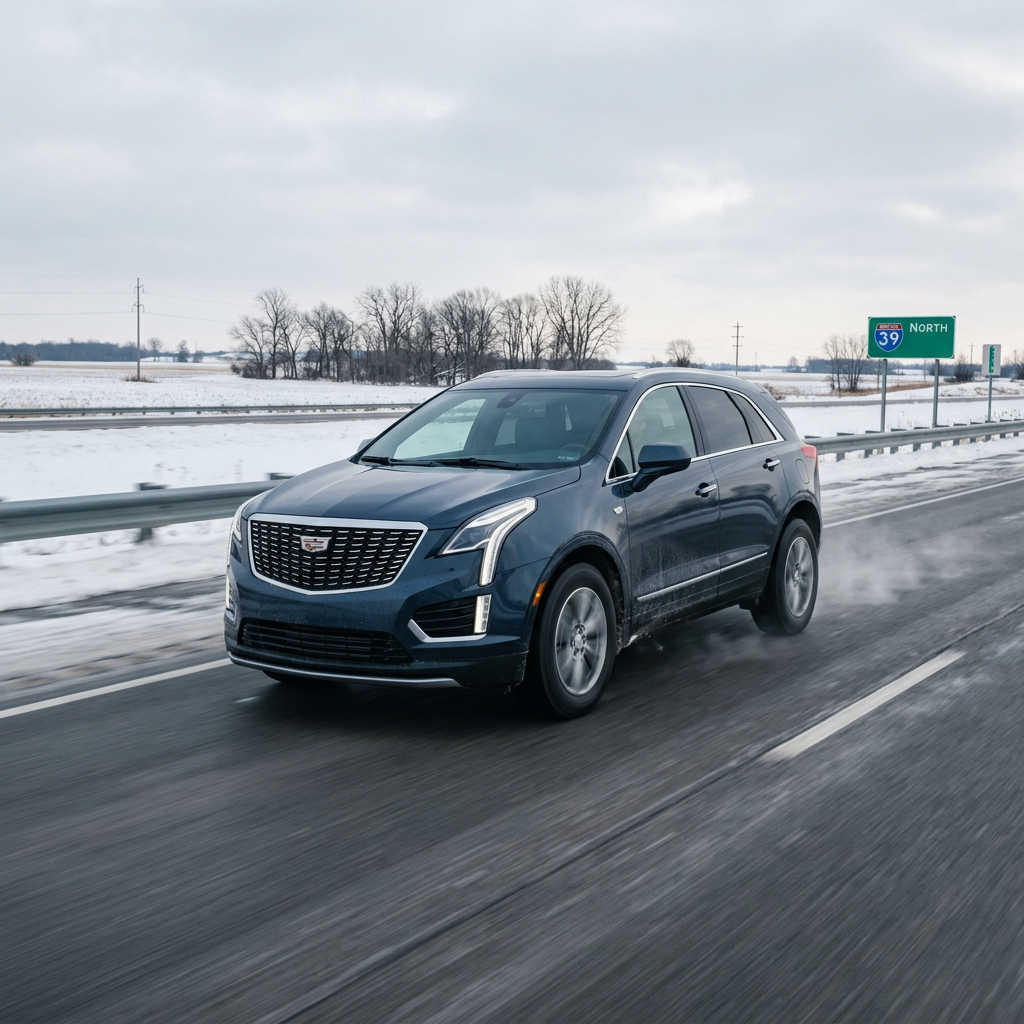
However, claiming that AWD alone ruins your winter mileage misses the bigger picture. Modern Cadillac vehicles feature advanced disconnectable twin-clutch AWD systems that actively disengage the rear axle when extra traction isn't required. During steady cruising on dry pavement, your Cadillac operates virtually as a 2WD vehicle, eliminating unnecessary parasitic drag. Furthermore, severe winter weather itself—sub-zero temperatures, dense icy air, extended engine warm-up cycles, winter-blend gasoline, and tire pressure drops—reduces fuel economy on both 2WD and AWD models alike.
For northern Illinois drivers commuting along I-55 or I-80 between Naperville, Plainfield, and Joliet, the minimal 1–3 MPG difference is a small trade-off for the immense safety, torque-vectoring stability, and confident acceleration Cadillac AWD provides during unpredictable winter weather snaps.
Why Winter Weather Reduces Cadillac Fuel Economy Regardless of Drivetrain
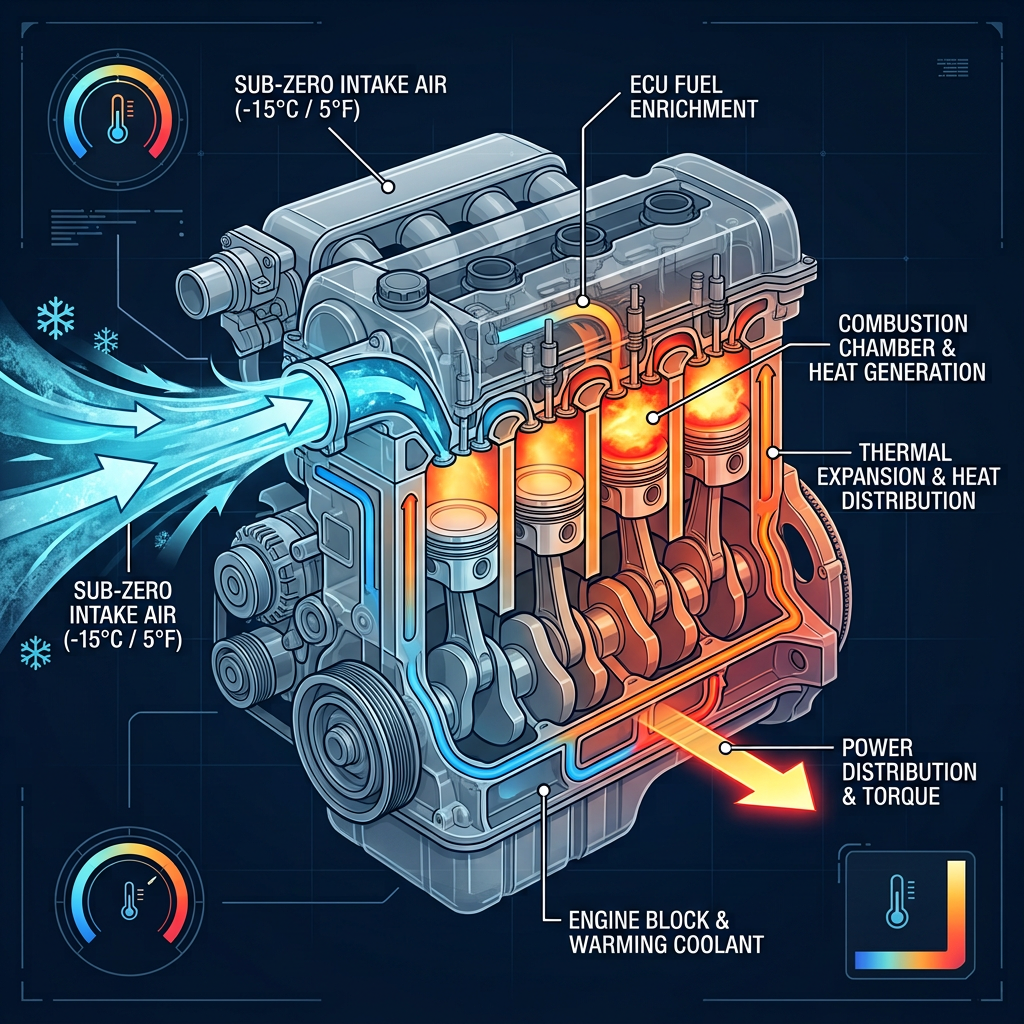
Many drivers attribute their sharp dip in winter fuel economy solely to their AWD system, but atmospheric and thermodynamic factors play a much larger role than drivetrain selection. 1. Cold-Weather Aerodynamics & Air Density As temperatures drop, ambient air contracts and becomes significantly denser. Driving through thick sub-zero air increases aerodynamic drag on your Cadillac, requiring the engine to consume more fuel simply to maintain highway speeds along I-55. 2. Engine Thermal Dynamics & Long Warm-Up Cycles In frigid weather, an internal combustion engine takes much longer to reach its optimal operating temperature (around 195°F–220°F). During this warm-up window, the engine control unit (ECU) runs a richer fuel-to-air mixture to keep combustion stable and rapidly warm up the catalytic converter. Short trips around Plainfield or Joliet where the engine never fully warms up will cause fuel consumption to spike drastically regardless of whether you drive a 2WD or AWD model.
3. Winter-Blend Gasoline Energy Content During winter months, fuel refineries alter gasoline formulas, adding higher Reid Vapor Pressure (RVP) additives like butane to help engines start easily in cold weather. Butane contains lower energy density per gallon than summer-grade fuel components, resulting in an inherent 1.5% to 3% decrease in total fuel efficiency. 4. Increased Electrical & Mechanical Loads Sub-zero commutes require running heavy electrical accessories simultaneously: heated seats, heated steering wheels, rear defrosters, high-speed cabin blower fans, and exterior LED lighting. This heavy demand forces the alternator to load down the engine, causing extra fuel consumption regardless of drivetrain.
How Cadillac's Twin-Clutch AWD System Differs from Standard AWD for Efficiency
Traditional permanent all-wheel drive systems route power continuously to all four wheels through mechanical differentials. While excellent for maximum traction, this design creates constant friction, gear drag, and parasitic horsepower loss, causing notable fuel economy penalties year-round. Cadillac engineers engineered a far smarter solution for models like the XT4, XT5, XT6, and CT5: the advanced Twin-Clutch AWD system with active disconnect technology. Unlike traditional designs, Cadillac's twin-clutch architecture features a mechanical disengage switch located at the front power take-off unit (PTU). When full-time AWD isn't required—such as steady cruising along flat stretches of highway—the system completely decouples the rear driveshaft.
By stopping the internal components of the rear differential and driveshaft from spinning, Cadillac eliminates drag losses, allowing your luxury crossover or sedan to operate with the fuel efficiency of a two-wheel drive vehicle. When sensors detect wheel slip, sudden steering input, ambient freezing temperatures, or aggressive throttle application, the twin-clutch system engages seamlessly in milliseconds. Dual clutches at the rear axle can independently send up to 100% of available rear torque to either the left or right rear wheel. This intelligent system provides the efficiency of 2WD when cruising and the uncompromising stability of AWD when ice or slush strikes.
How Cadillac All-Wheel Drive Performs in Severe Winter Snow and Ice on Highways
Dynamic Torque Vectoring
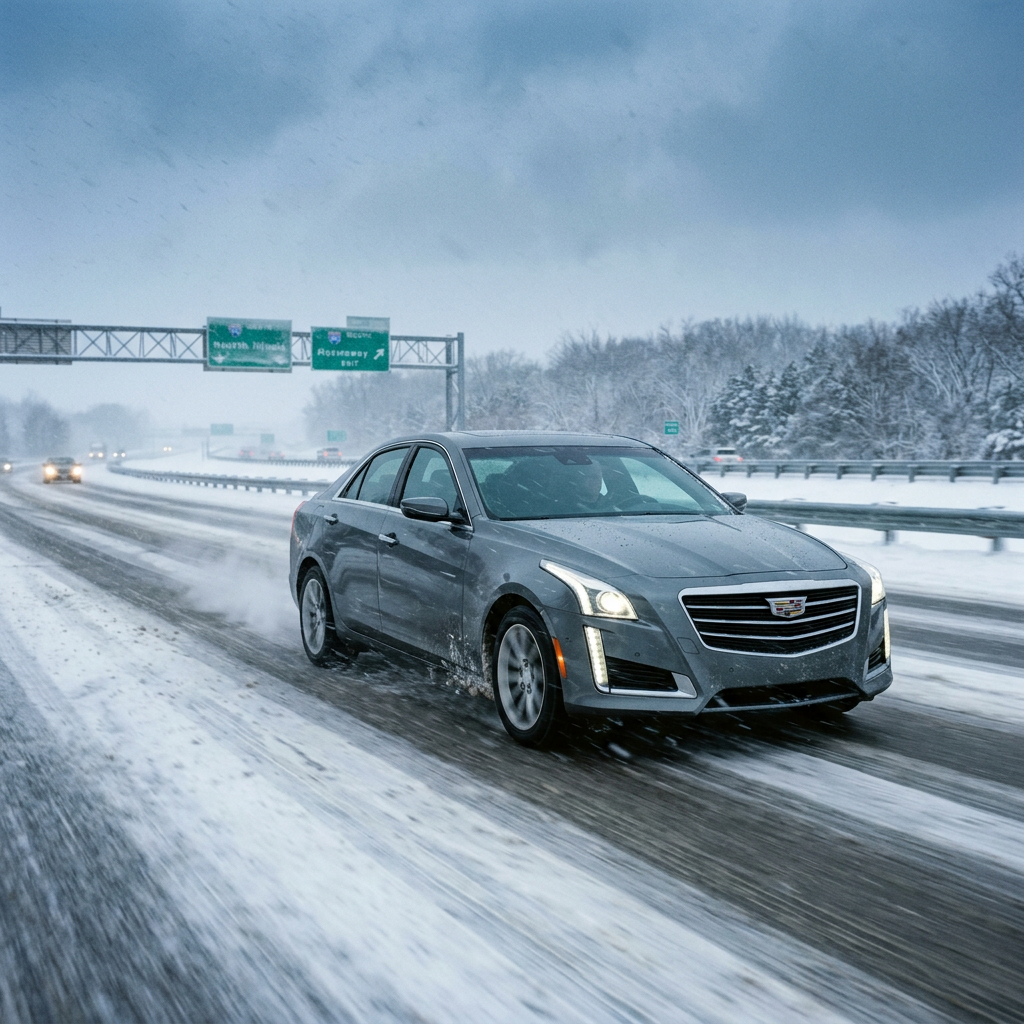
On slick stretches of I-55 or bridge overpasses around Joliet, black ice poses a severe danger. Cadillac AWD uses active torque vectoring to shift engine output instantly between wheels, preventing unwanted vehicle yaw and stabilizing your lane path before manual steering corrections are even needed.
Zero-Hesitation Take-Offs
While 2WD vehicles frequently spin their drive tires at snowy intersections or incline ramps, Cadillac AWD channels engine torque across four contact patches. This guarantees clean, controlled acceleration out of heavy snowbanks without wasting engine power or spinning tires uselessly.
The Value Trade-Off: Burning an extra gallon of fuel over several hundred miles is a minor investment compared to the confidence and safety gained when navigating whiteout blizzard conditions on regional highways.
How Tire Pressure Changes in Cold Weather During Northern Winter Months
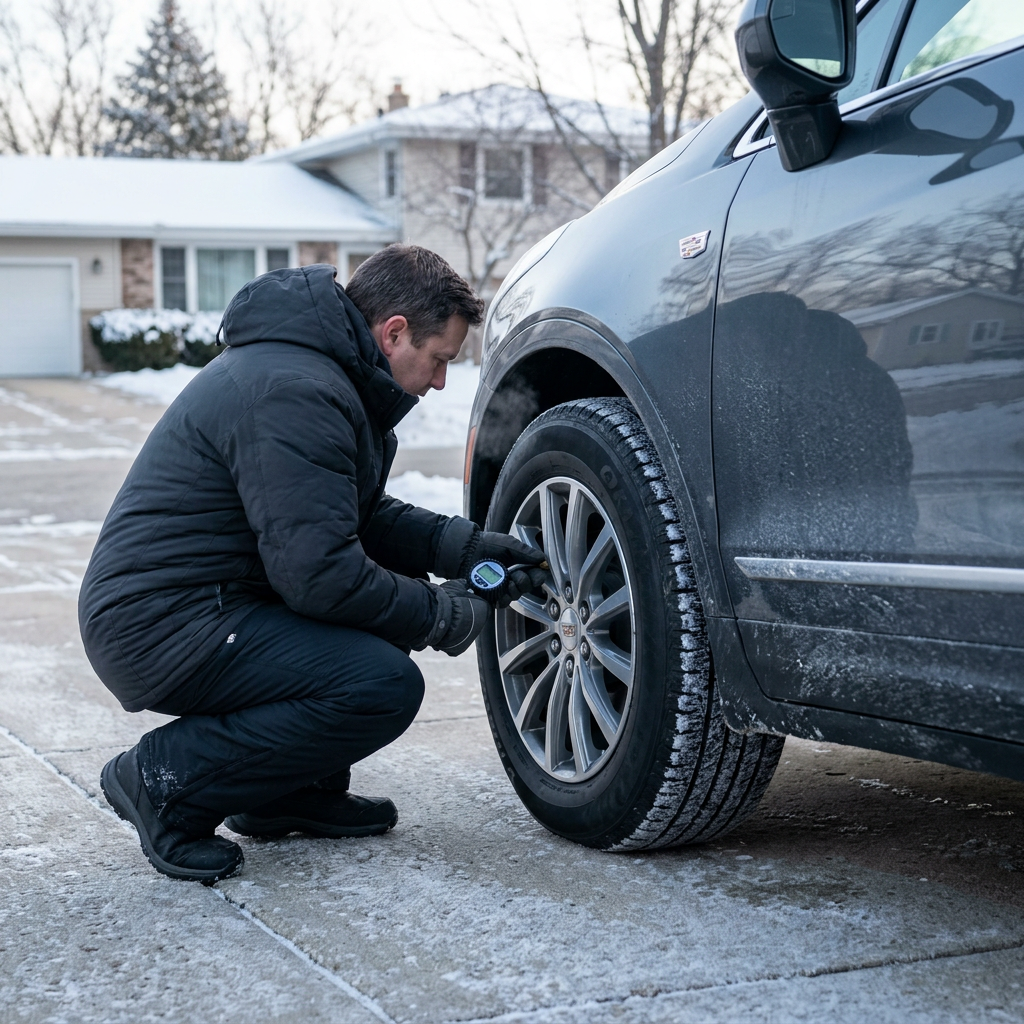
Underinflated tires are one of the most common causes of hidden fuel economy loss during northern winters. Physics dictates that air pressure drops inside a sealed container as ambient temperature declines. The 10°F Rule of Thermodynamics For every 10°F drop in ambient temperature, your Cadillac's tire pressure drops by approximately 1 PSI (Pound per Square Inch). A sudden cold snap in late autumn that drops temperatures from 55°F to 15°F can cause an unassisted loss of 4 PSI across all four tires. Impact on Fuel Economy & Safety Underinflated tires deform their tread contact patch, creating substantial rolling resistance. The engine must work significantly harder to roll the vehicle forward, reducing fuel efficiency by up to 0.2% for every 1 PSI drop in all four tires. In addition, soft tires compromise cornering precision and increase stopping distances on icy pavement. Check your cold tire pressure monthly inside your garage or before starting your drive. Maintain the exact PSI listed on your driver's side door jamb sticker.
What Is the Optimal Battery Voltage for a Cadillac in Winter?
Cold weather slows down electro-chemical reactions inside standard 12-volt lead-acid and AGM (Absorbent Glass Mat) batteries. At 0°F, a car battery retains only about 50% of its room-temperature cranking capacity, while your Cadillac engine requires up to twice as much electrical current to turn over thick, cold motor oil. Key Voltage Targets to Watch:• Resting Voltage (Engine Off): An optimal winter battery should read 12.6V to 12.8V when fully charged. If your resting voltage falls below 12.2V, the battery is operating at under 50% state-of-charge and risks freezing or failing to start during a sharp Joliet freeze snap. • Operating / Charging Voltage (Engine Running): Once started, your Cadillac's alternator should maintain a steady output between 13.7V and 14.7V.
How Electrical Strain Impacts Fuel Economy When a weak battery struggles to hold charge, the engine control module instructs the alternator to run at maximum output outputting higher voltage continuously. This places a heavy mechanical load on the engine serpentine belt system, increasing parasitic engine drag. Furthermore, modern Cadillac AWD modules, electric power steering systems, and electronic twin-clutch differentials require stable system voltage to process control signals smoothly. A weak battery can cause computer logic delays, temporary AWD fault codes, or inefficient torque management under heavy loads.
Interstate Commuter Winter Readiness: Testing Your Cadillac Battery and AWD on I-55 and I-80
1. Verify Battery Load
Before embarking on daily trips along I-55 toward Chicago, perform a professional conductance battery test. Ensure your battery meets cold-cranking amp (CCA) specs to prevent getting stranded during sudden lake-effect drops.
2. Confirm AWD Drive Modes
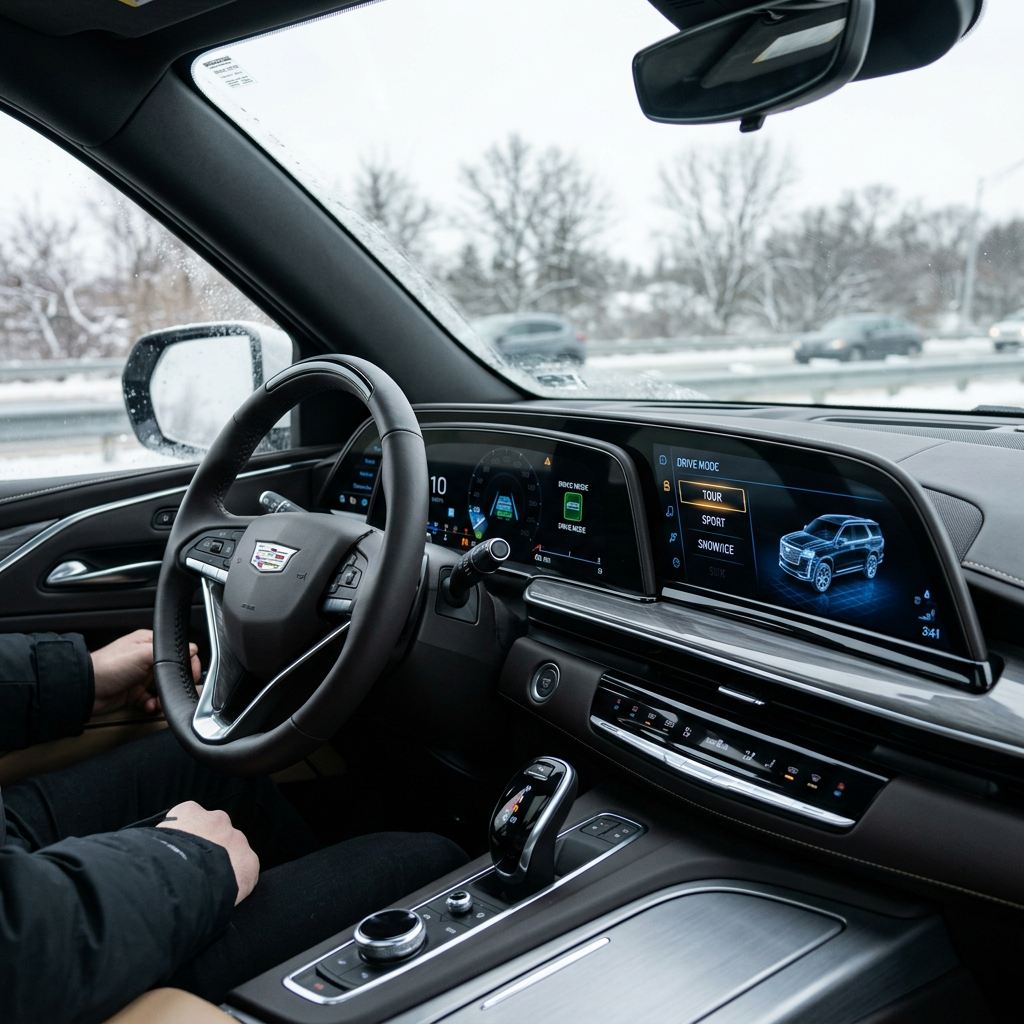
Familiarize yourself with your center console Drive Mode Selector. Switch to 'Snow/Ice' mode when roads are covered in slush to soften throttle mapping and optimize front-to-rear differential locking for maximum traction.
Fill your windshield washer reservoir with sub-zero rated fluid (-20°F) and replace worn wiper blades to handle heavy salt spray kicked up by semi-trucks on I-80.
What Should a 2027 Cadillac AWD Inspection Cover Before Winter Driving?
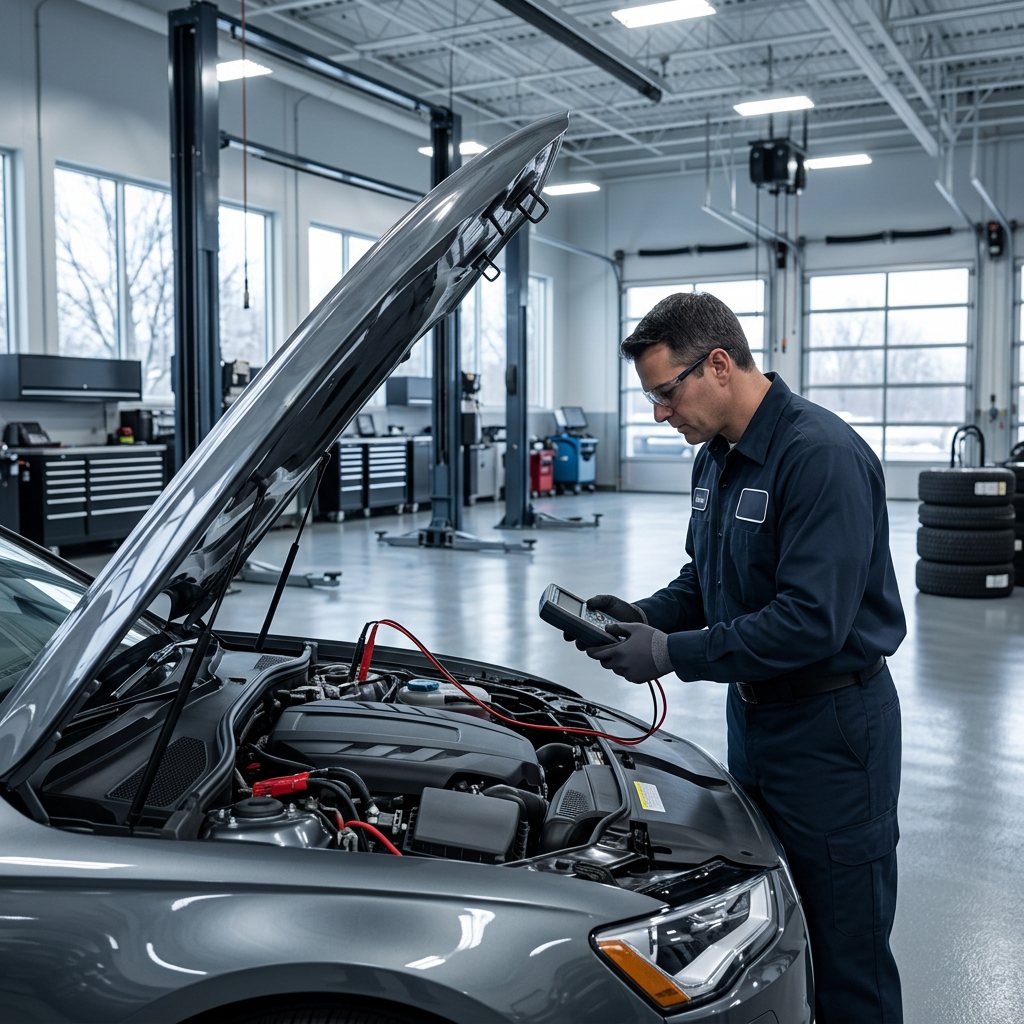
A comprehensive pre-winter multi-point inspection ensures your Cadillac operates at peak efficiency and safety through sub-zero weather. Certified Cadillac technicians focus on key mechanical areas: 1. Transfer Case & Rear Differential Fluid Quality Synthetic fluid inside transfer cases and rear differential modules degrades over time. Moisture contamination or low fluid levels cause severe internal friction, reducing fuel economy and potentially damaging precision gears under extreme loads. 2. Twin-Clutch Actuator & Hydraulic Solenoid Diagnostics Diagnostic scans check electronic actuators for fast engagement response times and clean internal fluid pressure, guaranteeing your vehicle disengages properly during highway cruising to preserve fuel.
3. Suspension Bushings & Alignment Angles Cold temperatures harden rubber suspension bushings. Off-spec wheel alignment drags tires sideways across pavement, causing accelerated tire wear and significantly lower fuel economy on icy or dry pavement. 4. Brake Pad & Rotor Inspection Slush, road salt, and ice cause brake calipers to drag if slide pins lack lubrication. Ensuring smooth caliper retraction prevents constant parasitic brake drag against your engine efficiency.
Practical Fuel-Saving Tips for Driving a Cadillac AWD Vehicle in Winter
Use Tour / Eco Mode
On clear, dry highways, select 'Tour' or 'Eco' mode. This forces the twin-clutch AWD system to completely disconnect the rear axle, giving you true 2WD fuel economy figures.
Minimize Idling Time
Excessive idling gets 0 MPG. Modern Cadillac direct-injection engines warm up faster while driving gently than sitting motionless in your driveway.
Remove unneeded roof racks during winter months to reduce aerodynamic cross-section area, preserving valuable miles per gallon.
What Winter Emergency Supplies Should Be Kept in a Cadillac Trunk?
Equipping your luxury vehicle with an organized winter recovery kit ensures safety without cluttering your refined cargo space: • Compact Lithium Jump Starter Pack: Eliminates the need to wait for a jump-start in freezing temperatures. • Traction Recovery Mats & Snow Shovel: Collapsible aluminum shovels combined with rubber traction mats provide immediate traction out of deep snowdrifts. • Heavy-Duty Tow Strap & Shackles: Essential for safe vehicle recovery if caught in a highway ditch.
• Emergency LED Flares & First Aid: Magnetic LED beacons alert passing traffic on low-visibility highways. • Thermal Blankets & Hand Warmers: Heavy fleece or wool blankets keep passengers warm during emergency waits. • Genuine Cadillac All-Weather Cargo Liners: Keep snowmelt, slush, and salt stains off your vehicle's premium interior carpet.
Comparing Cadillac AWD vs 2WD Fuel Economy Across Popular Sedan and SUV Models
|
Cadillac Model
|
Engine / Drivetrain
|
EPA Combined (2WD)
|
EPA Combined (AWD)
|
Estimated Winter MPG Delta
|
|
Cadillac CT4
|
2.0L Turbo 4-Cyl
|
27 MPG
|
26 MPG
|
-1 MPG
|
|
Cadillac CT5
|
2.0L Turbo / 3.0L V6
|
27 MPG
|
25 MPG
|
-2 MPG
|
|
Cadillac XT4
|
2.0L Turbo 4-Cyl
|
26 MPG
|
24 MPG
|
-2 MPG
|
|
Cadillac XT5
|
3.6L V6
|
22 MPG
|
20 MPG
|
-2 MPG
|
|
Cadillac XT6
|
3.6L V6
|
21 MPG
|
19 MPG
|
-2 MPG
|
Financial Breakdown of the AWD Difference Assuming an average annual driving distance of 15,000 miles and fuel costs around $3.50 per gallon, a 2 MPG variance between 2WD and AWD amounts to approximately $150 to $220 per year in fuel costs. For Northern Illinois drivers who regularly face sudden snow squalls, icy highways, and unplowed suburban side streets, this modest difference pays for itself after avoiding a single roadside slip or winter ditch recovery.
Prepare Your Cadillac for Winter Driving Excellence at Hawk Cadillac in Joliet
Don't let freezing weather compromise your vehicle's fuel efficiency or highway stability. At Hawk Cadillac in Joliet, our factory-certified master technicians specialize in complete winter readiness services for all Cadillac luxury sedans and SUVs. Whether you need an AWD system fluid service, a cold-cranking battery load check, or a fresh set of winter tires, our service team is dedicated to keeping your vehicle performing at its peak through every season.