What Tire Pressure Should a 2027 Cadillac Use in Cold Weather?
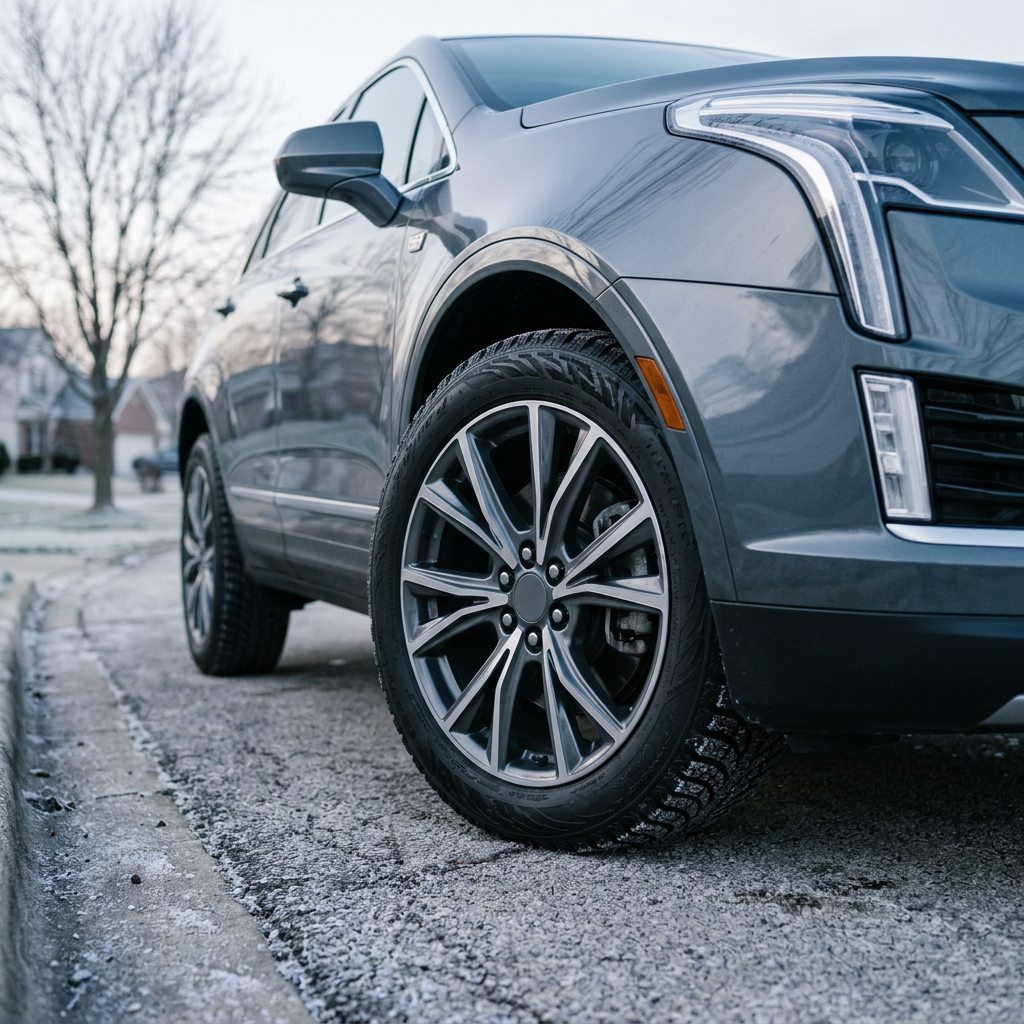
For optimal performance, safety, and tread longevity, you should always maintain your 2027 Cadillac's recommended cold inflation pressure rating as specified on the original equipment driver's side door placard. For most modern Cadillac luxury sedans and crossover SUVs—including the CT4, CT5, XT4, XT5, XT6, and Escalade—this baseline specification typically ranges between 32 PSI and 35 PSI. However, exact inflation targets depend specifically on your model's body style, powertrain architecture, wheel package diameter, and gross vehicle weight rating. During cold Northern Illinois winters, maintaining this precise benchmark becomes a daily necessity rather than a periodic checkup routine.
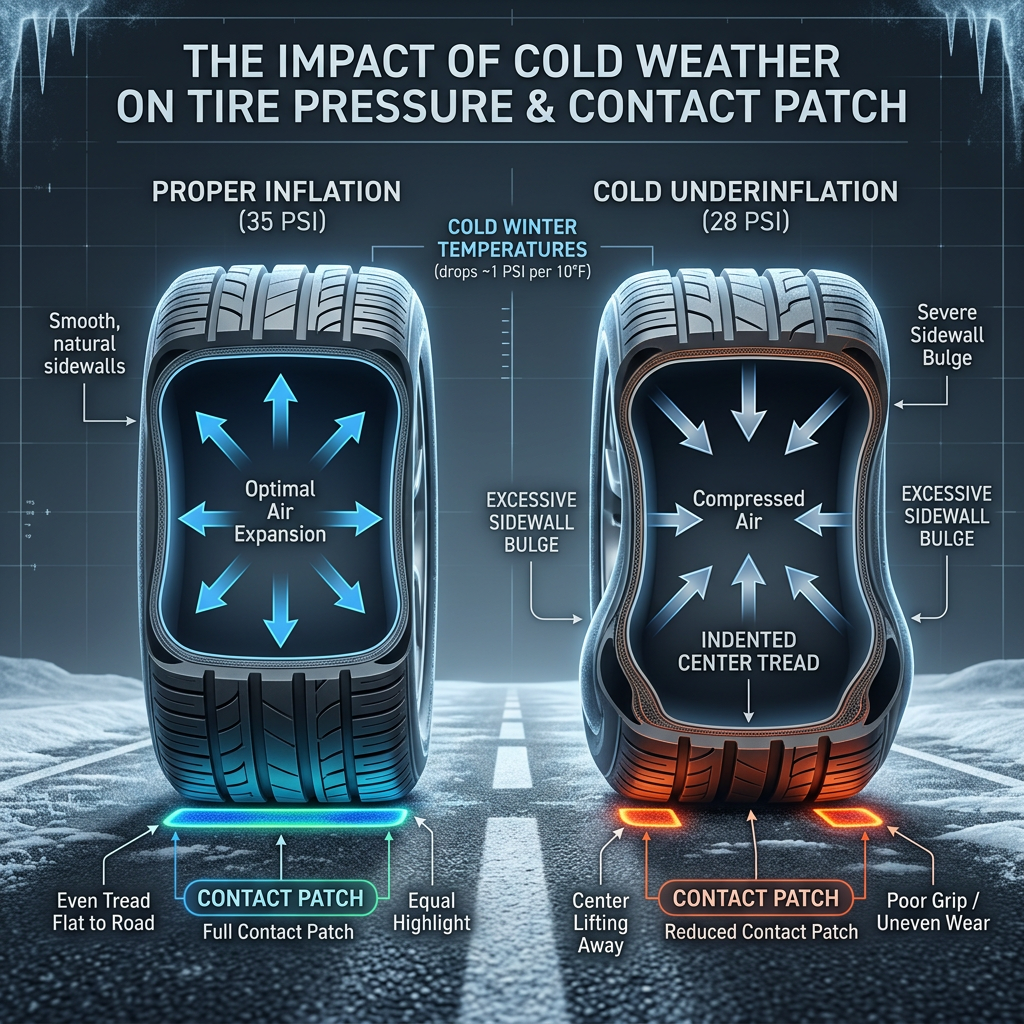
Ambient winter temperatures drop tire pressure by approximately 1 to 2 PSI for every 10°F decrease in ambient air temperature. As overnight temperatures in Joliet, Plainfield, and Naperville plunge well below freezing, air molecules inside your tires compress tightly, causing a noticeable drop in cold static pressure before you even turn the key. Checking your tire pressure first thing in the morning—before the vehicle has been driven or exposed to direct sunlight—ensures that you capture a true baseline reading. Regular top-offs during local cold snaps prevent underinflation, preserving sharp steering response, maximizing stopping distance on slick roadways, and avoiding uneven tread wear patterns.
Modern Cadillac vehicles are sophisticated performance machines engineered with advanced chassis electronics, including StabiliTrak electronic stability control, Magnetic Ride Control adaptive dampers, and intelligent All-Wheel Drive (AWD) systems. Every element of this safety and dynamic suite relies on predictable tire contact patches. When cold weather starves your tires of necessary air pressure, the tire carcass flexes excessively, squelching dynamic response and compromising the precision calibration designed by Cadillac engineers. Drivers navigating sub-zero commutes along I-55, Route 59, or Jefferson Street can rely on the certified service experts at Hawk Cadillac to verify baseline target pressures and maintain peak driving refined luxury.
|
Cadillac Model Lineup
|
Recommended Cold Placard PSI Range
|
Recommended Check Frequency (Winter)
|
Impact of 20°F Drop
|
|
Cadillac CT4 / CT5 Sedans
|
32 - 35 PSI
|
Bi-weekly / After sudden drops
|
-2.0 to -3.0 PSI loss
|
|
Cadillac XT4 / XT5 / XT6 Crossovers
|
33 - 36 PSI
|
Bi-weekly / First cold morning
|
-2.0 to -3.0 PSI loss
|
|
Cadillac Escalade / Escalade ESV
|
35 - 38 PSI
|
Weekly during winter months
|
-2.5 to -3.5 PSI loss
|
|
Cadillac LYRIQ / EV Architecture
|
38 - 42 PSI
|
Weekly during sub-freezing weather
|
-3.0 to -4.0 PSI loss
|
How Winter Temperatures Drop Cadillac Tire Pressure and Impact Performance
The underlying cause of winter tire pressure loss rests in fundamental physics—specifically Gay-Lussac's Law of ideal gas dynamics. Air within a sealed rubber tire expands when heated and contracts when cooled. In northern Illinois, autumn-to-winter transitions often produce severe overnight temperature swings of 30 degrees or more. As ambient air chills, gas molecules lose thermal energy, move slower, and press less forcefully against the inner tire casing. This physical contraction causes a predictable drop of approximately 1 PSI for every 10-degree Fahrenheit drop in outside temperature.
When tires become underinflated due to cold weather, their structural geometry collapses inward. The outer shoulders of the tire carry an unnatural proportion of the vehicle's weight, while the center of the tread lifts away from the roadway. This dynamic deformation alters the tire's optimal contact footprint, causing uneven tread scrub, sluggish turn-in execution, and increased rolling resistance that consumes extra fuel during suburban Plainfield commutes.
Furthermore, proper tire inflation is directly linked to Cadillac chassis technology. The StabiliTrak advanced traction control system constantly compares individual wheel speed sensor data against steering angle inputs. Underinflated tires experience greater sidewall flex and modified rolling radii, which can mislead onboard sensors during aggressive maneuvers on slushy roads. Maintaining correct PSI allows StabiliTrak, ABS, and driver assistance systems to intervene with millisecond accuracy whenever emergency avoidance is required.
Where Is the Tire Pressure Specification Placard Located on a Cadillac?
Locating your official factory cold inflation pressure specification takes just a moment. Every new Cadillac vehicle manufactured for North America features a standardized 'Tire and Loading Information' label permanently attached to the driver's side vehicle door pillar (known as the B-pillar). To inspect this placard, open the driver's door fully and examine the inner rear edge of the door frame near the latch assembly.
This color-coded placard provides vital information tailored exclusively to your model's factory configuration, including designated front and rear tire sizes, spare tire specifications (if equipped), maximum weight capacity limits, and exact recommended cold inflation pressures measured in both PSI (pounds per square inch) and kPa (kilopascals).
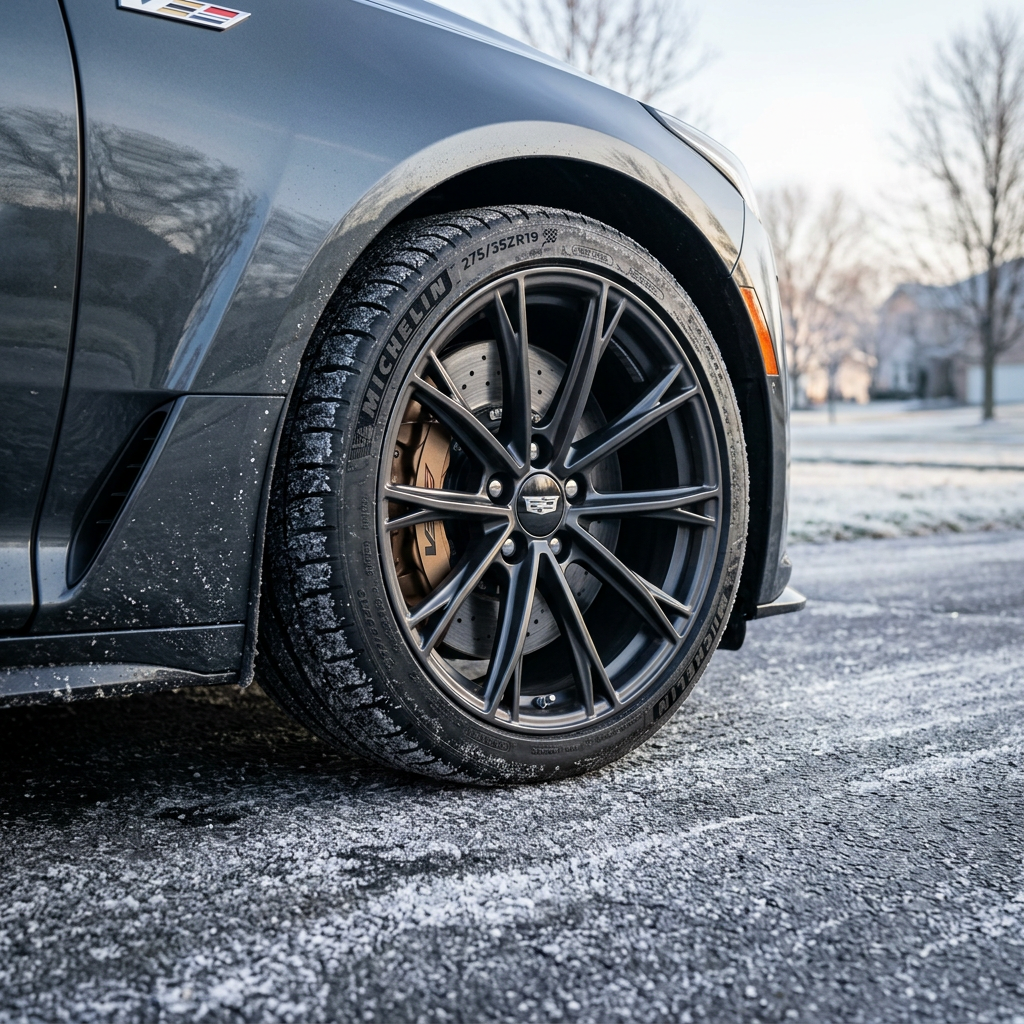
A frequent misconception among drivers is reading the pressure figure molded directly into the rubber sidewall of the tire itself. It is critical to understand that the sidewall number represents the absolute maximum pressure limit that the tire structural carcass can safely withstand at maximum load—it is never the recommended operating pressure for your Cadillac.
Inflating your tires to the sidewall maximum leads to an exceedingly harsh ride, uneven center tread wear, increased susceptibility to impact damage from winter potholes along Joliet roadways, and reduced mechanical grip on frozen surfaces. Always rely strictly on the door jamb placard specification.
At What PSI Threshold Does the Cadillac Low Tire Pressure Light Trigger?
Cadillac vehicles come equipped with a direct Tire Pressure Monitoring System (TPMS) that monitors real-time air pressure in each individual wheel via internal valve-stem sensors.
The 20-25% Trigger Alert
By federal safety standard and Cadillac engineering spec, the yellow low tire pressure warning symbol illuminates when pressure drops approximately 20% to 25% below factory door placard recommendation. For instance, if your placard calls for 35 PSI, the light will likely activate around 26 to 28 PSI.
Cold Snap vs. True Puncture
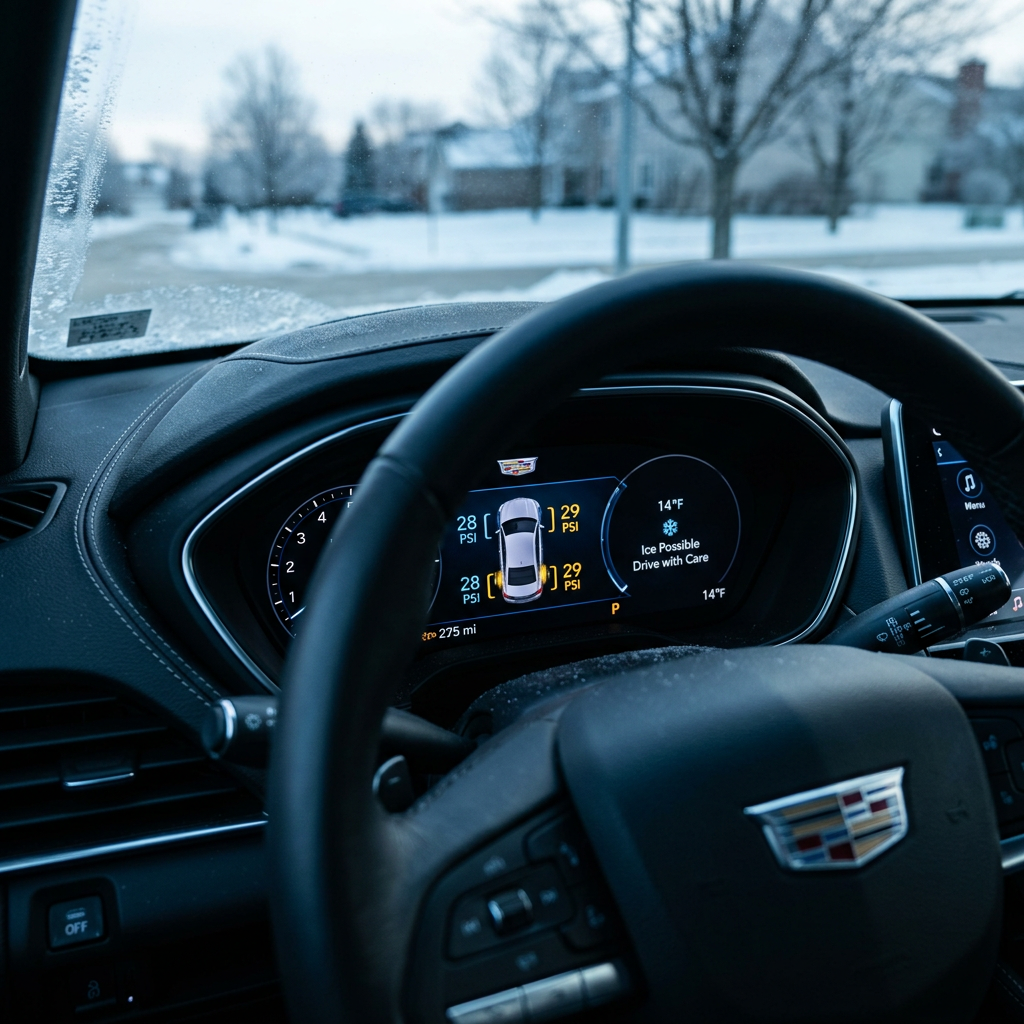
A sudden winter cold wave can easily push a slightly underinflated tire past the 25% threshold overnight. If all four tires indicate low pressure simultaneously on your Driver Information Center display, extreme cold weather is almost certainly the culprit rather than a flat tire.
Professional TPMS Service
If a single wheel repeatedly loses air while others stay stable, a nail or damaged valve stem may be present. If your TPMS light flashes for 60 seconds before remaining steady, a sensor battery or system error needs attention from certified technicians.
Will the Cadillac TPMS Light Turn Off Automatically After Driving?
Yes, on modern Cadillac models, the TPMS warning indicator light will automatically clear and extinguish after you inflate your tires back to the proper recommended PSI rating. However, the light does not turn off the exact second air fills the tire. The onboard receivers require a brief drive cycle to receive updated radio-frequency signals transmitted by the sensors inside each wheel hub.
To complete the auto-reset process, drive your vehicle continuously at speeds above 15 mph to 20 mph for approximately 2 to 5 minutes. As the wheels rotate, the internal wireless sensors wake up and transmit revised pressure measurements to the main body control module. Once verified, the dashboard amber light turns off automatically.
If you have refilled your tires to proper placard pressure and driven for more than 10 minutes without the warning light turning off, the system may require a manual relearn procedure (frequently needed after seasonal tire rotations or sensor replacement). You can also utilize the Tire Fill Alert feature found on many recent Cadillac models, which chirps the vehicle horn when proper pressure is reached while adding air.
Does Overinflating Tires Improve Traction on Icy Roads?
There is a persistent winter driving myth that intentionally changing tire pressure away from factory settings gives superior grip on ice or hard-packed snow. Automotive engineering proves this assumption dangerously incorrect.
The Danger of Overinflation
Overinflating tires causes the tread center to bulge outward, drastically shrinking the overall contact patch area. Reduced surface contact severely degrades rubber friction on slick ice and hard snow, dramatically increasing stopping distances.
The Pitfalls of Underinflation
Conversely, underinflating tires causes tread channels to pinch closed. Tread sipes and water-evacuation grooves cannot open properly to bite into snow or clear slush, leading to hydroplaning and sluggish steering feedback on icy curves.
OEM Cold Specification Safety
Maintaining exact manufacturer cold placard PSI allows the entire width of the tread pattern to press flat against the road. This provides maximum surface friction, allows active siping to bite ice, and ensures predictable stability on Naperville roads.
Do Dedicated Winter Tires Require Different PSI Settings Than Factory All-Season Tires on a Cadillac?
As a general rule, dedicated winter tires (such as Michelin X-Ice, Bridgestone Blizzak, or Continental VikingContact) installed on your Cadillac should still be inflated to the exact baseline cold PSI specified on your vehicle's driver's door jamb placard. The vehicle's weight distribution, suspension geometry, and load ratings remain unchanged regardless of rubber compound.
However, winter tires feature specialized high-flexibility rubber compounds designed specifically to stay soft in sub-freezing weather, combined with softer sidewall constructions and deep micro-siping. Because these softer sidewalls can slightly increase body roll, some performance drivers prefer adding 1 to 2 PSI over base placard recommendation to sharpen turn-in steering precision, provided it stays within safe operating parameters.
Hawk Cadillac's parts department offers genuine factory-approved winter tire and wheel package options built specifically for your CT4, CT5, XT5, or Escalade. These packages preserve speedometer accuracy, maintain proper clearance over large Brembo performance brakes, and ensure seamless communication with your vehicle's TPMS system.
Should a 2027 Cadillac with Summer Tires Be Driven in Joliet Winter Conditions?
CRITICAL SAFETY WARNING: No, a 2027 Cadillac model equipped with factory summer ultra-high-performance tires—such as those featured on Cadillac CT4-V, CT5-V, CT4-V Blackwing, or CT5-V Blackwing models—should never be driven in cold winter conditions, snow, or ice. Summer performance tire compounds are specially formulate with synthetic polymers engineered exclusively for high-grip traction in warm ambient weather.
When temperatures drop below 45°F (7°C), the specialized rubber compound in summer tires undergoes a chemical transformation called 'glass transition.' The rubber hardens dramatically, losing flexibility and becoming stiff like hockey pucks. On cold dry pavement, stopping distances increase dangerous lengths. On frozen roads, traction becomes virtually zero, making control impossible even with Cadillac's advanced All-Wheel Drive or electronic limited-slip differential.
Furthermore, flexing stiff summer rubber at sub-freezing temperatures causes irreversible compound cracking along the tread blocks, permanently destroying the tire structure and voiding tire warranty coverage. If you own a Cadillac V-Series vehicle in Will County, switching to a dedicated set of cold-weather winter tires before the first freeze is essential for protecting both your safety and your vehicle.
Step-by-Step Guide: Adjusting Cadillac Tire Pressure for Plainfield and Naperville Winters
Follow this practical four-step checklist to ensure accurate winter pressure adjustments for smooth, confident driving across Northern Illinois.
Step 1: Check Tires Cold
Always measure pressure in the morning before driving the vehicle or after it has been parked for at least 3 hours. Driving generates internal friction heat that temporarily increases reading pressure by 2 to 4 PSI.
Step 2: Use Accurate Digital Gauge
Remove valve stem caps and press a high-precision digital tire pressure gauge firmly onto the valve. Standard pop-up pencil gauges can be inaccurate by several PSI in freezing weather.
Step 3: Inflate to Placard PSI
Connect a portable air compressor or air hose, adding dry compressed air until reaching the exact driver door placard rating. If filling in a heated garage, add 2 to 3 PSI extra to offset outdoor ambient drops.
Step 4: Verify on Driver Display
Reinstall valve stem caps securely to prevent moisture from freezing inside the valve core. Start your engine and confirm individual pressure readings on your Cadillac Driver Information Center screen.
Nitrogen vs. Compressed Air for Winter Driving in Will County
Many Cadillac owners choose nitrogen tire conversion for winter driving in Will County. Regular compressed air contains roughly 78% nitrogen, 21% oxygen, and varying amounts of ambient water vapor. Water vapor inside a tire reacts dramatically to freezing temperatures, condensing into liquid and accelerating pressure drops.
Pure dry nitrogen gas eliminates internal moisture. Because dry nitrogen reacts far more consistently to temperature changes than humid air, tires inflated with high-purity nitrogen maintain stable pressure throughout sharp temperature drops, reducing the frequency of morning TPMS warnings.
In addition, nitrogen molecules are larger than oxygen molecules, slowing down natural gas migration through the porous inner rubber lining of the tire. This keeps your Cadillac running smoothly with consistent rolling resistance, improved fuel economy, and protection against wheel rim oxidation.
Hawk Cadillac provides professional nitrogen inflation services for all luxury models. Visit our service center in Joliet to convert your tires before severe winter weather arrives.
Schedule Certified Cadillac Winter Tire Service Near Plainfield at Hawk Cadillac
Preparing your Cadillac for challenging Midwest winter conditions goes beyond topping off tire air pressure. At Hawk Cadillac, our factory-trained and certified GM technicians provide comprehensive winter tire maintenance packages designed to keep your vehicle performing at its highest standard.
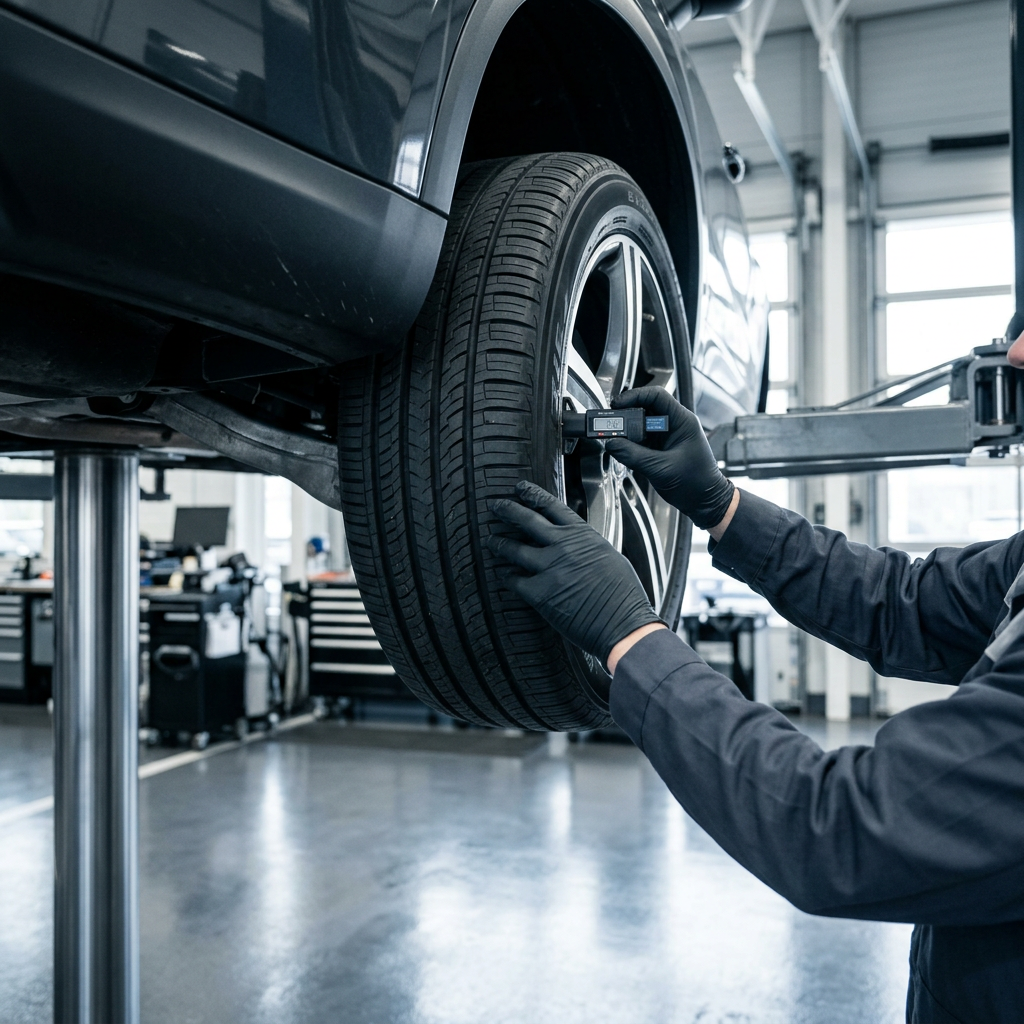
Our complete winter tire service includes precision laser wheel alignment checks, high-speed dynamic wheel balancing, complete tread depth inspection, tire rotation, and full TPMS diagnostics. Proper alignment prevents premature tire wear caused by winter potholes and uneven pavement.
Whether you need seasonal winter tires mounted, a fresh set of all-season tires, or expert chassis inspection before holiday road trips, Hawk Cadillac delivers luxury vehicle care. Schedule Your Service Today with our team or Call (815) 600-7027 to consult with a service advisor.
Prepare Your Cadillac for Winter Driving Excellence at Hawk Cadillac in Joliet
Don't let cold winter snaps compromise the luxury performance, handling, and safety of your Cadillac. Take proactive care of your vehicle today with certified maintenance from Hawk Cadillac. Conveniently located at 2001 W Jefferson St, Joliet, IL 60435, we proudly serve drivers across Joliet, Plainfield, Naperville, and surrounding Will County communities.
Need immediate assistance or turn-by-turn navigation? Get Directions to Hawk Cadillac or contact our dealership team directly at Call (815) 600-7027. You can also explore our inventory online if you are considering upgrading to a new AWD vehicle this season.