Key Takeaway: How Should One-Pedal Driving Be Adjusted When Driving a Cadillac EV in Snow?
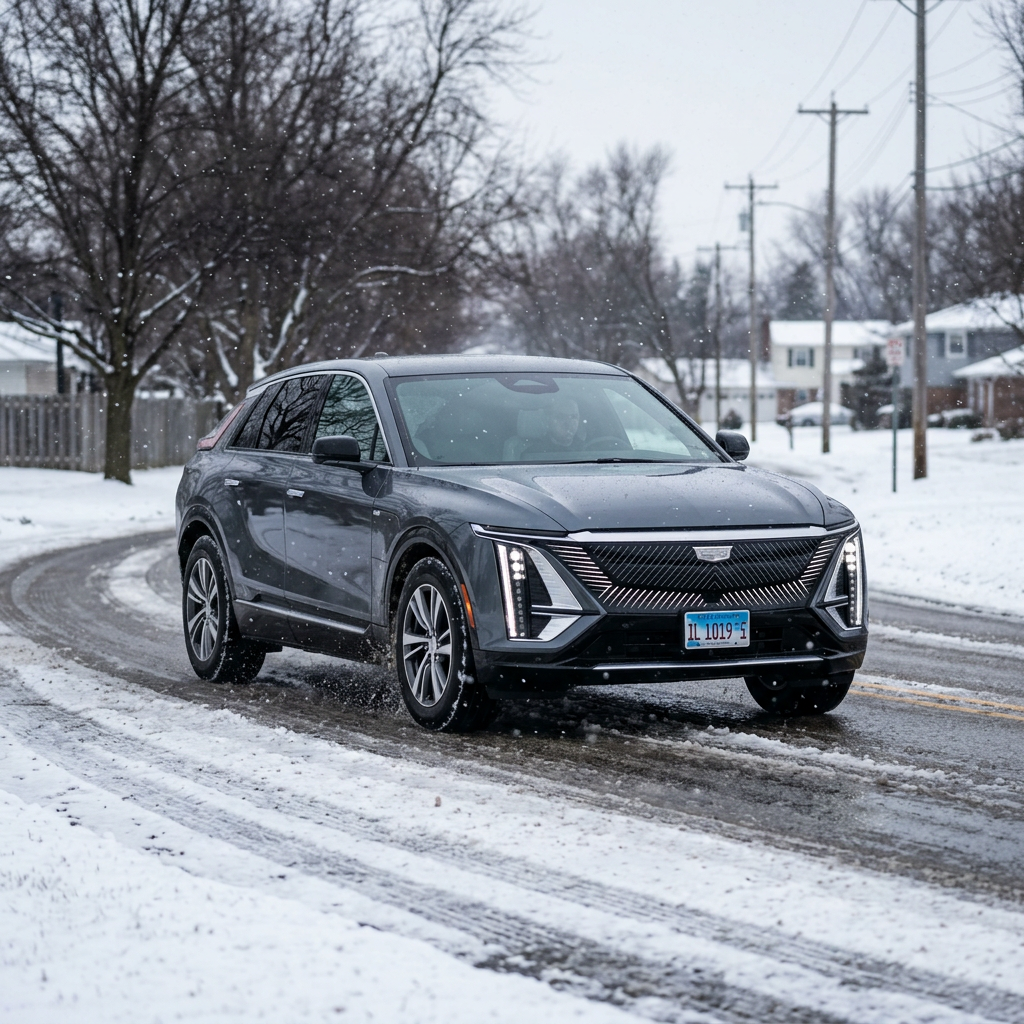
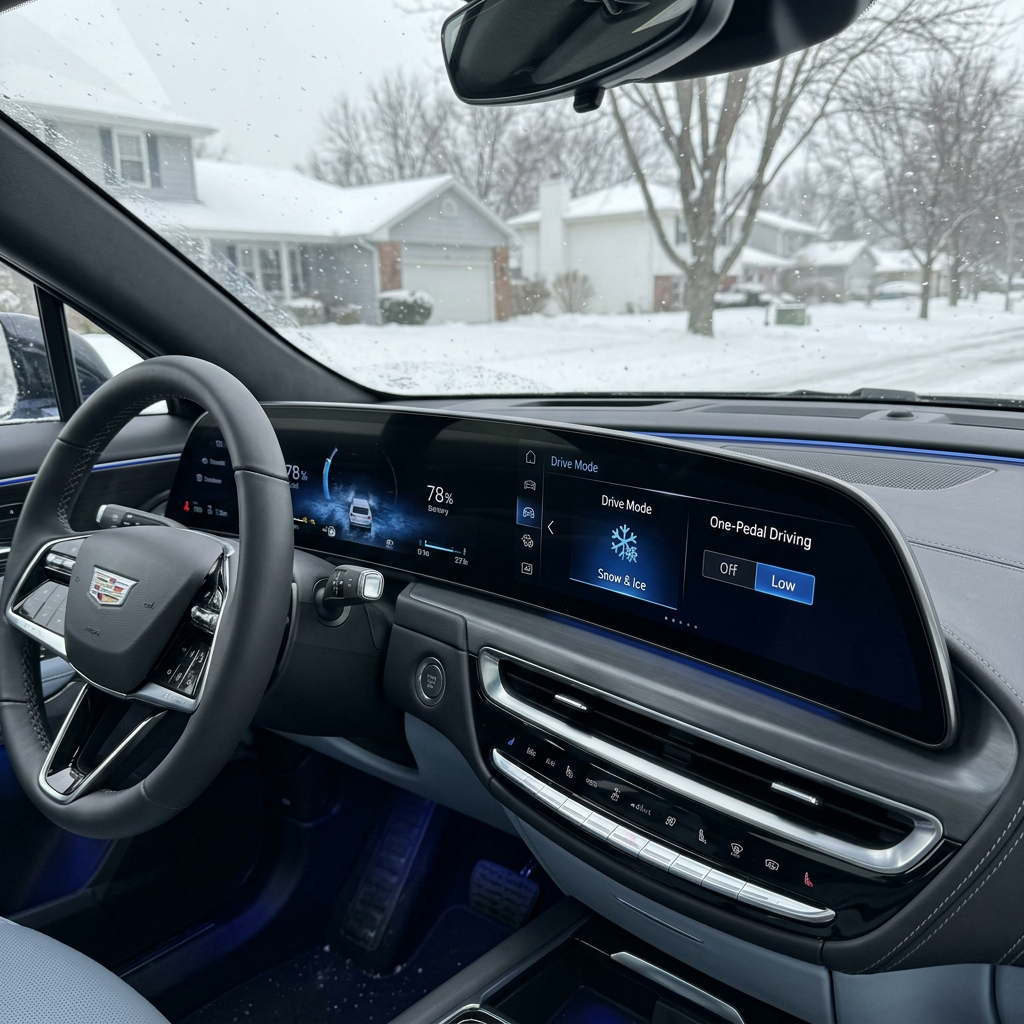
When navigating winter weather across Plainfield, Naperville, and Joliet, the most important adjustment you can make to your Cadillac EV (such as the LYRIQ or OPTIQ) is to set One-Pedal Driving to 'Off' or 'Low' during active snowfall, slushy conditions, and icy matrix scenarios. While One-Pedal Driving is a revolutionary convenience feature during dry or rain-soaked commuting along Route 59 and I-55, its aggressive regenerative deceleration torque can become a liability on low-friction frozen surfaces.
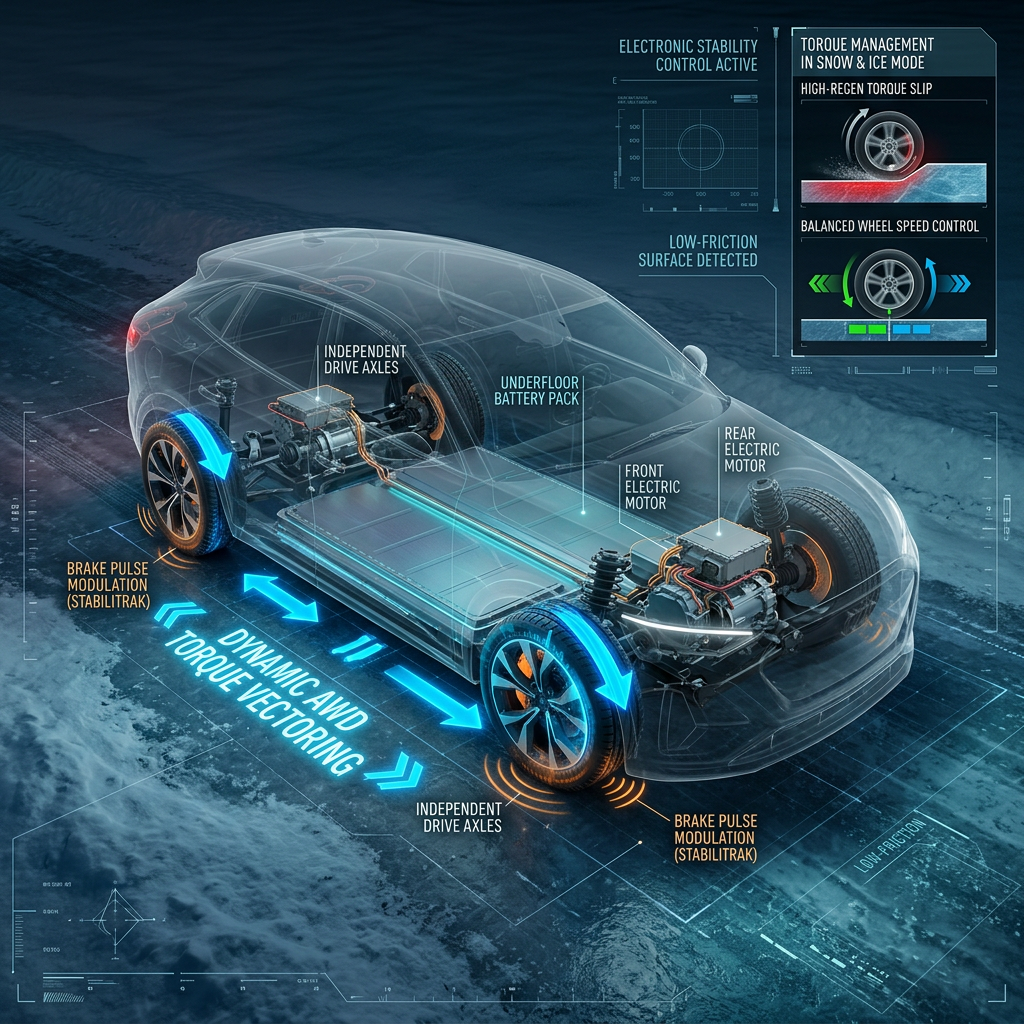
In high-regen mode, abruptly lifting off the accelerator pedal immediately sends strong negative torque to the driven electric motors. On black ice or packed snow, this sudden deceleration can break tire traction before the vehicle's electronic anti-lock systems can dynamically adapt, leading to momentary rear-wheel or front-wheel slip. By switching One-Pedal Driving to 'Off' or 'Low' and enabling your Cadillac's built-in Snow/Ice Drive Mode, you transfer primary decelerative control back to traditional hydraulic brake pedal blending. This ensures smooth, progressive wheel speed management and allows the advanced Ultium dual-motor electronic All-Wheel Drive (e-AWD) system to maximize lateral vehicle control when you need it most.
Understanding the Physics: How One-Pedal Regenerative Braking Affects Tire Grip on Ice
To understand why regenerative braking requires driver recalibration in sub-zero weather, we must examine vehicle dynamics and the friction ellipse. In a conventional gas-powered Cadillac, coasting occurs when you lift off the gas pedal, yielding mild engine drag. In an Ultium-based Cadillac EV with One-Pedal Driving set to 'High', lifting off the accelerator engages reverse electromagnetic resistance in the drive motors, converting kinetic energy back into battery storage. This creates immediate, potent deceleration forces without touching the physical brake pedal.
On clean pavement, tires possess a high coefficient of friction (around 0.8 to 0.9), easily absorbing this rapid torque transfer. However, packed snow drops that friction coefficient down to 0.2, and smooth black ice can plunge it below 0.1. When driving down Route 59 or merging onto I-55 during an Illinois winter storm, lifting your foot quickly in High One-Pedal Mode requests a braking force that vastly exceeds the available grip between your tires and the ice. Because the drag is applied strictly through the driven electric axles, the wheels can lock or micro-skid instantly before traction control throttles back motor drag.
Traditional friction braking, by contrast, operates in synergy with Cadillac's sophisticated StabiliTrak and anti-lock braking algorithms (ABS). Hydraulic braking distributes stopping force across all four wheels with precise pressure modulation occurring dozens of times per second across individual brake calipers.
By setting One-Pedal Driving to 'Off' or 'Low', you allow your vehicle to coast smoothly when modulating the throttle. This preserves momentum stability, prevents unexpected weight transfer to the front axle, and keeps all four contact patches primed for steerability. Smooth, gradual pedal modulation is the golden rule of winter commuting along Northern Illinois corridors, preventing unintended vector drift around slick highway bends.
Step-by-Step Settings: Configuring One-Pedal Driving and Regen on Demand in Cadillac Infotainment
Navigating the 33-Inch Curved OLED Display
1. Tap the Controls icon on the left edge of the central infotainment screen.
2. Select Drive & Park from the menu options.
3. Tap One-Pedal Driving.
4. Select either Low for reduced regenerative drag or Off for conventional two-pedal coasting during heavy snowstorms across Will and DuPage counties.
Utilizing Regen on Demand Steering Paddle
Cadillac EVs feature a pressure-sensitive Regen-on-Demand paddle behind the left side of the steering wheel. While this paddle allows pressure-controlled braking without touching the foot pedal, treat it with caution on slick roads. Use light, pressure-graduated finger engagement only when traveling in straight lines. Avoid pulling the paddle aggressively during cornering on icy Naperville suburban intersections.
Cadillac EV Snow/Ice Mode vs. Dual-Motor e-AWD: How Torque Vectoring Maintains Winter Stability
Beyond adjusting One-Pedal parameters, engaging Cadillac's dedicated Snow/Ice Drive Mode radically transforms how the vehicle interprets driver inputs. In standard Tour or Sport modes, electric torque is delivered instantly upon accelerator tip-in. Snow/Ice mode deliberately softens throttle response curves, requiring deeper, more intentional pedal displacement to request horsepower. This prevents accidental wheelspin when starting from a dead stop at snowbound traffic lights in Joliet.
Furthermore, dual-motor Ultium e-AWD models do not rely on mechanical driveshafts or slip-and-grip center differentials. Instead, dedicated front and rear electric motors are independently controlled via microsecond software loops. If the rear axle detects loss of grip on frozen slush along I-55, torque is instantaneously redistributed to the front motor. This ultra-fast torque vectoring keeps the vehicle tracking true without the mechanical lag of traditional gasoline AWD systems.
Are Winter Tires Necessary on an AWD Cadillac Vehicle Driving in Naperville and Plainfield?
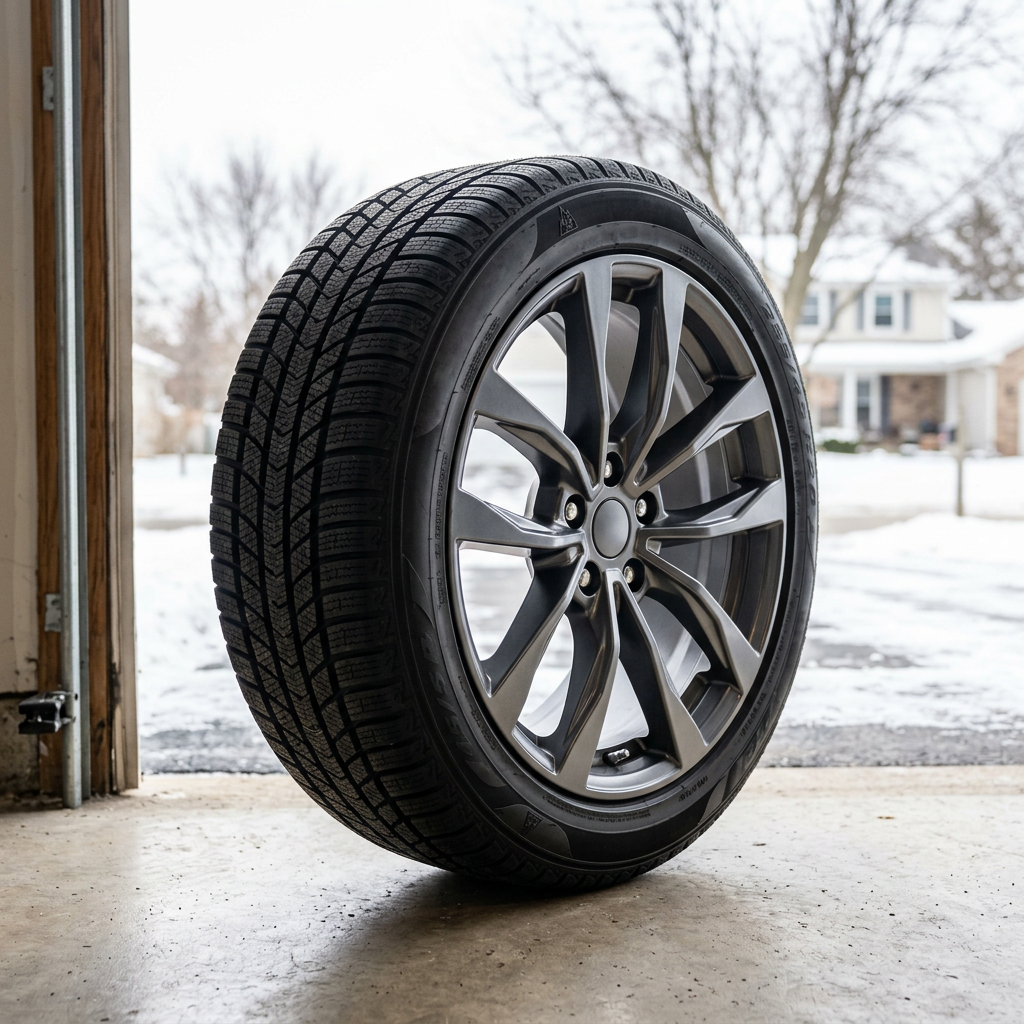
A widespread misconception among luxury SUV drivers in Naperville and Plainfield is that All-Wheel Drive replaces the need for winter tires. While dual-motor e-AWD excels at sending motive force to whichever wheels have grip, AWD only assists with acceleration and forward traction. It provides zero additional assistance when you step on the brake pedal or attempt to steer around a sudden obstacle on an icy bridge deck.
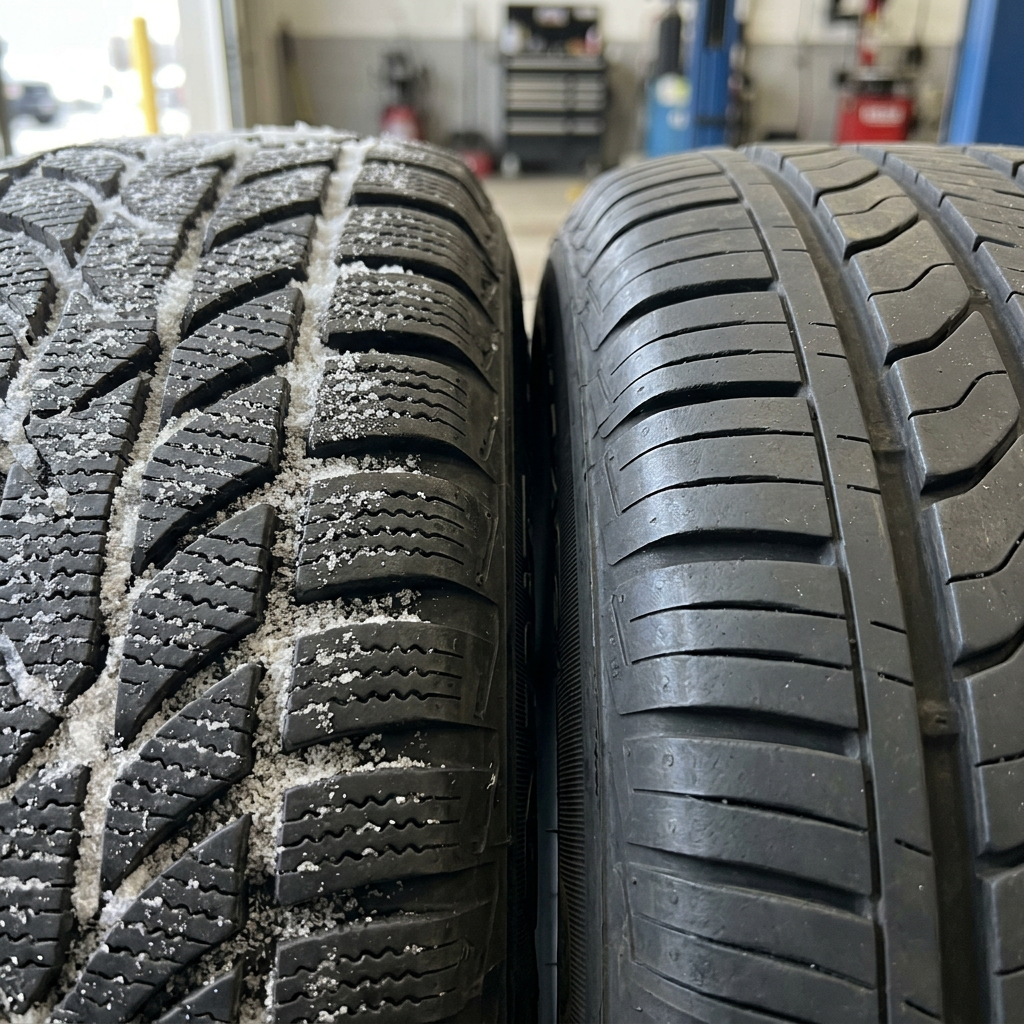
Factory all-season tires are engineered with rubber compounds designed to withstand summer heat, but when ambient temperatures drop below 45°F, that rubber hardens into a rigid plastic-like state, losing elastic grip. Dedicated winter tires utilize flexible silica compounds that remain soft in sub-zero freezes, paired with thousands of microscopic tread sipes that bite directly into packed snow and surface moisture.
How Much Shorter Are Stopping Distances with Winter Tires Compared to All-Seasons on Ice?
Empirical Braking Tests (at 30 MPH)
Independent automotive testing demonstrates that on packed snow and ice, dedicated winter rubber reduces emergency stopping distances by 30% to 40% compared to brand-new premium all-season tires. From a moderate speed of 30 mph on hardpack ice, a vehicle on all-seasons can take up to 150 feet or more to come to a complete standstill.
|
Tire Type
|
Braking Distance (30-0 MPH Ice)
|
Lateral Grip Margin
|
|
Factory All-Season
|
154 Feet
|
Baseline
|
|
Certified Winter Rubber
|
101 Feet
|
+38% Dynamic Traction
|
Managing Heavy EV Curb Weights
Electric vehicles carry structural Ultium battery architecture within their floorboards, making models like the LYRIQ noticeably heavier than equivalent gas compact luxury crossovers. While this low center of gravity enhances stability, momentum physics dictates that heavier mass takes more force to halt. Shortening your braking distance by 50+ feet with winter tires is often the difference between a safe ABS stop and an expensive fender bender.
Is Buying a Dedicated Winter Wheel Set More Cost-Effective Than Mounting Tires on Factory Rims Twice Per Year?
Financial Breakdown Over 4 Years
Dismounting, remounting, balancing, and recalibrating TPMS sensors on large 20-inch or 22-inch factory luxury rims twice a year costs approximately $150 to $250 per seasonal swap ($300–$500 annually). Over a standard 4-year ownership cycle, you will spend $1,200 to $2,000 purely on wheel shop labor, while continuously risking bead damage or cosmetic rim scratching from tire irons.
By contrast, purchasing a dedicated winter wheel package (slightly downsized 19-inch or 20-inch factory-spec rims with pre-installed TPMS sensors) carries a higher upfront cost but can reduce seasonal changeover labor to a fast bolt-on swap. Furthermore, downsizing rim diameter increases tire sidewall thickness, providing critical cushion against hidden Illinois winter potholes.
Do Auto Insurance Providers Offer Discounts for Installing Winter Tires in Illinois?
While Illinois law does not currently mandate winter tire installation, a growing number of major automotive insurance carriers may offer potential premium savings for policyholders who equip certified severe-snow-service tires (marked with the 3-Peak Mountain Snowflake logo) between November and April.
Beyond direct policy premium reductions, the potential financial savings lie in collision avoidance. Preventing a single winter loss deductible ($500–$1,000) and avoiding secondary premium surcharges after a winter accident far outweighs the investment in winter safety gear. Contact our team at Call (815) 600-7027 to discuss factory-approved wheel packages.
Winter Performance: Cadillac AWD and Winter Tires Working in Tandem for Ultimate Traction
Advanced Electronic Chassis Controls
When Cadillac's StabiliTrak control unit monitors chassis roll, yaw rate, and individual wheel speeds, it relies entirely on physical tire grip to execute software corrections. High-tech stability algorithms cannot overcome mechanical slipping if the tires lack traction.
Mechanical Grip Meets Smart Electronics
Pairing winter tires with dual-motor e-AWD gives electronic stability systems optimal mechanical traction to work with. When traveling through deep snowdrifts and sub-zero slush across DuPage and Will County routes, this synergy delivers unshakable highway composure.
How Does Cadillac Twin-Clutch AWD Perform on Snow and Ice Across Luxury Gas and Hybrid Models?
For multi-vehicle Cadillac households in Plainfield operating both EVs and internal combustion models like the XT5, XT6, or Escalade, understanding mechanical AWD dynamics is equally essential. Cadillac's mechanical Twin-Clutch AWD system actively pre-loads rear differential clutches, transferring up to 100% of available rear axle torque to either the left or right rear wheel if one side hits ice.
While Ultium EV dual-motor systems achieve similar torque distribution via instant software signals to separate electric motors, gas-powered twin-clutch systems utilize mechanical friction plates to physically lock power distribution. Both architectures deliver exceptional winter stability when paired with intelligent throttle modulation and cold-weather driving habits.
Preconditioning, Battery Thermal Management, and Range Optimization During Cold Plainfield Winters
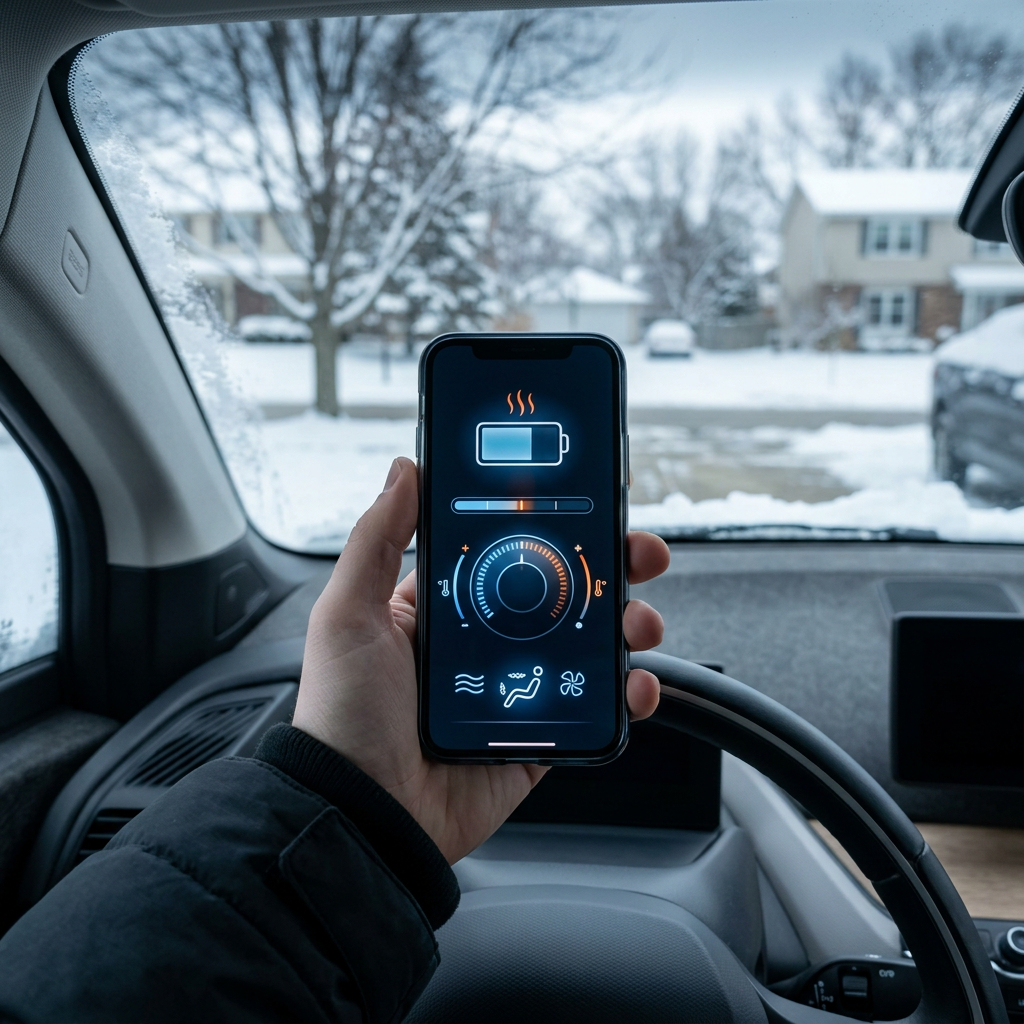
Sub-zero temperatures temporarily slow down electrochemical reactions inside lithium-ion battery cells. To maintain maximum range and rapid charging capability during Northern Illinois winters, utilize Cadillac's departure scheduling feature via the myCadillac mobile app or infotainment console. Scheduling your departure time while plugged into a home 240V Level 2 charger draws grid power to pre-warm battery chemistry and cabin temperatures.
Additionally, leverage targeted heated seats and heated steering wheel functions rather than relying solely on high cabin HVAC blower heat. Conductive body heat consumes significantly fewer battery kilowatt-hours, preserving maximum driving range for highway trips down I-55 toward Chicago or Bloomington.
Essential Winter Maintenance Checklist for Cadillac Ultium EVs and Luxury SUVs at Hawk Cadillac
Fluids & Wiper Blades
• Fill washer reservoir with de-icing washer fluid rated down to -20°F.
• Inspect front beam wiper blades for rubber tearing or ice buildup.
• Ensure thermal coolant loops are inspected by factory-certified technicians.
Tires & Pressure Monitoring
• Check cold tire pressures weekly—PSI drops 1 pound for every 10°F temperature drop.
• Ensure tread depth measures at least 5/32 inches for snow traction.
• Check TPMS sensor battery health before extreme cold sets in.
Chassis & Brakes
• Wash undercarriage regularly to rinse road salt off suspension links and high-voltage wiring.
• Inspect hydraulic brake rotors and friction pads for winter corrosion.
Prepare Your Cadillac EV for Winter Driving Success at Hawk Cadillac in Joliet, IL
Navigating Illinois winter roads safely is a blend of smart technology settings and mechanical grip. By turning One-Pedal Driving to 'Off' or 'Low', selecting Snow/Ice Mode, and mounting factory-approved winter tires, your Cadillac EV becomes a capable cold-weather performer.
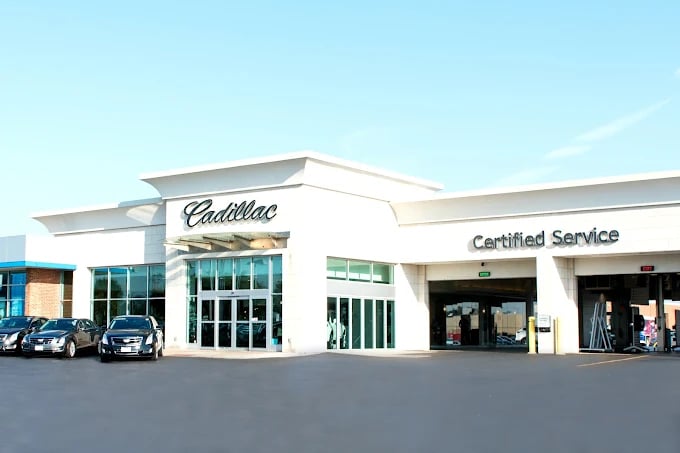
Visit our team at Hawk Cadillac located at 2001 W Jefferson St, Joliet, IL 60435 for expert EV maintenance, winter wheel package ordering, or to explore our latest electric vehicle lineup. You can also Get Directions to Hawk Cadillac directly from your smartphone.