What Is the Recommended Winter Tire Pressure for Cadillac Vehicles in Extreme Cold?
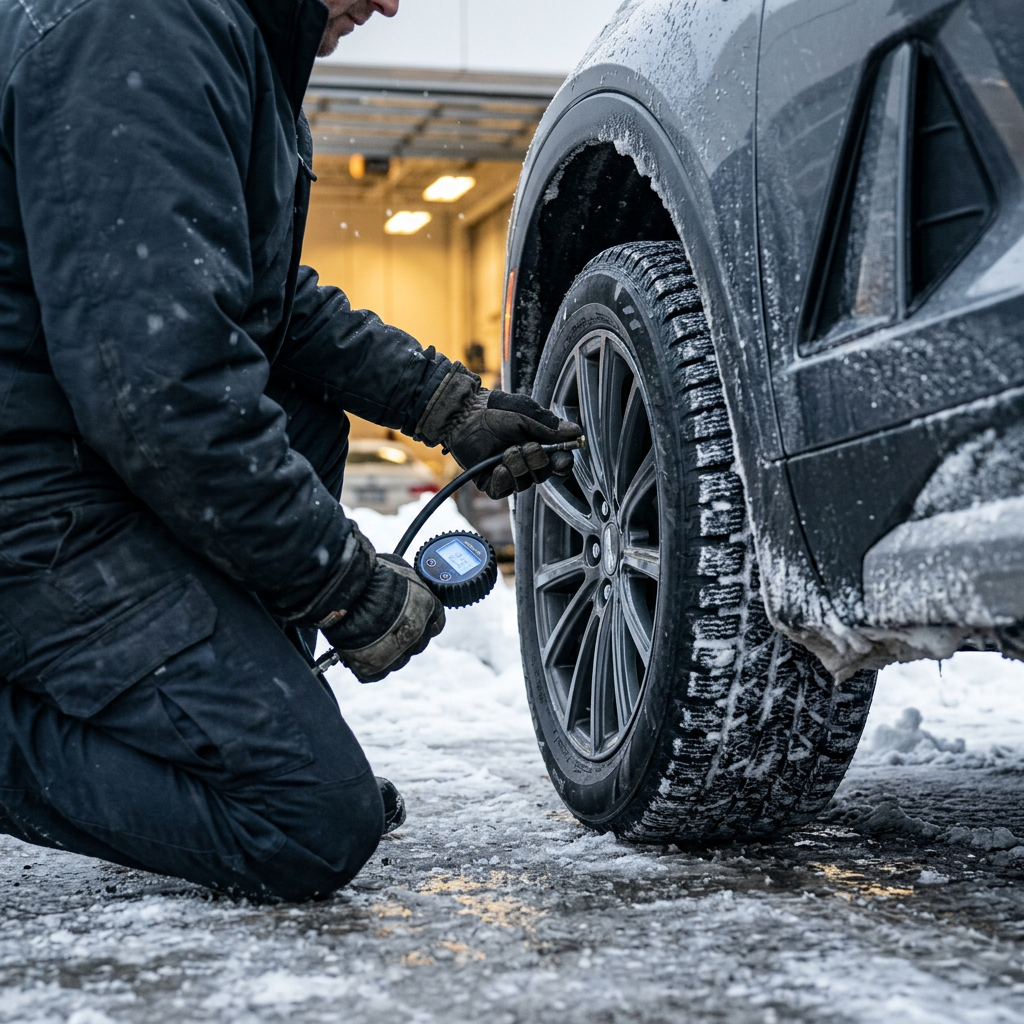
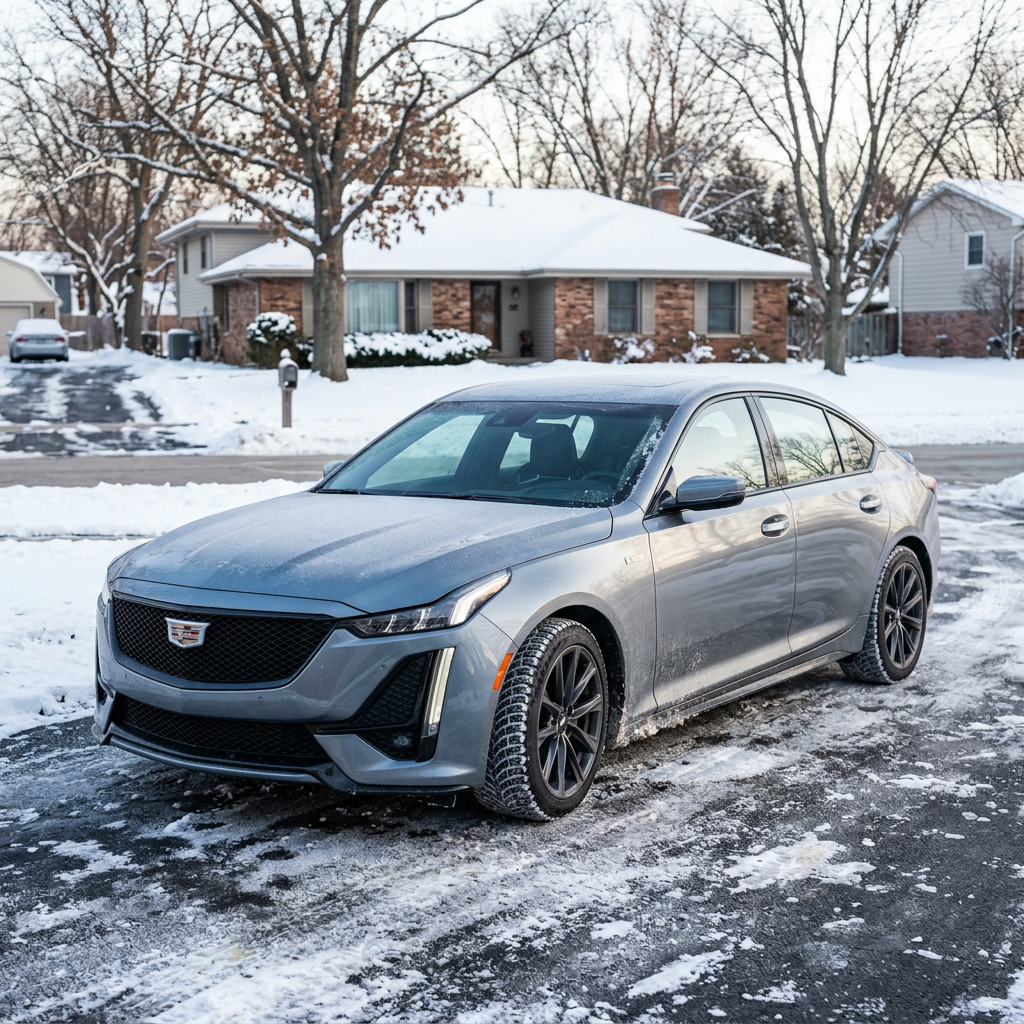
When sub-zero Arctic blasts sweep across Northern Illinois, maintaining correct tire pressure in your Cadillac is one of the single most critical safety and maintenance priorities you face. The direct answer for every Cadillac owner is straightforward: Cadillac explicitly recommends maintaining the factory cold tire inflation pressure listed on the driver's side door jamb placard (typically between 32 PSI and 36 PSI depending on your specific model, trim, and wheel setup). You should never deflate your tires in winter seeking extra traction, nor should you inflate them past the placard rating to compensate for ambient drops.
The underlying science behind cold-weather pressure loss is governed by fundamental physics: for every 10°F drop in ambient outdoor temperature, compressed air inside your tires contracts, causing overall inflation pressure to drop by approximately 1 to 2 PSI. When Joliet experiences extreme winter conditions—where temperatures can plummet from 35°F at sunset down to -5°F by dawn—your vehicle's tire pressure can easily drop by 4 to 8 PSI overnight without a single nail or puncture.
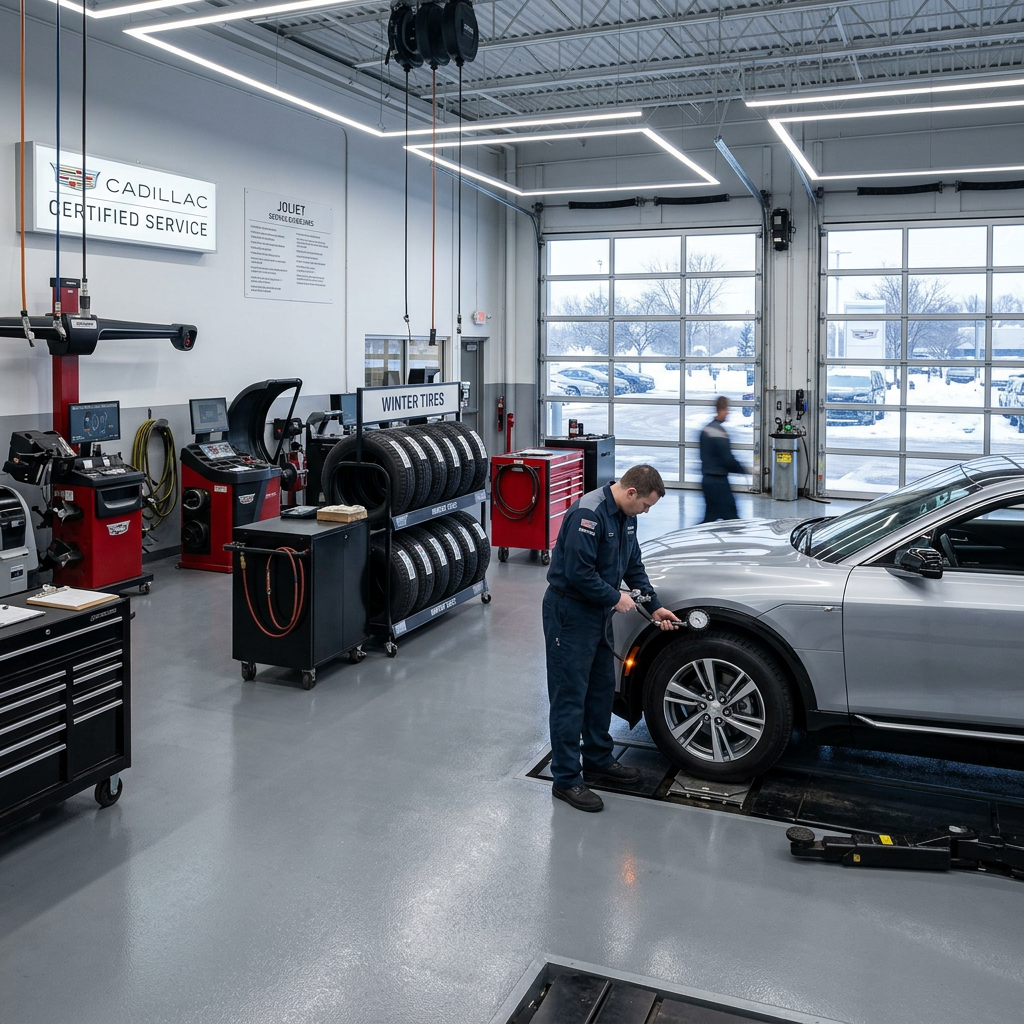
To prevent dangerous underinflation, reduced fuel economy, sluggish handling response, and permanent casing damage, tire pressure must always be measured when the tires are fully 'cold.' A tire is considered cold when the vehicle has been parked for at least three hours or driven less than one mile at moderate speeds. Checking your tires first thing in the morning in outdoor winter air gives you the true operational pressure. Below is a helpful reference table outlining factory placard recommendations across popular Cadillac vehicle lines.
|
Cadillac Model Line
|
Standard Factory Wheel Size
|
Recommended Placard Cold PSI
|
Severe Cold Warning Threshold
|
|
Cadillac CT4 / CT4-V
|
18-inch - 19-inch
|
32 - 35 PSI
|
Below 28 PSI
|
|
Cadillac CT5 / CT5-V
|
19-inch - 20-inch
|
33 - 36 PSI
|
Below 29 PSI
|
|
Cadillac XT4 Luxury / Sport
|
18-inch - 20-inch
|
32 - 35 PSI
|
Below 28 PSI
|
|
Cadillac XT5 Crossover
|
18-inch - 20-inch
|
33 - 35 PSI
|
Below 29 PSI
|
|
Cadillac XT6 3-Row SUV
|
20-inch - 21-inch
|
35 - 37 PSI
|
Below 30 PSI
|
|
Cadillac Escalade / Escalade ESV
|
22-inch
|
36 - 38 PSI
|
Below 31 PSI
|
|
Cadillac LYRIQ EV
|
20-inch - 22-inch (XL Rated)
|
38 - 41 PSI
|
Below 33 PSI
|
How Extreme Cold Drops Cadillac Tire Pressure in Plainfield and Northern Illinois
The Atmospheric Physics of Midwest Severe Cold Snaps Understanding why tire pressure drops so dramatically during Northern Illinois winters requires looking at ideal gas dynamics. According to Gay-Lussac's Law, the pressure of a given mass of gas is directly proportional to its absolute temperature when volume remains constant. In plain English: when air inside your Cadillac's tire cools down, its gas molecules lose thermal kinetic energy, slow down, and exert far less force against the inner tire casing.
During typical Will County winters, temperatures drop rapidly as polar vortex systems sweep south from Canada. A Cadillac parked outside in Plainfield or Shorewood when the mercury drops from 32°F to -8°F experiences a temperature shift of 40 degrees. This drop causes a natural pressure reduction of 4 to 6 PSI inside all four tires simultaneously, frequently triggering the low tire pressure warning symbol on your driver instrument cluster.
The Heated Garage Discrepancy Trap One of the most frequent sources of confusion for Cadillac luxury owners in Plainfield and Naperville involves garage parking. If you park your vehicle inside an attached heated garage maintained at a comfortable 62°F, adjust your tire pressure to 35 PSI, and then drive out into -5°F arctic air, physics takes over within twenty minutes of highway driving.
As the air inside the tires cools to equalize with the outdoor ambient air, your 35 PSI setting will drop down to approximately 28 or 29 PSI. Driven at highway speeds on I-55 underinflated, the tire experiences excessive sidewall flexing, accelerated tread wear, reduced steering sharpness, and compromised braking distance on ice. To prevent this, owners parking in heated structures should adjust inflation pressure 2 to 4 PSI above placard baseline inside the warm garage so that operational outdoor pressure matches factory target.
What Cold-Weather Tire-Pressure Checks Should 2027 Cadillac Owners Follow?
Maintaining precise inflation pressure in modern 2027 Cadillac models requires a combination of high-tech digital monitoring and reliable manual verification. Cold weather affects electronic sensors and mechanical valve assemblies differently, so establishing a methodical winter maintenance routine guarantees optimal performance and tire longevity.
1. Reading Digital TPMS vs Manual Gauges
Your 2027 Cadillac features an advanced digital Tire Pressure Monitoring System (TPMS) accessible directly through the high-resolution driver display screen. While TPMS provides continuous real-time telemetry while driving, always verify cold static pressure using a high-quality calibrated digital pencil gauge or digital pressure reader. Ambient freezing temperatures can cause minor sensor latency until tires travel a short distance, making manual verification the gold standard before heading out on long winter journeys.
2. Valve Stem Inspection & Moisture Care
Sub-zero temperatures convert road slush and atmospheric moisture into stubborn ice buildup around valve stems. Always inspect valve stems before attaching air hoses or pressure gauges. Pushing a gauge onto an icy valve stem can force microscopic ice crystals past the Schrader valve pin, causing a slow continuous leak. Keep high-grade rubber-sealed or metallic valve caps firmly screwed onto every wheel stem to protect internal core seals from freezing road brine.
3. Weekly Routine & Sub-Zero Habits
Establish a rigid weekly tire check schedule throughout December, January, February, and March. Check pressure every Sunday morning before starting the vehicle or pulling out of the driveway. Never bleed air from warm tires after a long highway trip—tires naturally build 3 to 5 PSI of internal pressure through normal friction while driving. Deflating warm tires down to placard pressure will result in dangerous severe underinflation once the rubber cools back down.
Are Factory Tires on My 2027 Cadillac Suitable for Joliet Winters, and Which V-Series Trims Require Swaps?
Standard production trims of the 2027 Cadillac CT4, CT5, XT4, XT5, XT6, and Escalade come equipped from the assembly plant with high-grade premium All-Season tires. For standard drivers in Joliet and surrounding Will County handling light snow, slush, and typical cold rainfall, these all-season compounds offer adequate multi-temperature versatility when tread depth is above 5/32".
CRITICAL V-SERIES WARNING: However, if you drive a Cadillac high-performance variant—such as the CT4-V, CT5-V, CT4-V Blackwing, or CT5-V Blackwing—your vehicle comes factory-fitted with ultra-high-performance summer compounds (such as Michelin Pilot Sport 4S or custom OEM rubber). These summer compounds feature specialized resins that turn rigid and glass-like below 45°F (7°C). Driving summer tires in freeze conditions causes tread compound cracking, catastrophic loss of lateral grip, and extreme braking failure on cold asphalt.
V-Series and Blackwing models MANDATE a seasonal swap to dedicated winter rubber or winter performance tires before Northern Illinois temperatures consistently drop below 45°F in late autumn.
Are All-Weather Tires with 3-Peak Mountain Snowflake (3PMSF) Sufficient for Naperville Winters?
Many Naperville and Joliet commuters ask whether upgrading to modern 'All-Weather' tires stamped with the 3-Peak Mountain Snowflake (3PMSF) symbol eliminates the need for full dedicated winter tire setups. Understanding the nuanced engineering differences between All-Season, All-Weather, and Dedicated Winter tires helps you select the exact tire safety profile required for your daily highway commute.
The 3PMSF rating indicates that a tire meets or exceeds standardized laboratory acceleration testing on packed snow, delivering at least 110% of the longitudinal snow traction offered by standard reference tires. All-Weather tires combine year-round usability with advanced silica compounds that remain flexible at freezing temperatures, making them a fantastic 'one-tire solution' for suburban drivers navigating plowed streets, wet slush, and moderate snow on I-88 or Route 59.
However, for severe ice storms, unplowed deep drifts, and sub-zero freeze snaps below 10°F, true dedicated winter tires (such as Bridgestone Blizzak WS90 or Michelin X-Ice Snow) remain unmatched. Dedicated winter tires feature thousands of microscopic sipes and specialized hydrophobic rubber formulations that draw surface water film away from black ice, delivering up to 30% shorter stopping distances than 3PMSF All-Weather tires on solid ice.
|
Tire Classification
|
Flexibility Below 32°F
|
Deep Snow & Slush
|
Packed Ice Braking
|
Year-Round Usage
|
|
Standard All-Season
|
Fair (Hardens below 45°F)
|
Moderate Traction
|
Longest Stopping Distance
|
Yes (12 Months)
|
|
3PMSF All-Weather
|
Good (Flexible down to 14°F)
|
Strong Traction
|
Moderate Stopping Distance
|
Yes (12 Months)
|
|
Dedicated Winter / Snow
|
Superior (Flexible down to -30°F)
|
Maximum Grip
|
Shortest Stopping Distance
|
No (Swap at 45°F Spring)
|
Why Tire Load Index Is Critical When Selecting Winter Tires for a Cadillac EV
The Mass and Instant Torque Challenge of EV Engineering Cadillac’s electrification lineup—led by the groundbreaking LYRIQ and the commanding Escalade IQ—presents unique engineering parameters for winter tire selection. Electric luxury vehicles carry substantial curb weight due to heavy structural Ultium battery packs housed low in the chassis. Furthermore, dual-motor electric drivetrains generate instantaneous full wheel torque from zero RPM.
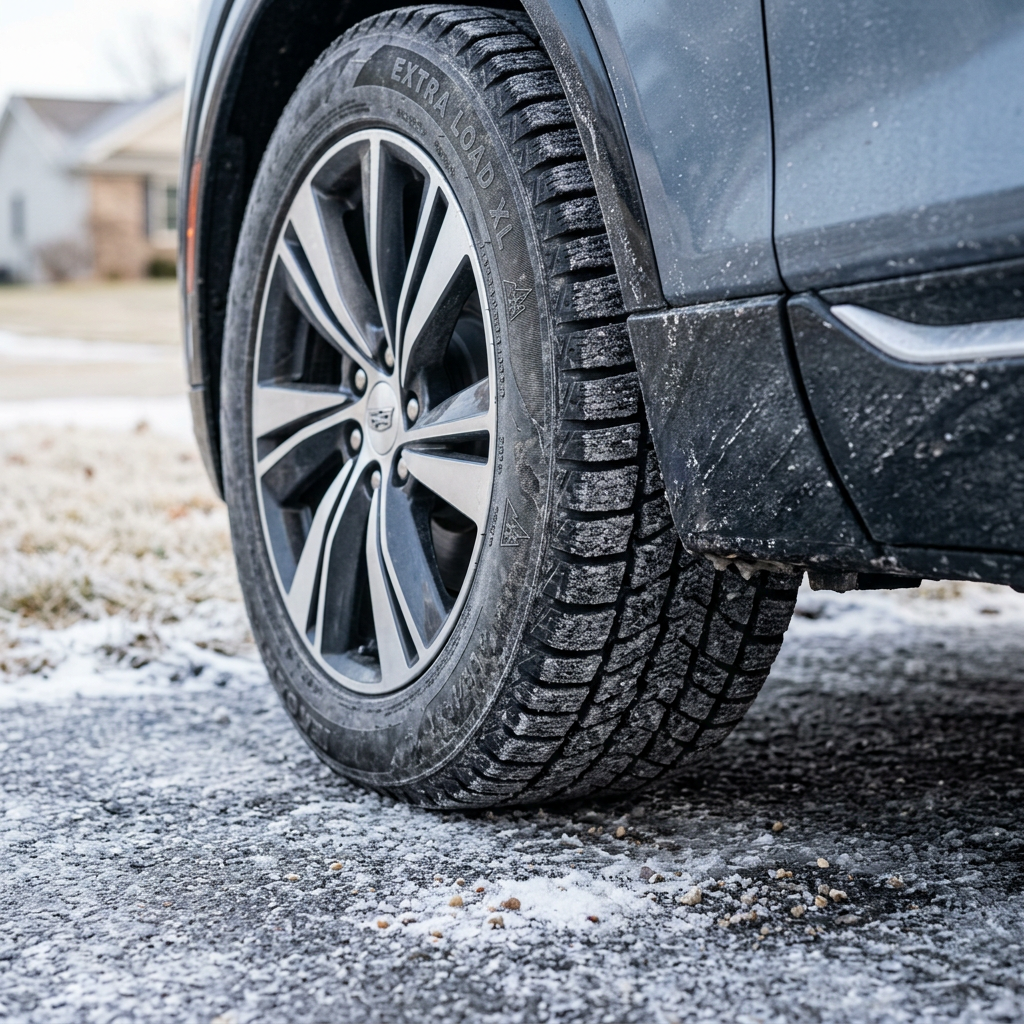
When mounting winter tires on a Cadillac EV, standard passenger tire load ratings are completely inadequate. EV winter tires must carry an XL (Extra Load) or HL (High Load) rating stamp on the sidewall, accompanied by a heavy-duty load index (typically 108 or higher depending on wheel diameter).
Risks of Incorrect EV Load Ratings in Winter Installing standard load (SL) tires on a heavy Cadillac EV places immense physical stress on tire internal belts and sidewall casings during hard cornering and emergency braking on freezing asphalt. Overstressed sidewalls cause severe tread squirm, unpredictable electronic stability control intervention, accelerated tread wear, reduced battery range efficiency, and heightened risk of structural sidewall blowout when striking winter potholes.
Should Stored Winter Tires Mounted on Wheels Be Laid Flat or Hung Vertically?
Storing off-season tires correctly preserves rubber compounds, structural integrity, and balances overall tread wear across multiple seasons. The ideal storage orientation depends entirely on whether your winter tires are mounted on secondary rims or kept as loose rubber assemblies.
Mounted on Wheels (On Rims)
If your winter tires are mounted on custom or OEM alloy wheels, inflate them to standard operational pressure (35 PSI). Store mounted tire packages by laying them flat on clean wooden pallets or stacking them vertically column-style. Alternatively, you can hang mounted wheel assemblies from heavy-duty wall hooks supported through the rim center bore. Never store mounted wheels standing upright on the floor without rim support, as heavy rim weight causes severe tread flat-spotting.
Unmounted Tires (Rubber Only)
If your winter tires are dismounted rubber casings without wheels, store them standing upright side-by-side on specialized tire rack shelves. Rotate unmounted tires slightly once a month to redistribute casing weight. Never hang unmounted rubber tires from hooks or ropes, as concentrated hook weight will permanently deform and distort the tire bead seal, rendering it unable to seal properly against the wheel rim during reinstallation.
Environmental Protection & Bags
Thoroughly wash stored tires with mild car soap to remove corrosive winter road salts and chemical de-icers before storage. Dry completely and place each tire inside an airtight heavy-duty opaque plastic tire tote bag. Store in a cool, dry, dark basement or climate-controlled garage away from direct sunlight, UV rays, moisture, and electric motors or furnaces that generate rubber-degrading ozone gas.
What Is the Typical Fee for Mounting, Balancing, and Installing Winter Tires on a Cadillac?
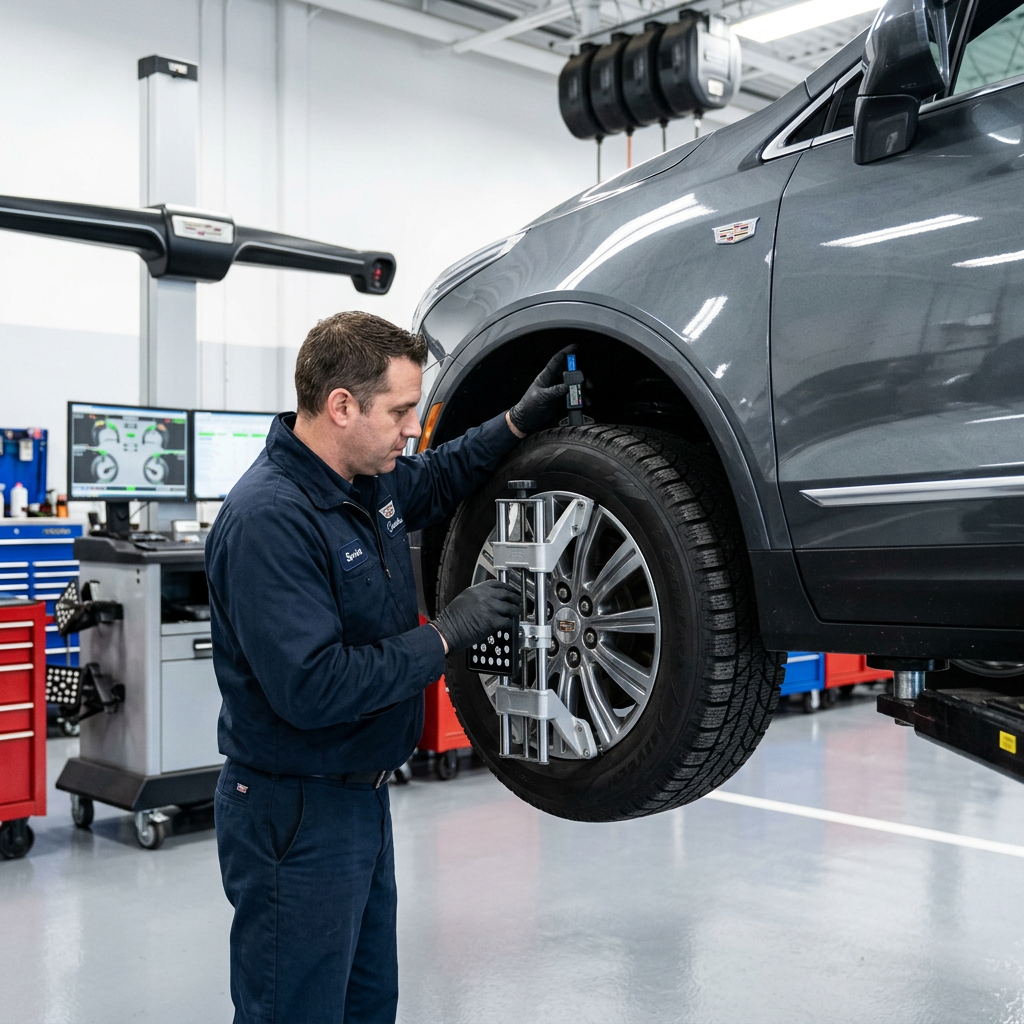
Professional winter tire installation at an authorized luxury dealership ensures exact wheel torque specifications, damage-free wheel mounting for delicate alloy finishes, and precise electronic TPMS recalibration. In the Will County and Greater Joliet area, pricing varies based on whether you are remounting rubber onto existing wheels or swapping complete pre-assembled seasonal wheel packages.
|
Winter Tire Service Procedure
|
Typical Regional Cost Range
|
Service Details Included
|
|
Dismount & Remount Loose Rubber (4 Tires)
|
$120 - $180
|
Dismount summer tires, mount winter rubber, replace valve cores, dynamic high-speed balance
|
|
Pre-Mounted Wheel Package Swap (4 Wheels)
|
$60 - $90
|
Remove summer wheel set, bolt on pre-mounted winter wheel package, adjust tire pressures
|
|
Road-Force Diagnostic Balancing Upgrade
|
$40 - $70 (Add-on)
|
Precision roller load balancing to eliminate high-speed vibration on Cadillac luxury chassis
|
|
TPMS Sensor Re-learning & Program Sync
|
Included / $25
|
Recalibrate interior TPMS computer to accurately map sensor IDs to correct wheel positions
|
|
Old Tire Disposal & Environmental Recycling
|
$4 - $8 per tire
|
State-mandated eco-friendly scrap tire recycling and disposal fee
|
Investing in high-speed Road Force balancing during installation ensures smooth vibration-free luxury travel down open stretches of I-55 and I-80, protecting your vehicle's adaptive suspension components and wheel bearings from uneven wear.
Essential Winter Tire Care for Cadillac Owners
Monitoring Tread Depth Limits for Safety While standard summer legal tread limit is 2/32", winter tires require far greater tread depth to bite through slush and clear deep packed snow. The recognized safety threshold for winter driving is 4/32" (3.2 mm) minimum tread depth. Once winter tread wear indicators level out at 4/32", winter traction drops off exponentially, making replacement necessary.
Potholes, Wheel Alignment, and Rotation Schedules Winter freeze-thaw cycles create severe potholes across Will County roads. Hitting a concealed pothole under snow can easily throw off your steering alignment or bend rim flanges. If your vehicle pulls to one side or exhibits steering wheel center offset, schedule an immediate wheel alignment check. Furthermore, perform tire rotations every 5,000 to 7,500 miles to promote even tread wear across all four drive wheels.
When Is the Ideal Time in Northern Illinois to Swap Winter Tires Back to Summer or All-Season Tires?
Timing your seasonal spring tire transition is just as important as putting winter tires on in late autumn. Transitioning too early leaves you vulnerable to unexpected April snow squalls, while transitioning too late accelerates winter tire wear on warm asphalt.
The 45°F (7°C) Benchmark
The universal rule of thumb for spring tire changeover is when daily ambient temperatures remain consistently above 45°F (7°C) for seven consecutive days. Temperature stability matters far more than fixed calendar dates, as Midwest spring weather can fluctuate wildly from day to day.
Joliet Regional Timing
In Northern Illinois and Will County, the ideal spring tire swap window typically arrives in late March or early-to-mid April. Resist the urge to switch after the first warm 60° day in early March, as late-season freezing rain and overnight snow flurries routinely strike the Chicagoland region.
Preventing Soft Rubber Wear
Once daytime temperatures regularly exceed 50°F, soft winter rubber compounds soften excessively against warm asphalt. Running winter tires in warm spring weather increases rolling resistance, reduces fuel efficiency, causes squishy steering response, and prematurely wears away expensive tread depth.
Certified Winter Tire Service and Tire Sales at Hawk Cadillac in Joliet
At Hawk Cadillac, our factory-certified service team understands the exact engineering standards required to maintain your vehicle's safety, luxury ride quality, and winter capability. Located conveniently at 2001 W Jefferson St in Joliet, IL, we serve luxury drivers across Joliet, Plainfield, Naperville, and Shorewood.
We offer complete OEM factory-approved winter wheel and tire packages tailored specifically for CT4, CT5, XT4, XT5, XT6, Escalade, and LYRIQ models. Benefit from our GM Price Match Guarantee on top tire brands including Michelin, Bridgestone, Continental, and Pirelli, along with genuine OEM TPMS sensors and specialized precision installation.
Schedule Your Cadillac Winter Tire Service in Joliet, IL Today
Don't wait until the next arctic deep freeze leaves you stranded with underinflated tires or compromised traction. Whether you need a comprehensive cold tire pressure inspection, precision road-force balancing, or a custom factory winter tire package, the expert technicians at Hawk Cadillac are here to assist you.