Key Takeaways: How Joliet Drivers Can Stop Winter Fuel Economy Drops
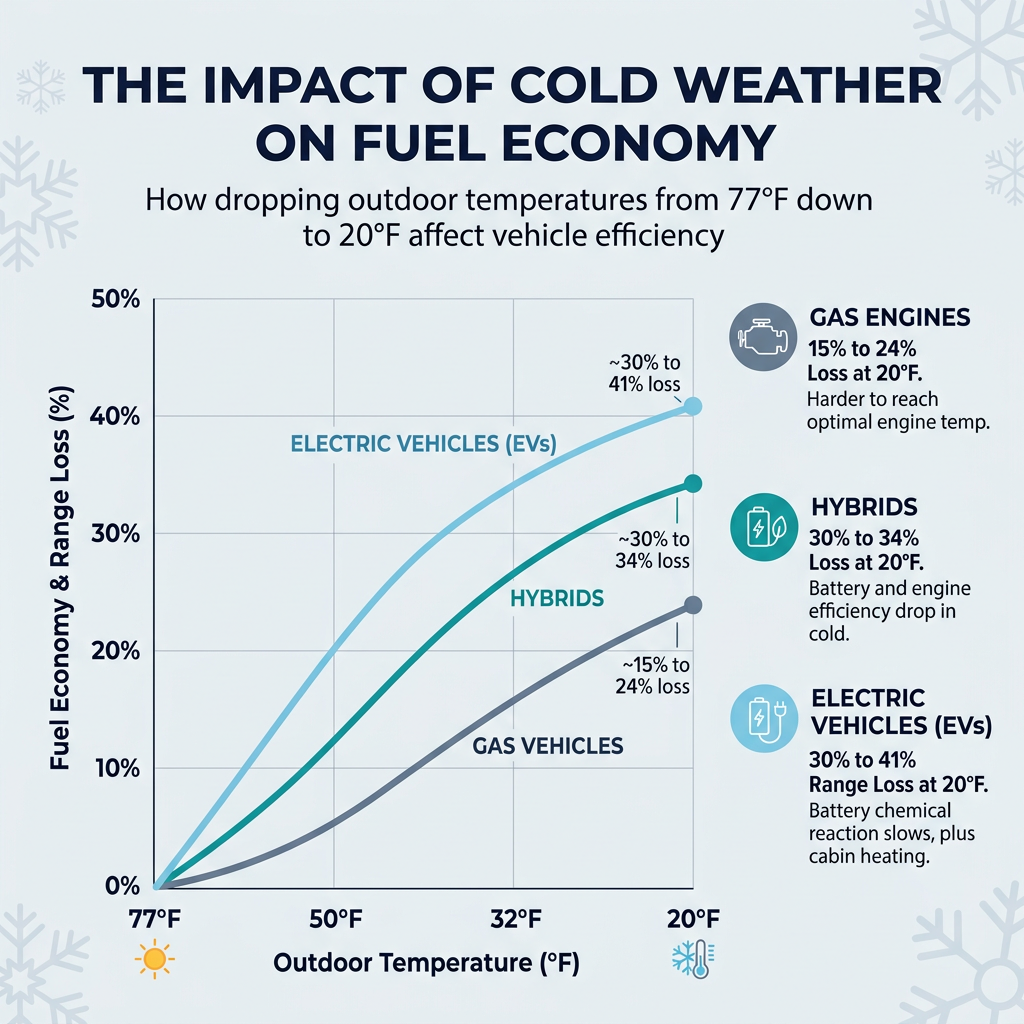
As temperature gauges plummet across Will County, local drivers regularly notice an unwelcome drop in fuel efficiency. According to verified testing from the U.S. Environmental Protection Agency (EPA), cold weather automatically reduces gas mileage by 12% to 20% in standard gasoline vehicles during urban driving, while short suburban trips in temperatures around 20°F can suffer mileage drops of up to 30% to 34% in hybrid and electric vehicles. When Northern Illinois winters arrive with sub-zero wind chills, engine oil thickens, winter-blend fuels yield lower energy density, tire pressure drops naturally, and electrical heating demands skyrocket. Understanding these thermal and physical mechanics is the first step toward regaining control over your vehicle's winter operating costs.
Fortunately, severe winter fuel efficiency losses are not entirely inevitable. By replacing long driveway warm-up idling with gentle driving after 30 seconds, maintaining strict cold-weather tire pressure levels, converting to low-viscosity synthetic motor lubricants, and removing unnecessary cargo weight from the trunk, Joliet commuters can immediately recover 10% to 15% of lost fuel efficiency. Drivers who stay proactive with routine maintenance at Hawk Cadillac can significantly minimize cold-weather stress on critical drivetrain components while protecting their monthly fuel budget.
How Much Does Cold Weather Lower a Car's Fuel Economy?
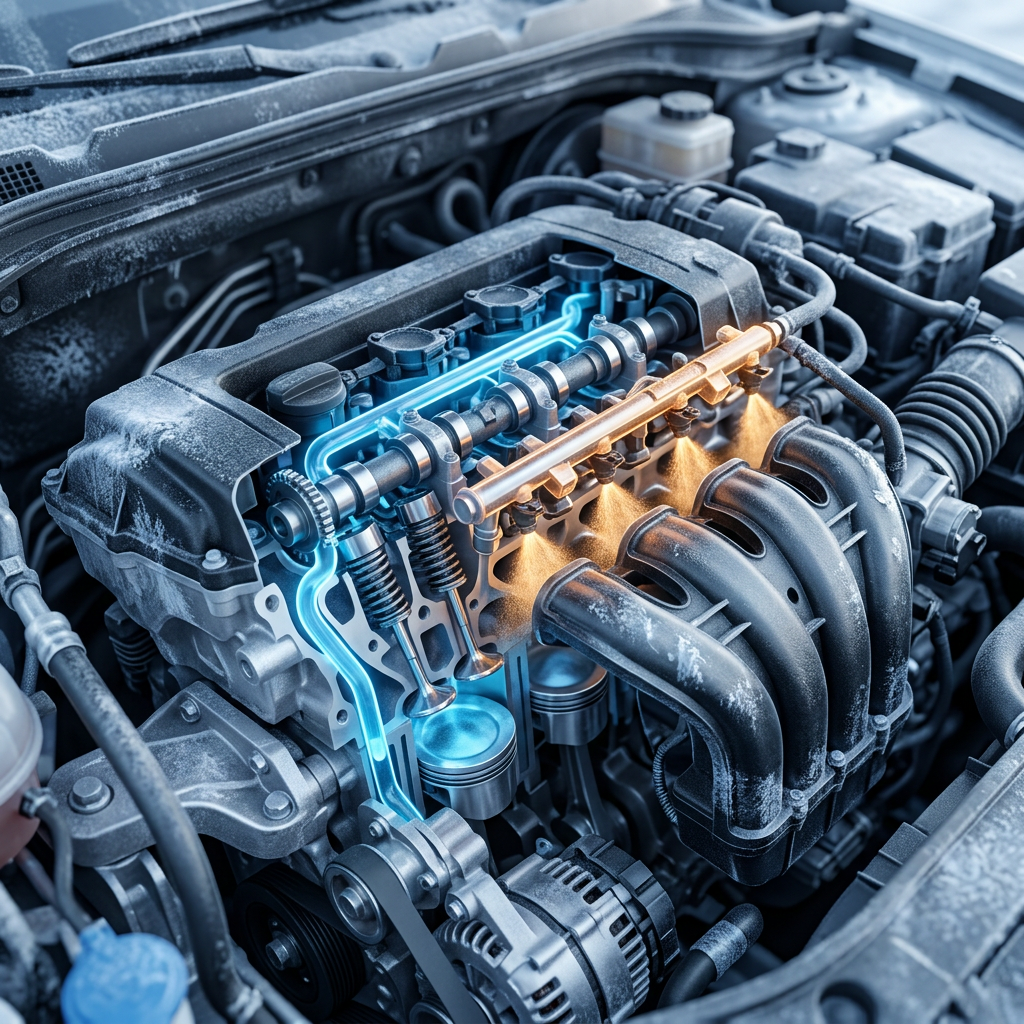
When comparing peak summer operating efficiency at 77°F to typical sub-freezing Midwestern winter conditions at 20°F or lower, vehicle energy conversion efficiency experiences multiple compounding handicaps. Engine operating temperature plays a central role: internal combustion engines are designed to operate optimally when coolant and oil reach roughly 190°F to 220°F. On short commuter runs through Joliet, Plainfield, or Shorewood, an engine may spend most of the journey operating far below its ideal thermal threshold, forcing the engine control module (ECM) to inject a richer air-fuel mixture to keep combustion stable.
Furthermore, ambient cold air is significantly denser than warm air, creating elevated aerodynamic drag against your vehicle's bodywork at highway speeds on I-80 or I-55. Mechanical friction inside transmissions, differentials, wheel bearings, and engine blocks also spikes due to thickened gear oils and grease. Combined with extra electrical draws from seat warmers, defrosters, and cabin blowers, your alternator demands continuous mechanical torque from the engine, placing an elevated baseline load on every mile driven.
EPA Efficiency Reductions at 20°F vs 77°F:
• Conventional Gas Engines (City Driving): 12% to 20% loss
• Short Commutes (Under 3 miles): 22% to 33% loss
• Hybrid Vehicles: 30% to 34% loss
• All-Electric Vehicles (EVs): 31% to 39% range drop
• All-Wheel Drive Systems under engagement: Additional 3% to 5% drag
What Is Winter-Blend Gasoline and How Does It Lower Fuel Efficiency?
Reid Vapor Pressure (RVP)
Petroleum refineries adjust fuel chemistry seasonally based on EPA mandates. In winter, gasoline requires a higher Reid Vapor Pressure (RVP) so fuel evaporates quickly enough in freezing combustion chambers to allow cold engines to ignite smoothly without prolonged cranking.
The Butane Addition Factor
To achieve high RVP levels economically, refineries blend higher percentages of butane into winter-grade fuel. While butane assists cold-weather ignition, it possesses a significantly lower energy density than pure gasoline fractions, reducing total thermal energy per tankful.
Net BTU Loss & Impact
Winter-blend fuel delivers roughly 1.5% to 3% fewer British Thermal Units (BTUs) of heat energy per gallon compared to summer blends. This inherent reduction in potential chemical energy means your engine must burn more physical gallons of fuel to propel your vehicle the same distance.
How Long Should You Warm Up a Modern Car Before Driving in Winter?
One of the most persistent automotive myths in Northern Illinois is that drivers must let their vehicles idle for 10 to 15 minutes before driving on cold mornings. In carbureted engines of the past, extended idling was necessary to prevent stalling. However, every modern vehicle features electronic fuel injection (EFI) managed by fast computer sensors that instantly calibrate the fuel mixture regardless of air temperature.
Modern powerplants require only 30 seconds of initial idling to allow engine oil pressure to stabilize and fully lubricate top-end components. In fact, prolonged driveway idling burns between 0.25 to 1 gallons of gasoline per hour while yielding exactly 0.0 MPG. Over a typical 16-week winter season, idling 15 minutes twice daily burns up to 28 extra gallons of fuel unnecessarily.
The fastest, most efficient way to warm up your engine, transmission, catalytic converter, and cabin heater is to drive gently immediately after that initial 30-second pause. Avoid hard acceleration until the temperature needle starts rising toward normal operating ranges.
Why Do Electric Vehicles Lose More Range Than Gas Cars in Cold Weather?
Slower Electrochemistry
Lithium-ion batteries rely on liquid chemical reactions to move ions between anodes and cathodes. Sub-zero temperatures slow these chemical kinetics down dramatically, increasing internal resistance and limiting total available battery energy discharge.
Lack of Waste Engine Heat
Gasoline engines generate massive amounts of byproduct waste heat to warm the passenger cabin for free. Electric vehicles must draw power directly from the main high-voltage battery pack to power electric resistance heaters or heat pumps, cutting efficiency.
Preconditioning Solution
EV owners can mitigate up to 80% of winter range loss by scheduling departure times through mobile apps while plugged into a Level 2 charger. Preconditioning draws grid power to warm the battery pack and cabin before unplugging.
How Does Cold Weather Affect Hybrid Vehicle Fuel Economy?
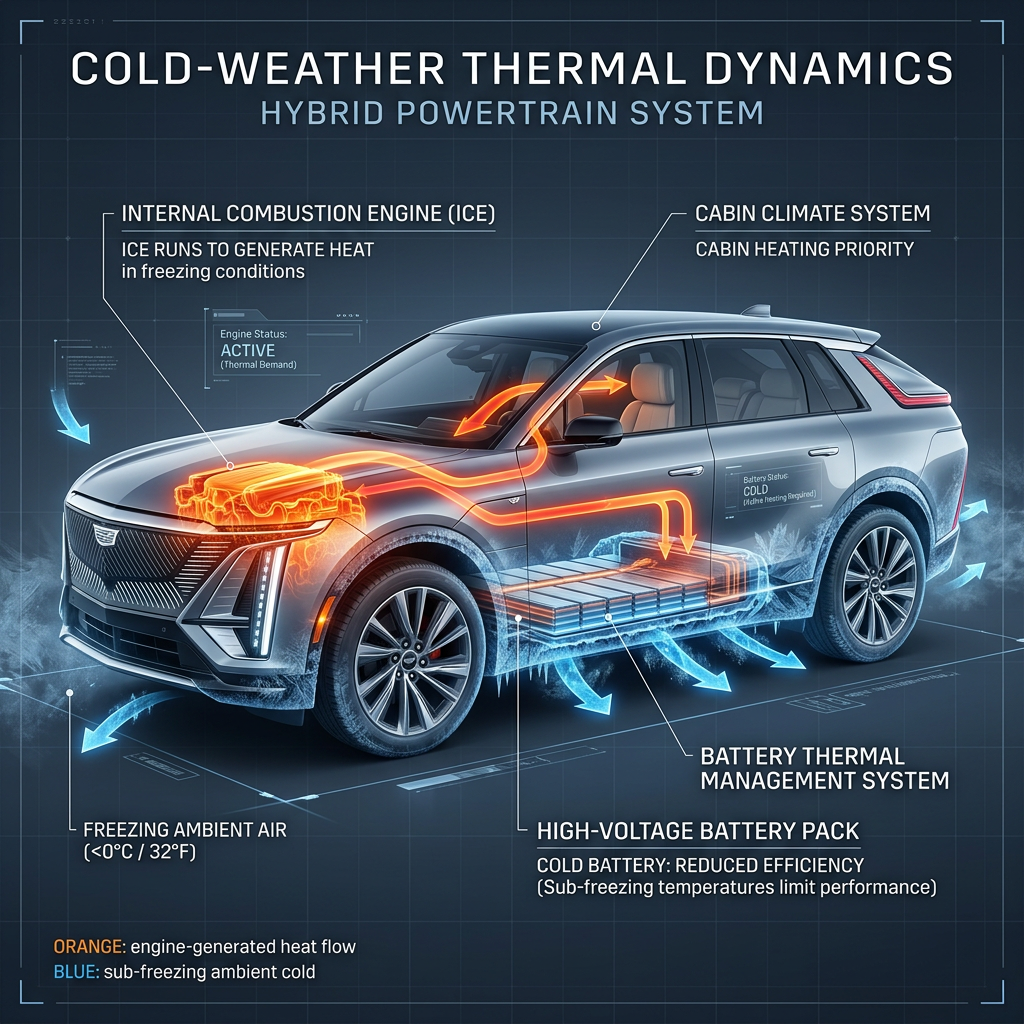
Hybrid vehicles suffer a higher percentage drop in fuel efficiency than standard internal combustion vehicles during freezing Midwestern weather. In summer, hybrids turn off their internal combustion engine (ICE) during coasting, braking, and extended stops at Joliet traffic lights, relying heavily on the electric motor. However, in winter, the powertrain computer overrides normal EV-mode driving to keep the gasoline engine running almost continuously.
This continuous ICE operation is driven by two main factors: maintaining minimum coolant temperatures required to keep cabin climate control warm, and keeping the hybrid high-voltage battery within its optimal operating temperature window. Additionally, cold hybrid batteries accept regenerative braking power less efficiently, reducing total energy recovery during stop-and-go city driving.
How Much Extra Money Do Drivers Spend on Gasoline During Winter?
The cumulative financial impact of winter fuel inefficiency adds up quickly for local drivers commuting along major Joliet arteries such as I-80, I-55, or Route 59. When a midsize luxury sedan drops from an average 25 MPG down to 20 MPG due to winter blend fuel, cold starts, and underinflated tires, total fuel consumption jumps by 25% for every mile traveled.
|
Daily Commute Distance
|
Summer Monthly Fuel Cost (25 MPG @ $3.50/gal)
|
Winter Monthly Fuel Cost (20 MPG @ $3.50/gal)
|
4-Month Winter Cost Difference
|
|
20 Miles / Day (Local Commute)
|
$84.00
|
$105.00
|
+$84.00
|
|
40 Miles / Day (Regional Commute)
|
$168.00
|
$210.00
|
+$168.00
|
|
60 Miles / Day (Long Commute)
|
$252.00
|
$315.00
|
+$252.00
|
For multi-vehicle households in Will County, winter driving inefficiencies can easily add $300 to $500 in additional seasonal fuel expenses between November and March. Implementing basic winter vehicle optimizations offsets the majority of these unnecessary expenses.
Tire Pressure and Cold Air: Maintaining PSI in Sub-Zero Weather
The 10°F / 1 PSI Rule
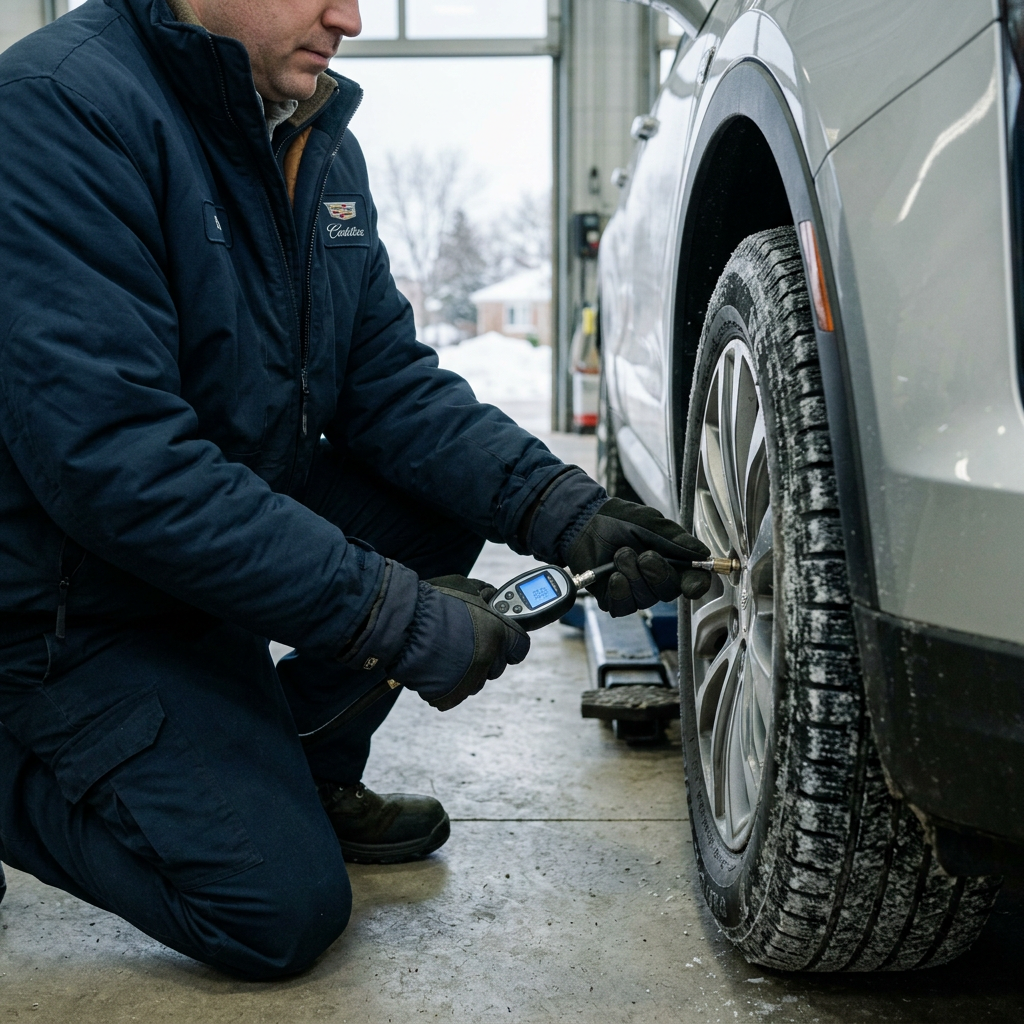
Basic physics dictates that gas contracts in cold temperatures. For every 10°F drop in outside air temperature, your vehicle's tire pressure decreases by approximately 1 PSI. A drop from 70°F to 10°F results in a loss of 6 PSI automatically.
Rolling Resistance Costs
Driving on tires that are underinflated by just 5 to 7 PSI increases rolling resistance substantially, reducing fuel economy by 1.5% to 3% while increasing severe shoulder tread wear and reducing cold-weather traction on slippery roads.
Essential Engine Maintenance Steps to Maximizing Winter MPG
Low-Viscosity Synthetic Lubricants
Thick conventional oil resists flow when cold, forcing the starter motor and internal crankshaft to work significantly harder during start-up. Upgrading to high-grade full synthetic engine oil matching manufacturer specifications (such as Dexos1 full synthetic 0W-20 or 5W-30) ensures instant oil flow to critical components at sub-zero temperatures, reducing internal friction drag by up to 2% to 3%.
Spark Plugs, Air Filters & Battery Health
Fouled spark plugs result in incomplete fuel burn during cold starts, throwing unburned fuel down the exhaust and wasting gasoline. Similarly, a clogged engine air filter starves the engine of dense cold oxygen. Ensuring your battery delivers strong cold cranking amps (CCA) also guarantees rapid starting without excessive ECM fuel dumping.
Practical Driving Habits to Reduce Winter Fuel-Economy Losses in Joliet
Smooth Throttle & Speed
Accelerate smoothly and anticipate stops along Jefferson Street or Essington Road. High-speed driving on highways creates massive aerodynamic drag in cold, dense winter air—driving 65 MPH instead of 75 MPH saves substantial fuel.
Trip Consolidation
Combine several short errands into one continuous trip. A fully warmed-up engine operates at peak thermal efficiency; multiple short trips separated by 30-minute cooling periods force your vehicle to perform repeated energy-intensive warm-ups.
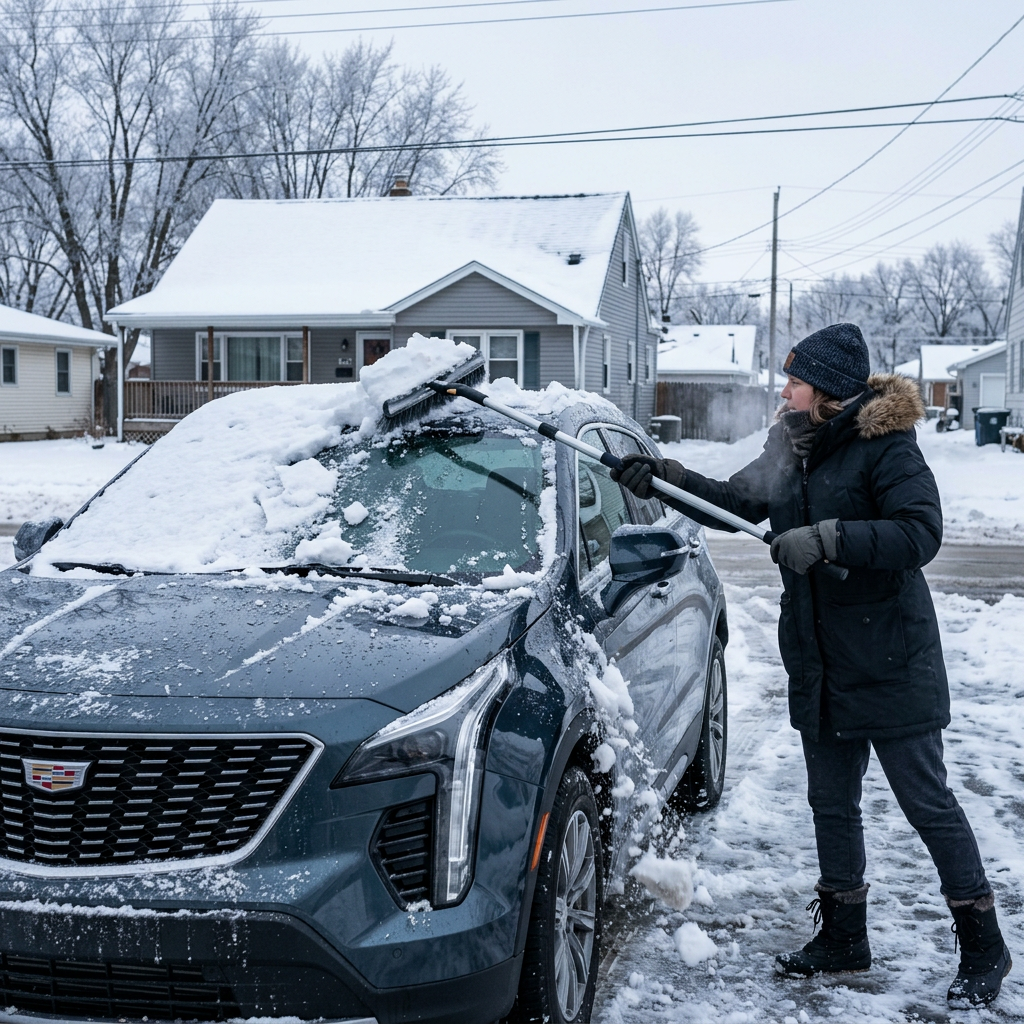
Clear all snow and heavy ice off your vehicle roof and hood prior to driving. Accumulations can add 30 to 50 lbs of useless weight while severely disrupting vehicle aerodynamics.
Upgrading to Fuel-Efficient Luxury Vehicles with Advanced Winter Tech
Modern Cadillac engineering incorporates cutting-edge technology designed specifically to counteract winter efficiency losses. Active Grille Shutters automatically close front bumper vents at highway speeds to optimize thermal engine retention and streamline airflow. Systems like Active Fuel Management and Dynamic Fuel Management shut down unnecessary engine cylinders during cruising, while AWD Disconnect seamlessly disengages secondary drive axles when extra traction is unneeded, maximizing winter highway efficiency.
If your current vehicle struggles through Northern Illinois winters with high fuel consumption and unreliable cold starts, consider evaluating your vehicle trade-in options. You can easily Value Your Trade online and explore sophisticated luxury SUVs equipped with modern thermal management systems.
Schedule Your Winter Maintenance Service at Hawk Cadillac in Joliet
Don't let cold Midwestern weather drain your wallet at the fuel pump this season. The factory-trained master technicians at Hawk Cadillac are here to ensure your vehicle is running at peak thermal and mechanical efficiency all winter long. From precise tire pressure adjustments and synthetic motor oil changes to comprehensive battery diagnostics and multi-point vehicle safety inspections, our team delivers complete winter driving peace of mind.