Key Takeaway: Early Autumn Battery and Fluid Care for I-55 and I-80 Cadillac Commuters
For Cadillac owners navigating the intense daily corridors of Interstate 55 and Interstate 80 in Northern Illinois, late August through September represents the vital operational window for vehicle maintenance. Extreme summer heat severely weakens 12V Absorbed Glass Mat (AGM) battery chemistry and degrades vital powertrain fluids. When autumn weather suddenly brings sharp overnight temperature drops across Will, Kendall, and DuPage counties, heat-compromised batteries fail and oxidized fluids lose their protective viscosity. Conducting comprehensive battery diagnostics and fluid maintenance before October guarantees effortless morning cold-starts, seamless power delivery during stop-and-go highway delays, and uncompromised engine longevity.
Modern Cadillac sedans and SUVs—including the CT4, CT5, XT4, XT5, XT6, and Escalade—are equipped with sophisticated electronic architectures, active fuel management systems, and high-demand starter motors. These technologies depend heavily on clean, uncombusted dexos1 engine oil, fresh DEX-COOL coolant, resilient transmission fluid, and a fully stable electrical grid. Delaying pre-autumn service until winter symptoms manifest exposes your vehicle to unexpected breakdown risk on high-speed freight arteries like the Des Plaines River Bridge or the Route 59 interchange.
By taking dynamic action now, local drivers ensure that critical systems retain peak thermal resistance and conductivity. Prioritizing preventive inspections at Hawk Cadillac in Joliet keeps your vehicle running according to rigorous GM engineering standards while protecting your investment against severe seasonal stress. You can easily Schedule Your Service Today online or contact our certified advisors for tailored maintenance advice.
When Should Joliet-Area Cadillac Drivers Schedule Pre-Fall Battery and Fluid Checks?
The ideal window to book early autumn maintenance for Joliet, Shorewood, and Channahon drivers is between late August and mid-September. During the peak summer months, ambient temperatures inside the engine bay can exceed 140°F during extended idling or high-speed runs on I-55. This high thermal environment accelerates internal battery grid corrosion and evaporates water content within the electrolyte mixture. Even though the vehicle may start effortlessly in 85°F weather, internal plate degradation silently accumulates.
As northern Illinois transitions into late September and early October, autumn cold fronts introduce temperature swings of 30 degrees or more within a single 24-hour cycle. Low ambient temperatures thicken engine oil, requiring significantly higher cranking power from the starter motor. Simultaneously, a cold battery experiences a drop in chemical activity, reducing its available cold cranking amps (CCA) by up to 30%. A battery that felt perfectly functional during August afternoon heat may suffer complete voltage collapse on an October morning when ambient temperatures hover around 40°F.
Fluid systems experience similar vulnerabilities during seasonal transitions. Engine oil accumulates thermal breakdown products and microscopic carbon deposits after months of summer driving. When colder weather arrives, degraded oil thickens rapidly, impeding rapid oil pressure buildup during cold starts and increasing wear on delicate variable valve timing actuators and turbocharger bearings.
Scheduling pre-autumn checks in early September creates a critical buffer. Factory-trained technicians can test electrolyte conductivity, check reserve battery capacity, measure brake fluid boiling points, and sample transmission fluid condition before severe cold arrives. This proactive strategy ensures your vehicle remains reliable, preventing stressful morning delays on your daily route to Naperville, Chicago, or local employment hubs.
How Heavy Highway Congestion on I-55 and I-80 Stresses Cadillac Engine Systems
The intersection of Interstate 55 and Interstate 80 in Joliet is widely recognized as one of the most heavily trafficked freight and commuter crossroads in the Midwest. Daily stop-and-go congestion surrounding the Des Plaines River bridge, combined with endless construction merging zones, creates severe stress on vehicle mechanical systems. Standard highway driving benefits from continuous Ram-air airflow through the front radiator and transmission cooler. However, bumper-to-bumper traffic starves the engine bay of fresh air, forcing cooling fans to run continuously and elevating under-hood temperatures.
This sustained thermal load accelerates engine oil oxidation and breaks down essential shear stability in modern multi-ratio automatic transmissions (such as GM's 9-speed and 10-speed electronically controlled units). Extended idling during commuter bottlenecks causes fuel dilution in engine oil, lowering flashpoints and reducing oil film thickness on vital mechanical components.
Continuous low-speed cycling places enormous strain on electrical charging systems. Modern Cadillacs feature Auto Stop/Start systems engineered to reduce emissions and conserve fuel during idling. In heavy I-80 corridor traffic, the vehicle engine may restart dozens of times in a single hour. Each restart draws significant amperage from the primary AGM battery.
When engine speed remains low during prolonged crawling traffic, the alternator produces reduced output while powering climate control, ventilated seats, heated glass, infotainment systems, and advanced driver-assistance sensors. If the battery is aged or heat-damaged, it cannot recharge sufficiently between auto-starts, putting the electrical system under severe stress.
Furthermore, frequent heavy braking while surrounded by commercial semi-trucks causes intense brake fluid heating. Over time, moisture absorbed by standard glycol-based brake fluid lowers its boiling point, leading to spongy pedal response or decreased braking efficiency during unexpected highway slowdowns.
How Are Battery Diagnostics Performed on Modern Cadillac Vehicles During Routine Service?
1. Conductance & Dynamic Testing
Traditional visual inspection or basic voltage checks are insufficient for modern Absorbed Glass Mat (AGM) batteries. Certified GM technicians utilize specialized handheld conductance testers that send a small AC signal through the battery grid. This non-destructive test measures internal cell resistance, plate health, and remaining Cold Cranking Amps (CCA) without draining the battery. The diagnostic tool compares actual output against factory rating specs to determine exact health percentage.
2. Charge Acceptance & Parasitic Drain
Modern Cadillacs feature dozens of microprocessors that enter low-power sleep modes after parking. Technicians check the vehicle's quiescent parasitic current draw to verify no modules are drawing excess amperage when turned off. Additionally, dynamic alternator ripple voltage testing measures charging stability, ensuring regulated voltage feeds back into the battery without harming delicate electronics.
3. Battery Sensor Calibration
When replacing an AGM battery on late-model Cadillacs, technicians perform a mandatory Battery Energy Control Module (BECM) reset using GM Multiple Diagnostic Interface (MDI) software. Resetting the battery monitoring algorithm ensures the charging system adjusts charging output based on the new battery's fresh capacity rather than overcharging it as if it were an old unit.
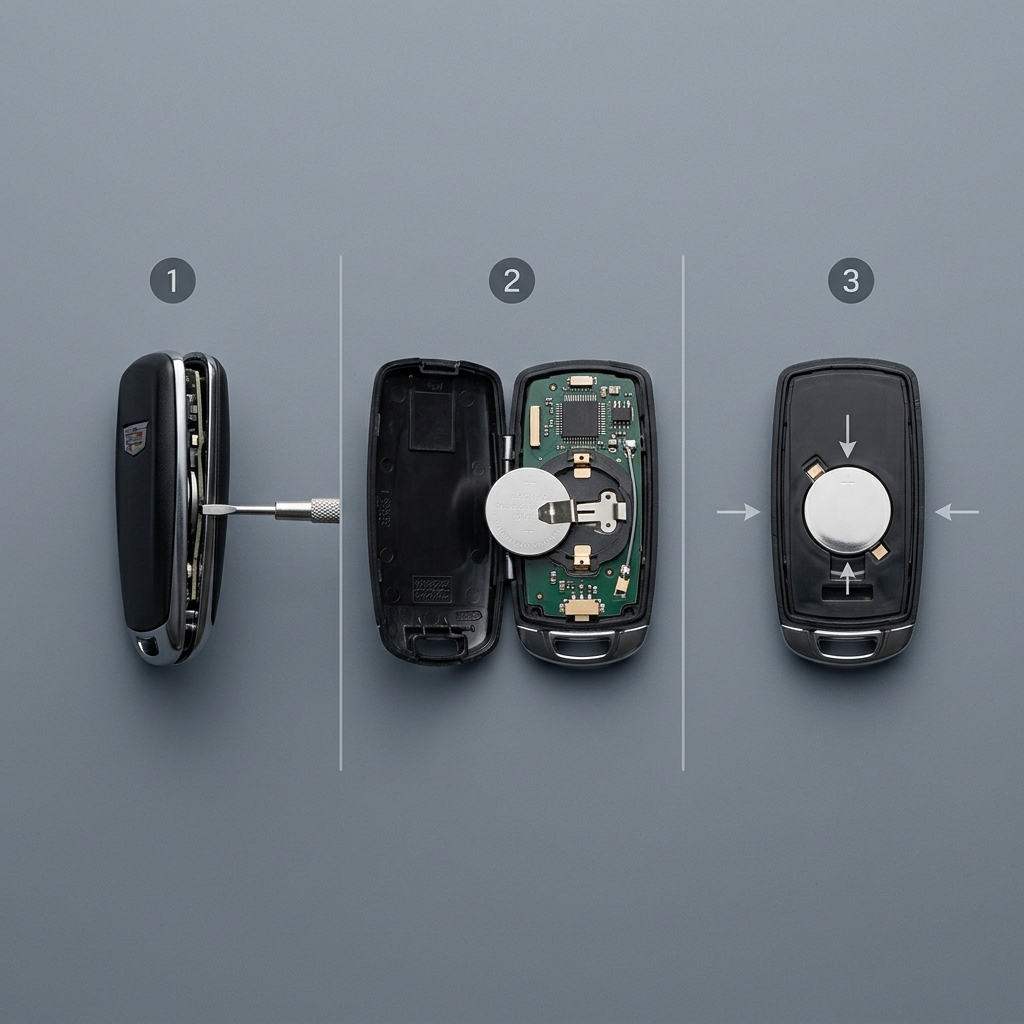
How Should Cadillac Owners Replace Their Key Fob Battery Safely?
A sudden key fob failure during a chilly autumn morning commute can leave you stranded or delayed. Modern Cadillac key fobs incorporate proximity sensors, remote start, and security immobilizer chips, all powered by a standard 3V coin-cell battery (typically CR2032 or CR2032H depending on model year). Low battery voltage can trigger warnings on your Driver Information Center or degrade keyless entry range.
To replace the key fob battery without damaging delicate plastic clips, internal seal rings, or circuit boards, follow these essential steps: 1. **Release Mechanical Key:** Press the small release button on the side or bottom of the fob casing to pull out the emergency metal key blade. 2. **Separate Housing Halves:** Insert a flat tool or flathead screwdriver wrapped in thin protective tape into the dedicated slot near the key opening. Gently twist to pop open the outer casing halves.
3. **Remove Old Battery:** Note the positive (+) polarity facing upward. Carefully pry out the depleted CR2032 battery using a non-conductive plastic pry tool to avoid shorting board traces. 4. **Install Fresh Cell & Reassemble:** Seat the new OEM-quality coin battery, ensure the rubber weather seal is properly aligned to protect against moisture, and snap the housing covers firmly back together.
If you experience keyless access issues before replacing the battery, remember that modern Cadillacs have a dedicated backup RFID reader inside the cabin (usually inside the center console storage bin or cupholder). Placing a dead fob inside this pocket allows the engine to start electronically.
Need assistance? You can Order Genuine Cadillac Parts or stop by our dealership where our service team will replace your key fob battery quickly while you wait.
What Are Standard Oil, Brake Fluid, and Transmission Fluid Service Intervals for a 2026 Cadillac?
Adhering to factory-recommended fluid service schedules is vital to maintaining performance, fuel efficiency, and powertrain warranty coverage. Commuting along heavy freight routes like I-55 and I-80 frequently falls under GM's 'Severe Driving Conditions' schedule due to recurring stop-and-go delays, heavy idling, and Midwest environmental variations.
dexos1 Full Synthetic Oil
• **Standard Interval:** 7,500 miles or 1 year • **Severe/Commuter Interval:** 3,000–5,000 miles • **Specification:** GM dexos1 Gen 3 full synthetic oil • **Function:** Formulated to eliminate Low-Speed Pre-Ignition (LSPI) in turbocharged 2.0L and 3.0L engines while providing superior high-temperature shear stability during prolonged highway idling.
Brake Fluid Moisture Care
• **Flush Interval:** 24 months or 45,000 miles • **Specification:** OEM DOT 4 / GM approved brake fluid • **Function:** Hygroscopic fluid absorbs water vapor over time. Flushing restores high boiling point tolerance, protects internal ABS / StabiliTrak valves against internal corrosion, and ensures crisp pedal response.
Transmission & DEX-COOL
• **Transmission Fluid:** 45,000 miles (Severe) / 90,000 miles (Normal) • **DEX-COOL Coolant:** 5 years or 150,000 miles • **Function:** DEX-COOL protects aluminum cylinder heads and engine blocks against electrolytic degradation. Fresh Dexron ULV transmission fluid maintains smooth clutch pack engagement across multi-speed gearboxes.
|
Service Type
|
GM Normal Interval
|
I-55/I-80 Commuter Interval
|
Approved Fluid Standard
|
|
Engine Oil & Filter
|
7,500 Miles / 12 Months
|
5,000 Miles / 6 Months
|
dexos1 Gen 3 Synthetic
|
|
Brake Fluid Flush
|
45,000 Miles / 36 Months
|
24,000 Miles / 24 Months
|
GM Approved DOT 4 High Temp
|
|
Transmission Service
|
90,000 Miles
|
45,000 Miles
|
DEXRON ULV Transmission Fluid
|
|
Engine Coolant Flush
|
150,000 Miles / 5 Years
|
100,000 Miles / 5 Years
|
Genuine DEX-COOL Extended Life
|
What Local Service Protocols Exist in Joliet for Seasonal Cadillac Battery and Fluid Care?
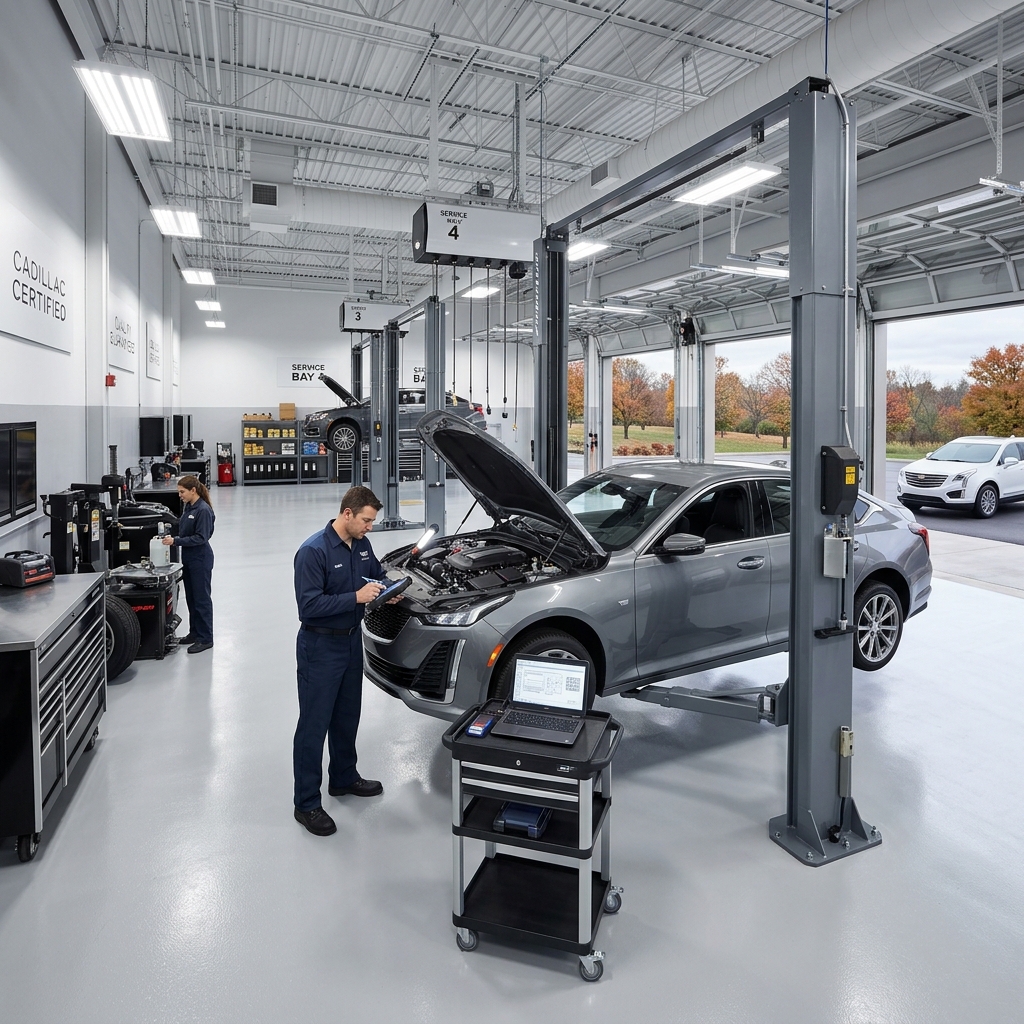
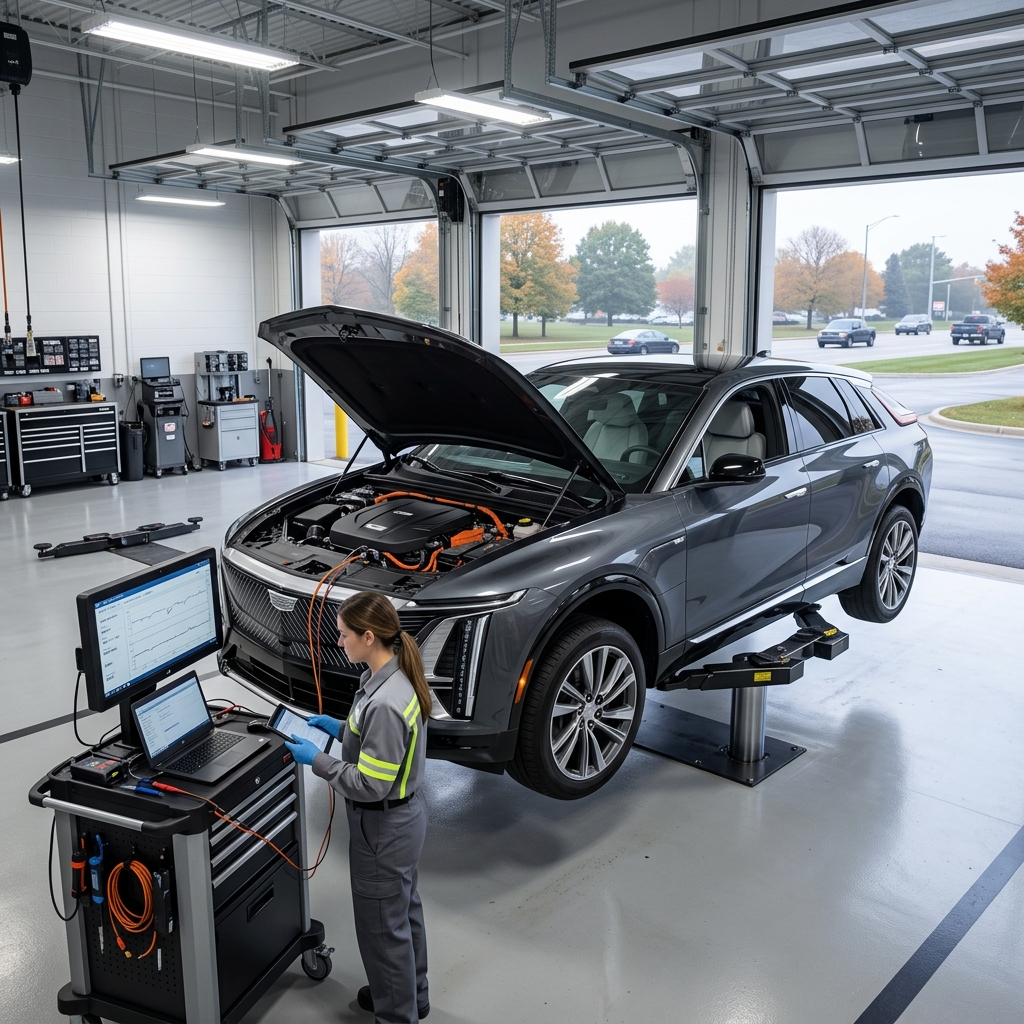
At Hawk Cadillac, located conveniently at 2001 W Jefferson St in Joliet, our service department executes specific local maintenance protocols tailored to the demands of Will County driving. Every vehicle undergoing autumn preparation receives a thorough multi-point inspection performed by factory-certified GM technicians using specialized diagnostic tools.
Our seasonal protocol begins with complete digital battery health profiling using GM-approved diagnostic hardware. Technicians measure reserve capacity, cold cranking power, and load response under simulated starter draws. We inspect terminal clamps for microscopic corrosion, clean battery posts using anti-corrosive treatments, and test ground straps connected to the chassis frame.
Next, fluid condition is analyzed using digital refractometers and chemical moisture test strips. We inspect coolant freeze protection levels to verify protection down to sub-zero temperatures, test brake fluid water content, and evaluate differential and transmission fluid cleanliness. Any required flushes utilize dedicated closed-loop exchange machines that purge old fluids completely without introducing air into sensitive valve bodies.
What Is Included in a Standard Winter Maintenance Checklist for Cadillac Commuter Vehicles?
Electrical & Battery
✔ Conductance conductance test for 12V AGM battery ✔ Terminal corrosion removal & protective sealant ✔ Alternator output & voltage regulator check ✔ Starter draw amperage evaluation ✔ Key fob battery voltage inspection
Fluids & Climate
✔ dexos1 synthetic engine oil & filter replacement ✔ Coolant refractometer check (freeze protection to -30°F) ✔ Brake fluid moisture percentage analysis ✔ Windshield washer fluid replacement with sub-zero formulation ✔ Cabin air filter replacement for optimal defrosting
Tires & Braking
✔ Tire tread depth measurement (minimum 5/32" recommended) ✔ Cold tire pressure adjustment to door placard PSI ✔ Brake pad thickness & rotor surface inspection ✔ Front/rear wiper blade replacement ✔ Suspension boot & steering linkage check
What Is the Typical Cost Structure for a Seasonal Battery and Fluid Maintenance Visit on a 2026 Cadillac?
Understanding the cost structure of routine seasonal maintenance allows Cadillac owners to plan effectively while protecting their vehicles against costly emergency repairs. Preventative maintenance costs a fraction of the expenses associated with emergency highway towing, secondary component damage, or unexpected commuter downtime.
• **Multi-Point Inspection & Battery Test:** Often complimentary during routine oil changes, or nominal diagnostic fee. • **dexos1 Synthetic Oil & Filter Service:** Typically ranges from $95 to $145 depending on engine capacity (4-cylinder turbo vs. V6/V8 engine sumps). • **Brake Fluid Flush:** Typically ranges from $160 to $220, including complete pressure purging and fresh OEM DOT 4 fluid.
• **ACDelco AGM Battery Replacement:** $240 to $380 depending on exact CCA group size, including professional installation and BECM system registration. • **Transmission Fluid Exchange:** Ranges from $280 to $420 depending on capacity and transmission model.
Investing in preventative care eliminates the risk of catastrophic failures. For instance, replacing a heat-damaged battery during early autumn prevents premature starter motor wear and alternator overload. Similarly, fresh engine oil protects turbocharger bearings from expensive carbon buildup.
If you are considering upgrading your vehicle or evaluating long-term vehicle ownership costs, feel free to Value Your Trade or explore our latest inventory options online.
Navigating Autumn Highway Commutes from Plainfield and Naperville to Joliet
Thousands of Cadillac drivers traverse regional corridors linking Plainfield, Naperville, Shorewood, and Minooka to the major industrial and commercial hubs in Joliet every day. Route 59, Route 30, I-55, and I-80 present unique driving challenges during early autumn. Cool damp morning fogs rolling off the Des Plaines and DuPage river valleys create slick pavement conditions, while heavy agricultural equipment moving along rural connectors adds unpredictable slow-downs.
When commuting under these shifting conditions, responsive vehicle electronics, immediate engine restart capability, and sharp braking responsiveness are vital for safety. Ensuring your battery operates at 100% capacity allows Cadillac's active driver assistance systems—such as Forward Collision Alert, Super Cruise, and StabiliTrak—to function with precision. Proper maintenance guarantees your commuter sedan or SUV delivers smooth performance regardless of weather or traffic density.
Why Genuine OEM Fluids and GM Certified Parts Matter for Modern Cadillacs
Modern Cadillac vehicles represent sophisticated automotive engineering. Components are manufactured to extremely precise tolerances, and sub-systems are closely integrated. Using generic aftermarket fluids or lower-tier replacement batteries can compromise performance, trigger false error codes, and lead to premature wear.
Genuine GM ACDelco Gold and AGM batteries are engineered specifically for your vehicle's exact electrical load requirements and physical tray dimensions. They feature heavy-duty lead-alloy grids, high-density plate paste, and pressure-relief valves designed to handle high under-hood thermal conditions while providing long-term reliability.
Similarly, GM dexos1 Gen 3 engine oil and DEX-COOL coolant formulations contain specialized anti-foaming, anti-corrosion, and friction-modifying additives matched directly to Cadillac engine alloys and seal materials. Non-approved fluids may break down rapidly under turbocharger heat or react negatively with internal gasket materials.
When you service your vehicle at Hawk Cadillac, every fluid top-off, replacement part, and diagnostic procedure adheres strictly to factory specifications. If you prefer to perform basic maintenance yourself, you can Order Genuine Cadillac Parts directly through our authorized parts department.
Schedule Your Early Autumn Cadillac Commute Prep at Hawk Cadillac Today
Don't wait for sudden cold weather or unexpected highway slowdowns on I-55 or I-80 to expose hidden battery or fluid vulnerabilities. Protect your luxury investment, safeguard your daily schedule, and drive with complete confidence throughout the autumn season.
Our certified master technicians at Hawk Cadillac in Joliet are ready to provide thorough battery diagnostics, comprehensive fluid checks, and factory-certified care tailored to your driving habits. Experience transparent service, comfortable customer amenities, and unmatched luxury expertise.