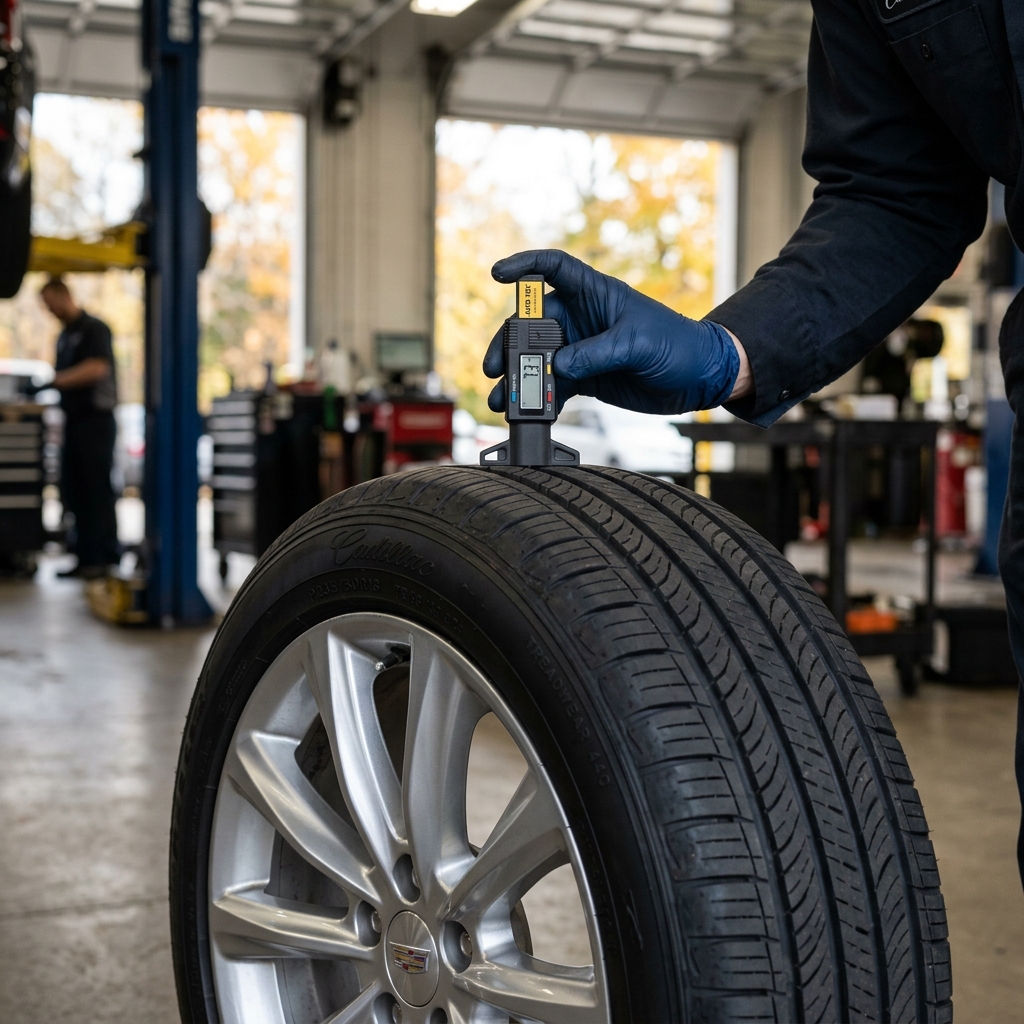
Chicagoland Fall Commute Readiness: Essential Brake, Tire, and Suspension Maintenance
Key Takeaway: Preparing your luxury vehicle for Chicagoland's intense autumn commute requires servicing your brakes, tires, and suspension system between mid-September and late October before ambient road temperatures consistently fall below 45°F and slick leaf hazards turn into early black ice. Ensuring brake pad friction material remains well above 4mm, maintaining tire tread depth at or above 4/32", and verifying that shock absorbers and struts are leak-free prevents dangerous wheel slippage, reduces emergency stopping distances by up to 30%, and preserves precision vehicle control on major Northern Illinois corridors like Interstate 55, Interstate 80, and Route 59. Early preventative care guarantees your Cadillac continues to deliver its signature whisper-quiet, refined ride regardless of unpredictable Midwest autumn weather.
Why Chicagoland Fall Weather Demands Early Vehicle Maintenance
Autumn in Will County and southern DuPage County presents a unique set of atmospheric and roadway challenges that test every major safety component of your vehicle. As drivers travel daily between Joliet, Plainfield, and Naperville, they face volatile temperature swings where clear, brisk afternoons rapidly transition into freezing early-morning ground fogs. According to basic physics and tire mechanics, ambient temperatures directly dictate inflation pressure: for every 10-degree drop in outside temperature, your vehicle's tire pressure decreases by approximately 1 PSI (pound per square inch). A crisp October drop from 65°F down to 25°F overnight can underinflate your tires by 4 PSI or more, severely compromising sidewall stiffness, steering response, and tire footprint stability.
Furthermore, fallen autumn leaves covering suburban roads in Plainfield and Naperville create an insidious hazard when combined with dew or rain. Wet leaves act as a organic lubricant on asphalt, dropping the coefficient of friction down to levels comparable to driving on packed ice or slick snow. When slowing down for traffic lights along Route 59 or navigating entrance ramps onto I-55, compromised tire tread or worn brake pads on wet leaves can instantly double your vehicle's required stopping distance.
Crucially, local geography amplifies early winter hazards. Elevated river bridge decks—such as those crossing the Des Plaines River along I-80 or the DuPage River in Plainfield—cool far faster than traditional earth-backed roadways. Cold air circulates both above and beneath bridge structures, causing lingering moisture and early morning frost to flash-freeze into invisible black ice long before surrounding roads appear slippery. Proper system maintenance before temperatures drop guarantees your suspension, anti-lock braking system (ABS), and tire sipes work in perfect harmony when unexpected surface slickness occurs.
What Are the Warning Signs That My Brakes, Tires, or Suspension Need Service Before Winter?
Before cold weather fully settles over Will County, conduct a high-level triage check of your vehicle's core safety triad: brakes, tires, and suspension. Each system communicates wear through specific physical, visual, and auditory signals.
Brake System Triage
• High-pitched squealing or high-frequency squeaks when light brake pressure is applied • Steering wheel shudders or brake pedal pulsation during highway speed deceleration • Spongy or soft brake pedal feel that requires deeper depression to engage friction • Vehicle pulling subtly to one side under firm braking
Tire Assembly Triage
• Tire tread wear indicators sitting flush with the surrounding rubber blocks • Persistent low tire pressure warning light (TPMS) illuminated on instrument cluster • Noticeable vibration through the floorboard or steering wheel at 55–65 MPH • Visual cracking, dry rot, or sidewall bulges caused by road hazard impacts
Suspension System Triage
• Excessive vehicle nose-diving forward during moderate to heavy braking stops • Unstable body roll or vehicle sway while making lane changes on I-55 • Vehicle continuing to bounce two or three times after clearing dip or bump • Visible oily fluid leaking down body of shock absorbers or strut housings
What Are the Signs My Brakes Need Repair Before Winter?
Stopping power is your single most important active safety defense during Chicagoland's treacherous autumn commute. Modern Cadillac vehicles feature advanced braking hardware designed for rapid deceleration and smooth modulation, but heavy commute traffic on I-80 and Route 59 generates intense thermal stress that degrades friction materials over time.
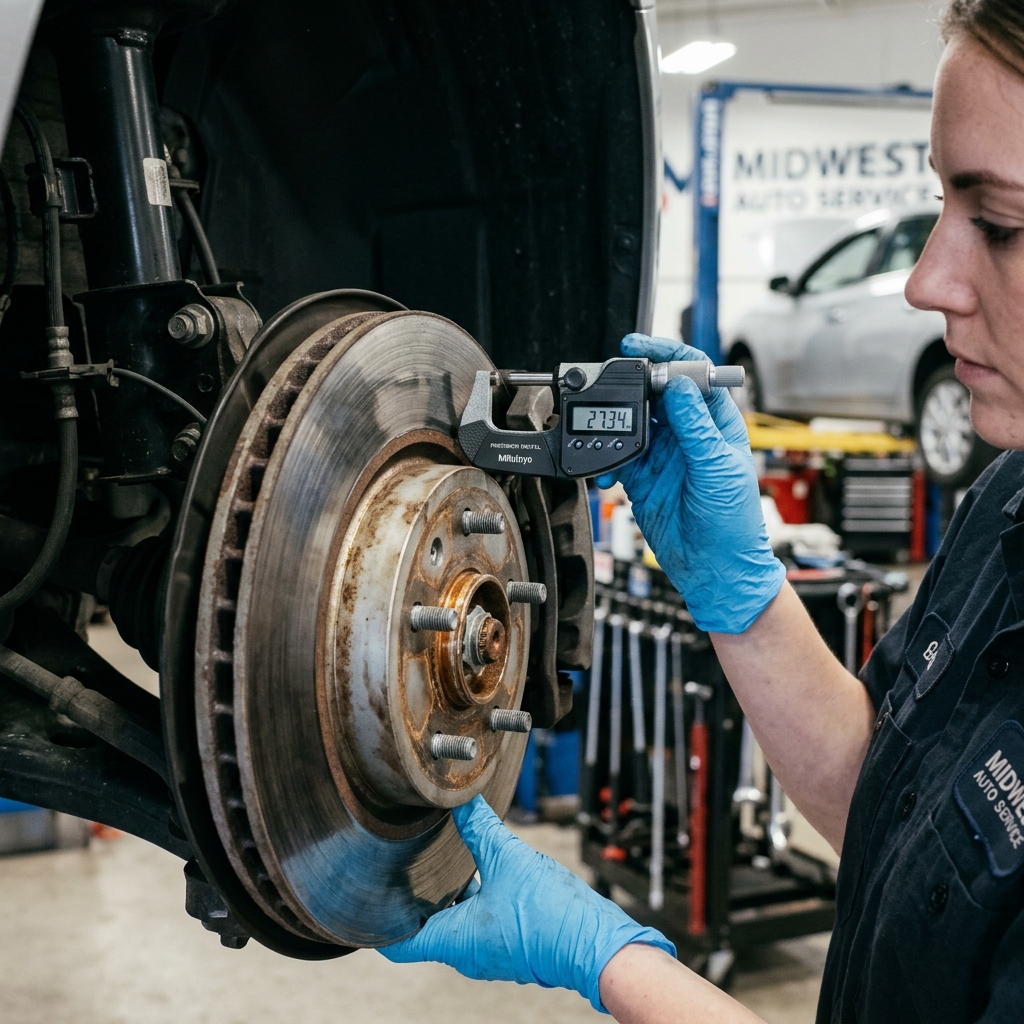
1. Friction Pad Thickness Dropping Below 4mm: Brand new brake pads typically feature 10mm to 12mm of friction material. While legal minimums permit driving down to 2mm, cold winter temperatures make brake pad compounds significantly stiffer and less pliable. Once friction material drops below 4mm, heat dissipation declines dramatically, leading to pad glazing and extended stopping distances on slick leaf surfaces or slush.
2. Brake Rotor Warping & Lateral Runout: Continuous stop-and-go commuting creates uneven heat distribution across brake rotors. Over time, rotor disc thickness variation or excessive lateral runout develops. When you compress the brake pedal at highway speeds, uneven rotor surfaces force hydraulic fluid back through the caliper, causing a distinct pulsating sensation in the pedal or rapid vibration in the steering column.
3. Moisture-Contaminated Hydraulic Brake Fluid: Automotive brake fluid is hygroscopic, meaning it continuously absorbs moisture directly from humid Midwest air. Moisture lowers the fluid's boiling point and accelerates internal caliper corrosion. During winter, vapor bubbles formed in contaminated fluid expand under pressure, leaving your brake pedal feeling unnaturally soft or spongy. Schedule Your Service Today to test your brake fluid's moisture content.
What Tire Tread Depth Is Required for Driving Safely on Wet Fall and Winter Roads in Chicagoland?
Tire tread depth directly determines how efficiently rubber can channel away standing water, leaf sludge, and winter slush from beneath the tire contact patch. Without sufficient channel depth, water becomes trapped under the tire, lifting the vehicle off the pavement and causing dangerous hydroplaning.
2/32" Legal Minimum
• Status: Legally worn out. • Performance: Stopping distances on wet roads increase by over 80%. Hydroplaning occurs at normal highway speeds. • Testing: Insert a penny upside down. If Abraham Lincoln's entire head is visible, replacement is overdue.
4/32" Wet Fall Standard
• Status: Recommended autumn minimum. • Performance: Maintains adequate water evacuation channels to prevent hydroplaning on rain-soaked I-55 surfaces. • Testing: Insert a quarter upside down. If George Washington's head top is covered, you have sufficient wet tread.
6/32" Winter Ready
• Status: Optimal snow & slush depth. • Performance: Deep siping packs snow into tread voids to achieve snow-on-snow traction during heavy winter storms. • Tire Selection: Premium all-season or winter-rated tires with high silica compounds perform best in< 45°F weather.
What Tire Wear Patterns Suggest Suspension Trouble?
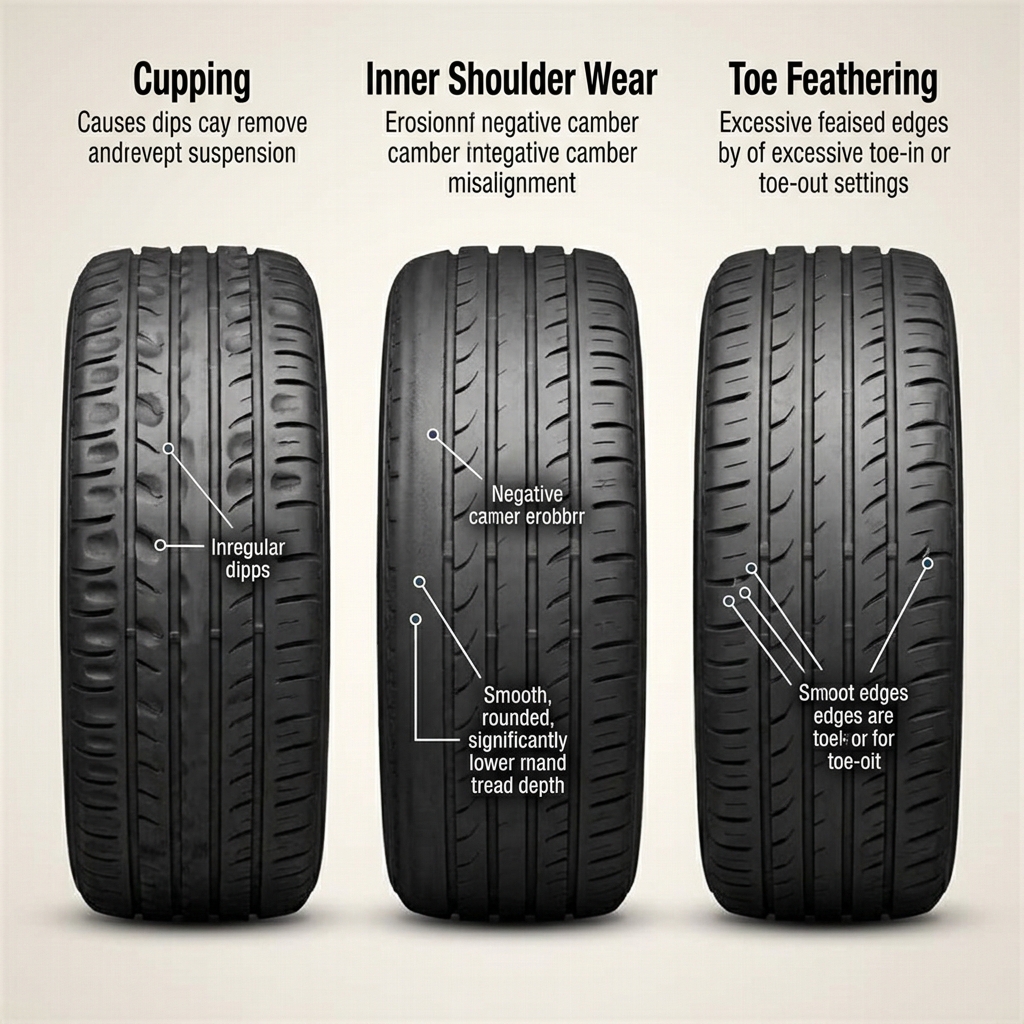
1. Tire Cupping or Scalloping (Worn Shocks/Struts): Repeated high-and-low dip patterns around the tire perimeter indicate worn shock absorbers or struts. When shocks lose damping force, the tire bounces uncontrolled down the road, creating scooped-out hollows along the tread blocks.
2. Inner or Outer Shoulder Wear (Camber Misalignment): Heavy wear restricted strictly to the inner edge or outer edge of the tire footprint reveals camber misalignment or sagging control arm bushings, preventing full tire surface contact with the road.
3. Feathered Tread Edges (Toe-In / Toe-Out Errors): When tread blocks feel smooth when running your hand inward but sharp when pulling outward, wheel toe alignment is incorrect. Incorrect toe angle drags tires sideways across pavement. Order Genuine Cadillac Parts to replace worn tie rods or control arms before performing a four-wheel alignment.
How Potholes and Rough Roads in Joliet and Naperville Damage Your Commute Safety
Northern Illinois road surfaces suffer immense stress caused by early autumn freeze-thaw cycles. Micro-cracks in asphalt absorb rainwater, which expands upon freezing overnight and breaks apart pavement along high-traffic routes like Jefferson Street in Joliet or Washington Street in Naperville. Striking sharp road defects at commute speeds transfers violent kinetic energy directly into your suspension hardware.
Impact forces can fracture internal ball joint sockets, bend forged aluminum control arms, or rupture the rubber hydraulic seals on strut assemblies. Fluid leakage from strut housings deprives the suspension of dampening fluid, leading to excessive body roll and unpredictable vehicle tracking on highway lane changes. Routine digital multi-point inspections ensure damaged steering linkage or suspension arms are repaired before causing severe tire damage or unsafe handling.
Should I Inspect My Spare Tire and Emergency Equipment Before Winter Too?
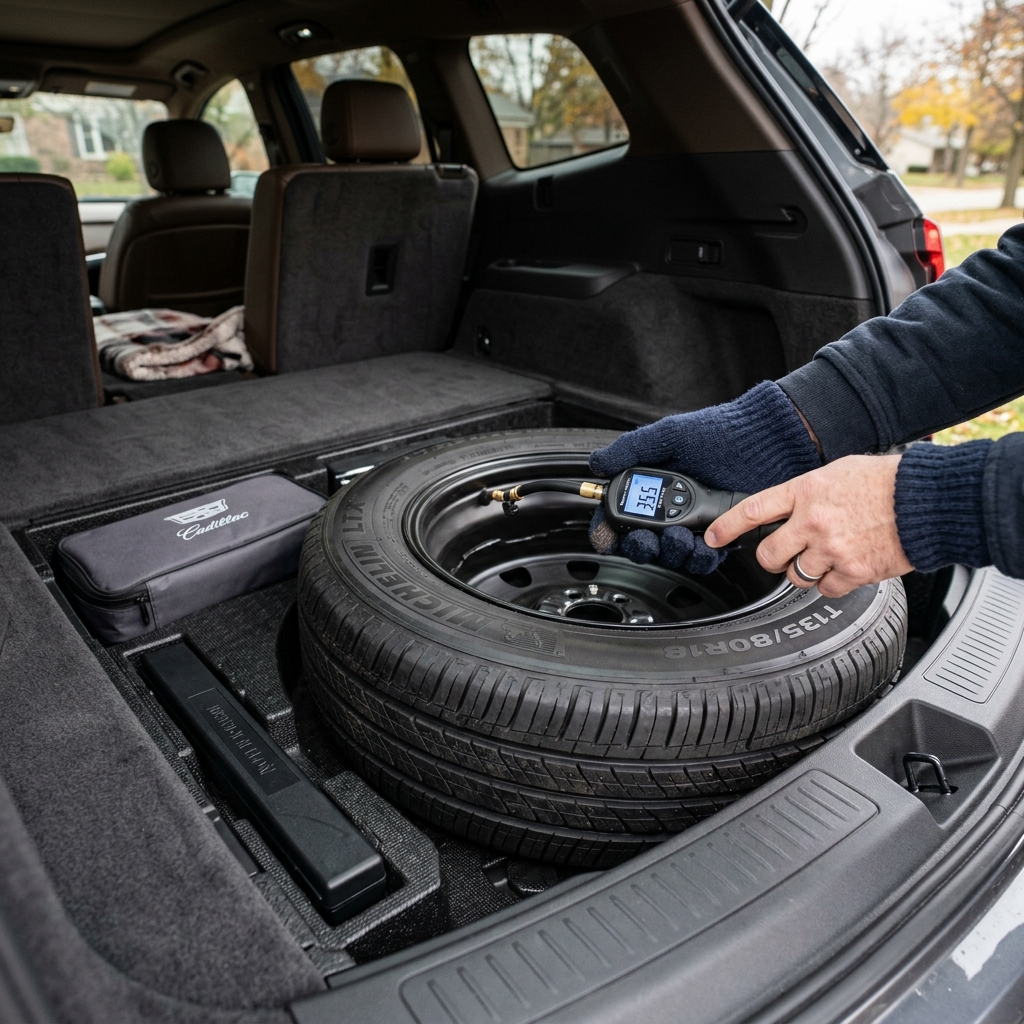
An emergency spare tire is often completely forgotten until a flat tire leaves you stranded along I-55 in freezing temperatures. Compact emergency spares require much higher inflation pressure—typically 60 PSI—than standard highway tires. Because rubber loses pressure over time, a neglected spare can easily drop to an unusable 25 PSI.
• Spare Pressure & Age: Check inflation pressure monthly and replace compact spares older than 6 years due to internal rubber dry rot. • Jack & Lug Wrench: Verify scissor jack mechanical threads are lubricated and lug wrenches fit factory wheel nuts correctly. • Roadside Emergency Kit: Pack heavy jumper cables, LED flashlight, thermal blankets, tire pressure gauge, traction sand, and non-perishable snacks.
Comparing Maintenance Steps for Brakes, Tires, and Suspension
|
System Category
|
Inspection Frequency
|
Critical Measurements
|
DIY Visual Check
|
Professional Diagnostics
|
|
Brake System
|
Every 6,000 miles or 6 months
|
Pad thickness ≥ 4mm; Rotor runout < 0.002"
|
Listen for squeals; check brake fluid level and color
|
Digital micrometer rotor measuring; fluid moisture test
|
|
Tire Assemblies
|
Monthly pressure check; 6,000 mi rotation
|
Tread depth ≥ 4/32" fall; Pressure per door placard
|
Quarter test; check for uneven edge wear and cracking
|
Precision road-force wheel balancing; TPMS calibration
|
|
Suspension System
|
Every 12,000 miles or annually
|
Strut rebound cycles ≤ 1.5; Zero bushing play
|
Bounce test front/rear bumpers; inspect for oil leaks
|
Laser four-wheel alignment analysis; ball joint check
|
When Should I Schedule Fall Maintenance in the Chicagoland Area?
Timing is everything when preparing your Cadillac for Chicagoland winters. The optimal window for servicing your vehicle is between mid-September and late October. Waiting until the first major freeze or snowfall in November usually results in long service appointment delays across Will County and southern DuPage County.
By scheduling autumn maintenance early, you secure prompt appointment slots, guarantee factory OEM part availability, and protect your tires and brakes before extreme freezing conditions set in. Visit our state-of-the-art facility or Get Directions to Hawk Cadillac for fast, certified service.
OEM Parts vs. Aftermarket Components for Harsh Illinois Winters
Genuine GM Friction Pads
Genuine GM brake pads feature engineered ceramic friction formulations specifically calibrated to eliminate noise and resist severe salt corrosion encountered on Chicagoland winter highways.
Magnetic Ride Control
Cadillac Magnetic Ride Control dampers require precision factory fluid viscosities and electrical sensor calibration. Generic aftermarket struts fail to integrate with factory electronic stability management.
Factory Spec Tire Approvals
Fall Maintenance Checklist for Plainfield and Naperville Highway Commuters
Step 1: Front & Rear Wiper Blade Replacement: Replace chatter-prone rubber wiper blades with beam-style winter blades and fill fluid reservoirs with washer fluid rated to -20°F. Step 2: Cold Pressure Recalibration: Adjust tire pressures when cold using the placard specs listed on your driver door pillar. Step 3: Multi-Point Digital Vehicle Inspection: Have certified technicians inspect steering linkages, ball joints, CV boots, and brake lines for salt corrosion or tears. Step 4: Battery Cold-Cranking Performance Check: Cold weather reduces battery chemical efficiency by 30-50%. Test cold-cranking amps (CCA) before morning frost arrives. Interested in upgrading your winter drive? Learn how to Get Pre-Approved for Financing or Value Your Trade online.
Schedule Your Chicagoland Fall Commute Inspection at Hawk Cadillac in Joliet
Don't let unexpected autumn weather compromises your commute safety. Drivers across Joliet, Plainfield, and Naperville trust Hawk Cadillac for factory-certified vehicle care, genuine OEM parts, and unmatched luxury customer service. Call us at (815) 600-7027 today or visit our dealership conveniently located at 2001 W Jefferson St, Joliet, IL 60435.