What Does a Seasonal Maintenance Guide for a 2026 Cadillac in Joliet Typically Include?
Driving a 2026 Cadillac in Joliet, Illinois, represents the pinnacle of modern automotive luxury, engineering, and technological innovation. Whether you are navigating the morning commute along Interstate 80, cruising down Jefferson Street, or embarking on a long-distance family highway trip across Will County, your vehicle relies on precision performance. However, Northern Illinois is famous for its drastic weather swings. From sub-zero winter blasts that dump inches of snow and coat roads in corrosive liquid magnesium chloride to blistering, humid Midwest summers, local driving conditions subject every subsystem of your luxury vehicle to intense environmental pressure.
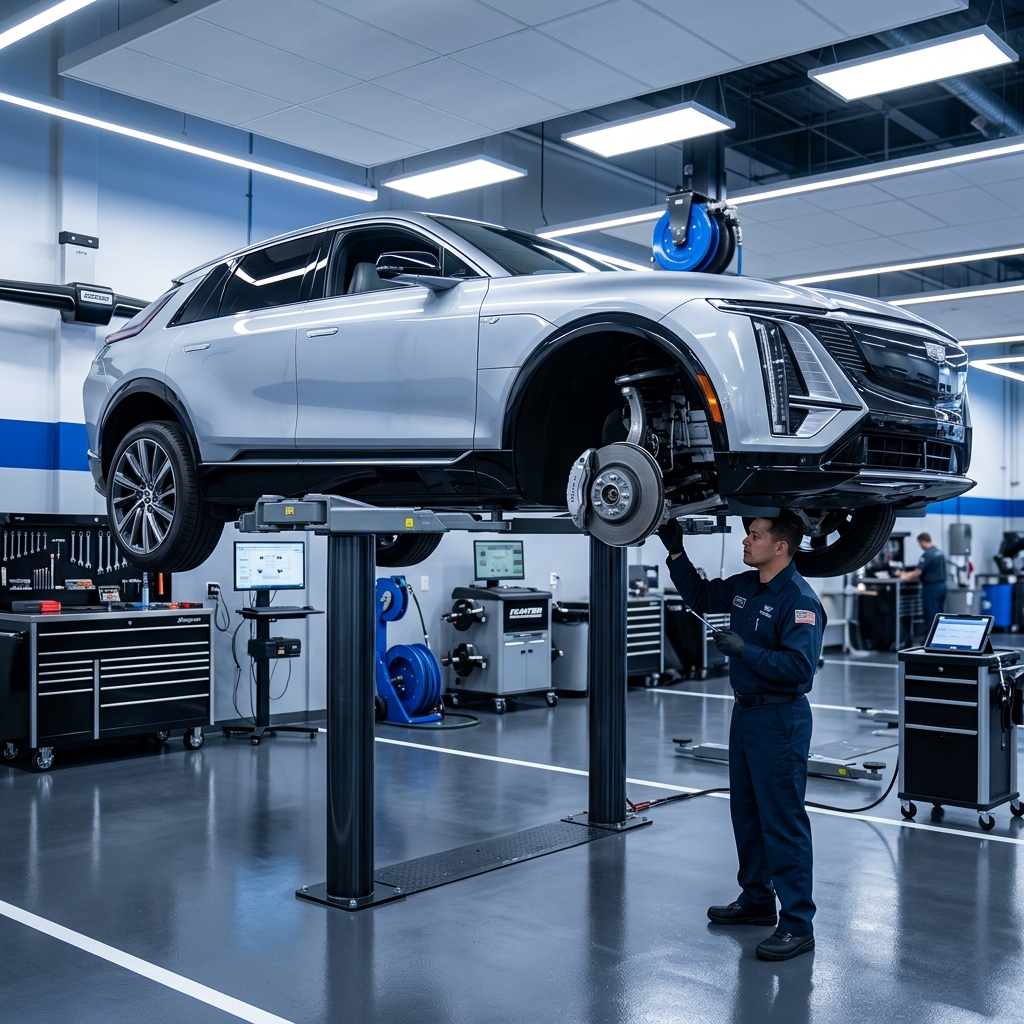
A comprehensive 2026 Cadillac seasonal maintenance guide in Joliet is structured around four distinct quarterly protocols. Each protocol addresses the specific environmental stressors of the changing Midwest seasons. Rather than relying on simple mileage intervals alone, seasonal care aligns service schedules with real-world weather challenges. Winter protocols focus on thermal management, cold-cranking amp availability, high-traction contact patches, and undercarriage corrosion protection. Spring services target post-winter road damage restoration, laser four-wheel alignment, and salt residue removal. Summer protocols emphasize cooling efficiency for both internal combustion engines and advanced Ultium electric vehicle battery packs, while autumn service prepares your vehicle for the rapidly approaching deep freeze.
Modern 2026 Cadillac models—ranging from gas-powered luxury SUVs like the Escalade, XT4, XT5, and XT6 to cutting-edge electric vehicles like the LYRIQ, OPTIQ, and Escalade IQ—incorporate sophisticated electronic architectures, sensitive camera sensors for Super Cruise™, and specialized suspension setups like Magnetic Ride Control™. Proactive seasonal maintenance preserves these advanced components, optimizes fuel efficiency or battery range, maintains factory warranty protection, and safeguards resale value over time. To ensure your vehicle remains in peak operating condition year-round, trust the factory-trained master technicians at Hawk Cadillac.
|
Season / Quarter
|
Primary Local Stressor
|
Core Maintenance Focus
|
Key Cadillac Components Checked
|
|
Winter (Q1 / Q4)
|
Sub-zero freezes, road salt, snow/ice
|
Freeze protection & cold start reliability
|
12V & High-Voltage Battery, 0W Synthetic Oil, AWD Fluids, Snow Tires
|
|
Spring (Q2)
|
Potholes, thawing moisture, road salt brine
|
Suspension realignment & corrosion wash
|
4-Wheel Laser Alignment, Bushings, Dampers, Brake Rotors & Undercarriage
|
|
Summer (Q3)
|
Extreme heat, humidity, long road trips
|
Thermal cooling & climate management
|
HVAC Cabin Filter, Engine/Ultium Battery Coolant Loops, Tire Pressure
|
|
Fall (Q4 Prep)
|
Dropping temps, wet leaves, dark commutes
|
Pre-freeze readiness & lighting checks
|
Tread Depth (Min 4/32"), Headlight Lenses, Charging System, Wiper Blades
|
What Winter Seasonal Maintenance Does a Cadillac Need in Joliet, Illinois?
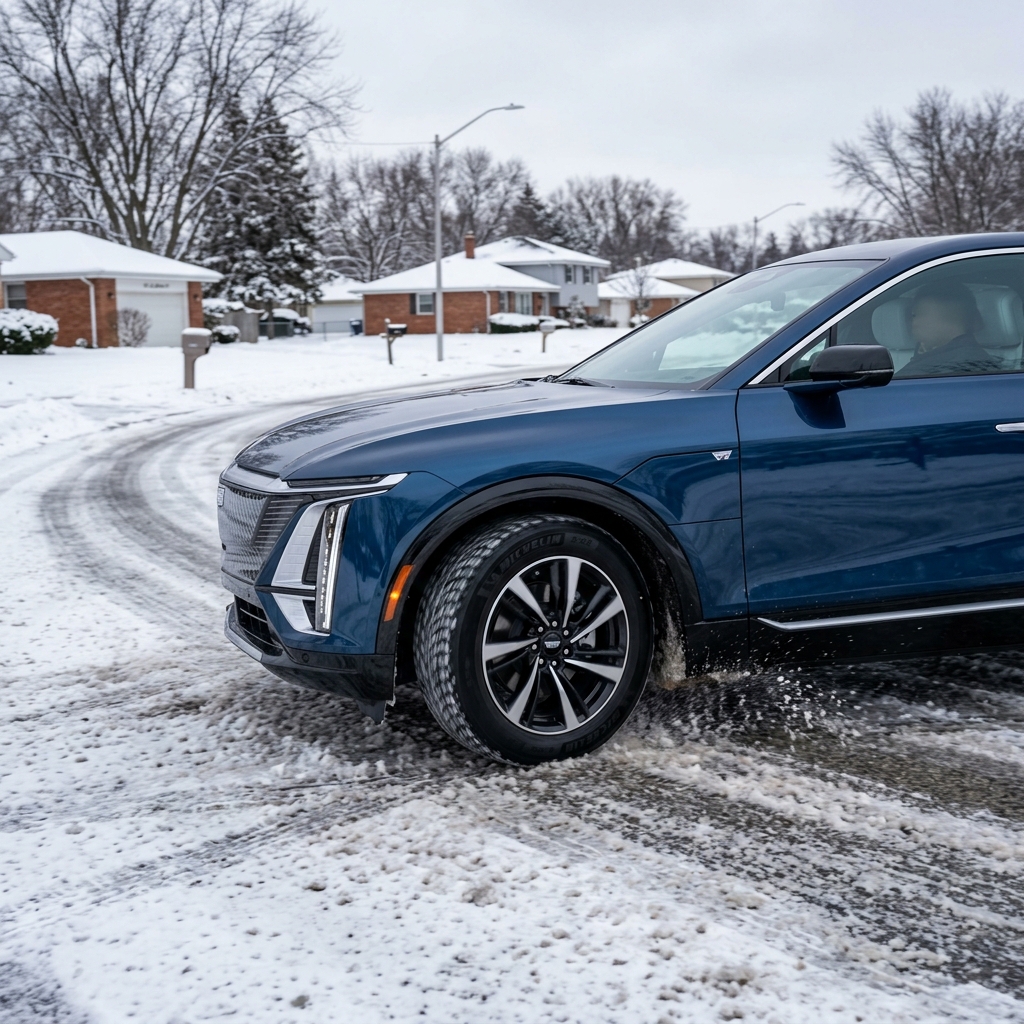
Winter in Northern Illinois brings harsh freezing temperatures, lake-effect snow bursts, and slippery ice layers that place massive stress on motor vehicles. When the thermometer plummets below freezing in Joliet and neighboring Plainfield, chemical reactions inside auto batteries slow down dramatically. A battery operating at 0°F loses up to 60% of its starting capacity, right when the engine requires up to twice as much current to turn over cold oil. A core requirement of winter Cadillac service is a comprehensive cold-cranking amp (CCA) load test. Technicians measure conductance and reserve capacity to prevent unexpected failure during a cold morning start.
For internal combustion models such as the Cadillac CT5, XT4, XT5, or Escalade, engine oil viscosity is critical. Sub-zero weather thickens standard motor oil, delaying lubrication to vital top-end valvetrain components during start-up. Switching to high-grade full synthetic DEXOS1™ engine oil (such as 0W-20 or 5W-30 formulation depending on your specific engine) ensures immediate oil circulation, minimizing wear on cold starts. Furthermore, standard summer windshield washer fluid will freeze solid on impact with a cold windshield, potentially cracking fluid reservoirs and line fittings. Winter service replaces fluid with specialized anti-freeze washer formulations rated down to -20°F or lower.
Traction control and winter tire management are equally vital. All-season tires begin losing rubber flexibility below 45°F, reducing grip on dry or slushy pavement. Equipping your 2025 Cadillac with dedicated winter tires featuring specialized tread compounds maintains pliable grip on icy Will County roads. Additionally, for Cadillac models equipped with Advanced All-Wheel Drive (AWD) or 4WD systems, winter service includes inspecting transfer case fluid and rear differential lubricant levels. Clean fluid prevents binding and ensures rapid power transfer between axles when navigating snowdrifts or slippery intersections. You can Schedule Your Service Today online to prepare your luxury sedan or SUV before the first snowstorm hits.
Spring Cadillac Care: Pothole Alignment, Suspension Checks, and Brake Inspections
As winter ice thaws across Will and DuPage counties, local roadways like Route 59, Black Road, and Lincoln Highway undergo intense freeze-thaw expansion cycles. Water seeps into pavement cracks, freezes, expands, and collapses under heavy truck traffic, creating deep, dangerous potholes. Hitting a severe pothole at speed can immediately knock your Cadillac out of alignment, damage expensive aluminum wheels, bend control arms, or compromise calibrated sensor systems.
Laser Alignment Precision
Spring maintenance includes a computer-guided four-wheel laser alignment test. Proper camber, caster, and toe settings ensure your vehicle tracks dead-straight, prevents uneven tire edge wear, and keeps delicate electronic safety features—such as Lane Keep Assist and Super Cruise™ steering actuators—operating within strict factory calibration standards.
Suspension & Damper Check
Cadillac suspension architectures—including Air Ride Adaptive Suspension and Magnetic Ride Control™—utilize complex electronic valving, air bladders, and rubber bushings. Master technicians inspect shock absorbers for hydraulic fluid leaks, test air compressor seals, and inspect suspension ball joints and tie-rod ends for play caused by winter impacts.
Brake System & Salt Wash
Winter road salt and liquid brine build up underneath your vehicle, accelerating corrosion on steel brake lines, caliper slides, and rotor surfaces. Spring service includes a thorough undercarriage salt-neutralizing wash followed by a complete brake inspection, pad thickness measurement, caliper pin lubrication, and rotor resurfacing if pitted by rust.
Summer Heat Preparation: Air Conditioning Flush, Engine Coolant, and Battery Thermal Management
Midwest summers bring high temperatures exceeding 90°F along with heavy humidity, putting immense load on air conditioning units and cooling systems. For gasoline-powered Cadillac models, engine coolant (antifreeze) serves a dual purpose: preventing winter freezing and raising the boiling point of cooling water during summer stop-and-go traffic. Summer preparation involves testing coolant pH levels, verifying fluid concentration, and performing radiator hose pressure checks. Over time, breakdown of corrosion inhibitors inside cooling fluid can lead to internal radiator scale build-up and localized engine hot spots.
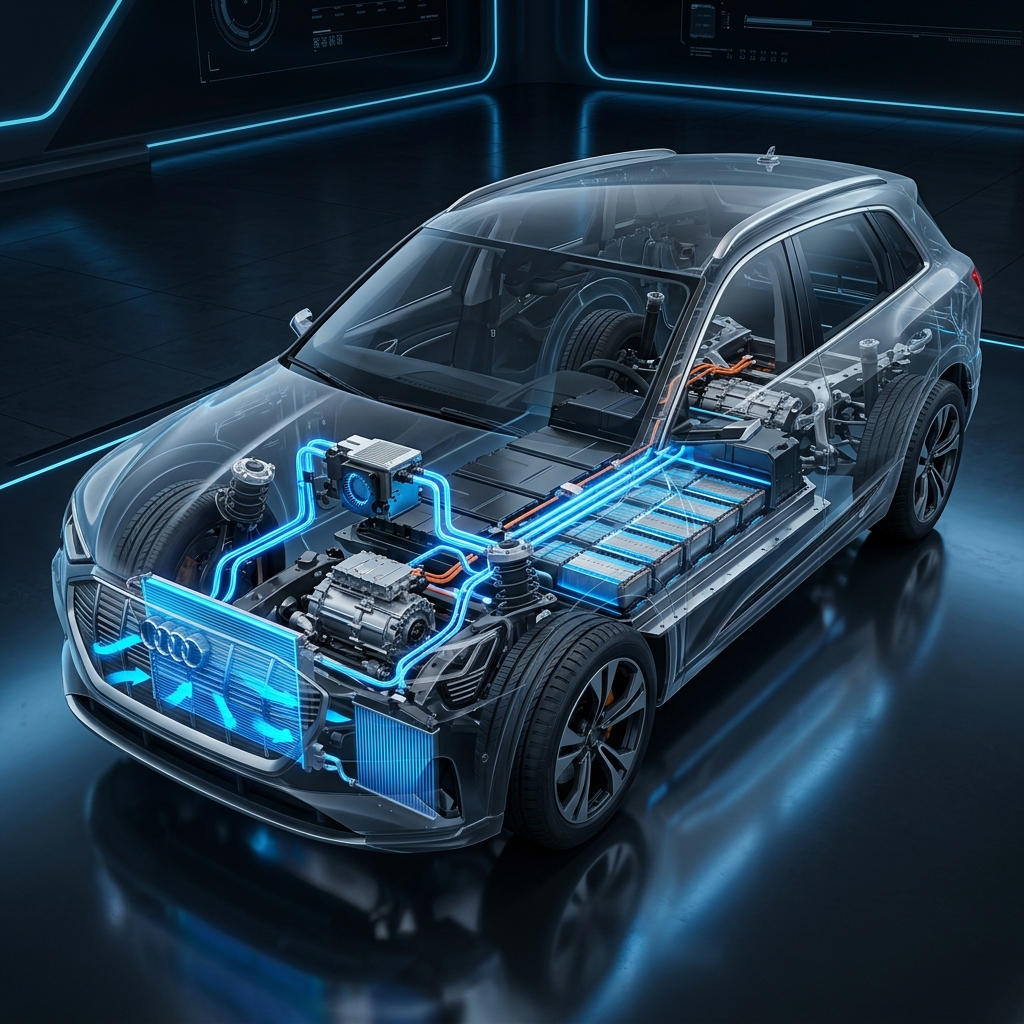
To maintain interior luxury comfort, the tri-zone or quad-zone automatic climate control system undergoes testing for refrigerant pressures and evaporator core performance. Replacing the interior cabin air filter removes pollen, dust, and highway debris, restoring full airflow through dash vents. For Cadillac Ultium EV drivers traveling to Naperville or Lake Michigan, summer battery thermal management is even more crucial. Extreme heat accelerates battery degradation if heat is not dissipated efficiently. Technicians check high-voltage liquid coolant loops, electric coolant pumps, and heat exchanger fins to keep electric powertrains operating within optimal temperature bands.
Before taking long summer vacation road trips, ensuring your engine or electric drivetrain is fully protected against heat stress is essential for peace of mind and long-distance driving safety.
Fall Season Protocol: Battery Voltage Testing, Tread Depth, and Fluid Top-Offs
Autumn in Joliet is the ideal window for proactive vehicle health checks before unpredictable Midwest winter weather arrives. As temperatures gradually dip in October and November, taking key maintenance steps helps prevent cold-weather breakdowns.
Tread Depth Inspection
Wet autumn leaves and early season slush require proper tire tread depth to channel water away from tire contact patches. While legal minimum tread is 2/32", Cadillac service recommendations require a minimum of 4/32" tread depth for safe wet and cold weather stopping power. Technicians measure all four tires using precision depth gauges.
Electrical Charging System
Fall diagnostics verify battery resting voltage, alternator output amperage, and starter motor current draw under load. Catching a declining 12-volt battery during mild autumn weather eliminates the annoyance of being stranded in a freezing parking lot when the first major winter cold front sweeps through Plainfield or Joliet.
Lighting & Comprehensive Fluids
Shorter daylight hours demand peak performance from Intellibeam® LED headlights, vertical daytime running lamps, and rear LED taillight assemblies. Clear polycarbonate lenses are cleaned, aligned, and inspected, while brake fluid, power steering fluid (where applicable), transmission fluid, and engine coolant are topped off or serviced.
How EV Seasonal Maintenance Differs for 2026 Cadillac Ultium Models vs. Gas Powertrains
The emergence of 2026 Cadillac electric vehicles—powered by GM's revolutionary Ultium platform—has changed the landscape of seasonal auto care. Traditional gas-powered Cadillac models (like the XT5 crossover or Escalade V-Series) rely heavily on internal combustion fluid maintenance: engine oil changes, spark plug replacements, engine air filters, drive belt replacements, and exhaust system inspections. Electric vehicles like the LYRIQ and Escalade IQ eliminate oil changes and exhaust work entirely, but introduce specialized maintenance requirements.
For EV owners, seasonal maintenance focuses heavily on high-voltage thermal management fluid conditioning, Over-The-Air (OTA) software module verification, and specialized tire care. Due to the instantaneous electric torque and heavier curb weight of high-capacity battery packs, EV tires experience faster tread wear if neglected. Frequent front-to-rear tire rotations every 5,000 to 7,500 miles are critical to prevent uneven wear and optimize range efficiency across all four seasons.
Furthermore, electric models utilize regenerative braking (Regen on Demand® / One-Pedal Driving), which uses electric motors to slow the vehicle while recharging the battery. Because friction brakes are used less frequently, brake rotors on EVs can accumulate surface oxidation or suffer stuck caliper slider pins in high-salt Midwest environments. Seasonal EV service includes cleaning, lubricating, and testing mechanical friction brake components to ensure emergency stopping power is always ready.
What Is the Battery Range and Towing Capability of the Cadillac Escalade IQ Across Seasons?
The all-electric 2026 Cadillac Escalade IQ redefines full-size luxury SUV expectations with impressive engineering capability: an estimated driving range of up to 460 miles on a full charge, combined with a maximum towing capacity of up to 8,000 lbs when properly equipped. However, seasonal temperature extremes directly influence chemical battery efficiency, cabin heating power draw, and trailering performance during Midwest travel.
During frigid Joliet winters, cold temperatures temporarily slow lithium-ion chemical reactions while resistance heating draws significant power to keep passengers warm. Driving in sub-zero weather can reduce real-world EV range by 20% to 30% if battery pre-conditioning is not utilized. To counteract range loss, 2026 Escalade IQ owners can utilize the MyCadillac mobile app to pre-condition the battery pack and warm the cabin while plugged into a 240V Level 2 charger or DC fast charger. This ensures energy for climate conditioning comes directly from the grid rather than depleting internal drive battery storage.
|
Operating Factor / Season
|
Estimated Range Impact
|
Towing Capability
|
Recommended Seasonal Protocol
|
|
Ideal Summer / Spring (70°F)
|
Up to 460 Miles (100%)
|
Up to 8,000 lbs
|
Inspect thermal liquid cooling loops & tire inflation
|
|
Extreme Heat (95°F+ w/ AC)
|
Approx 410–430 Miles (-8%)
|
Up to 8,000 lbs
|
Pre-cool cabin while plugged into Level 2 charger
|
|
Freezing Winter (15°F w/ Heat)
|
Approx 320–350 Miles (-25%)
|
Up to 7,000 lbs (reduced trailering range)
|
Pre-condition battery via MyCadillac app prior to departure
|
|
Heavy Winter Trailering
|
Approx 200–250 Miles (-45%)
|
Up to 8,000 lbs
|
Check trailer brake controller, AWD setup & tire pressures
|
How Do the Interior Cargo Dimensions Compare Between the LYRIQ and XT5 for Seasonal Travel?
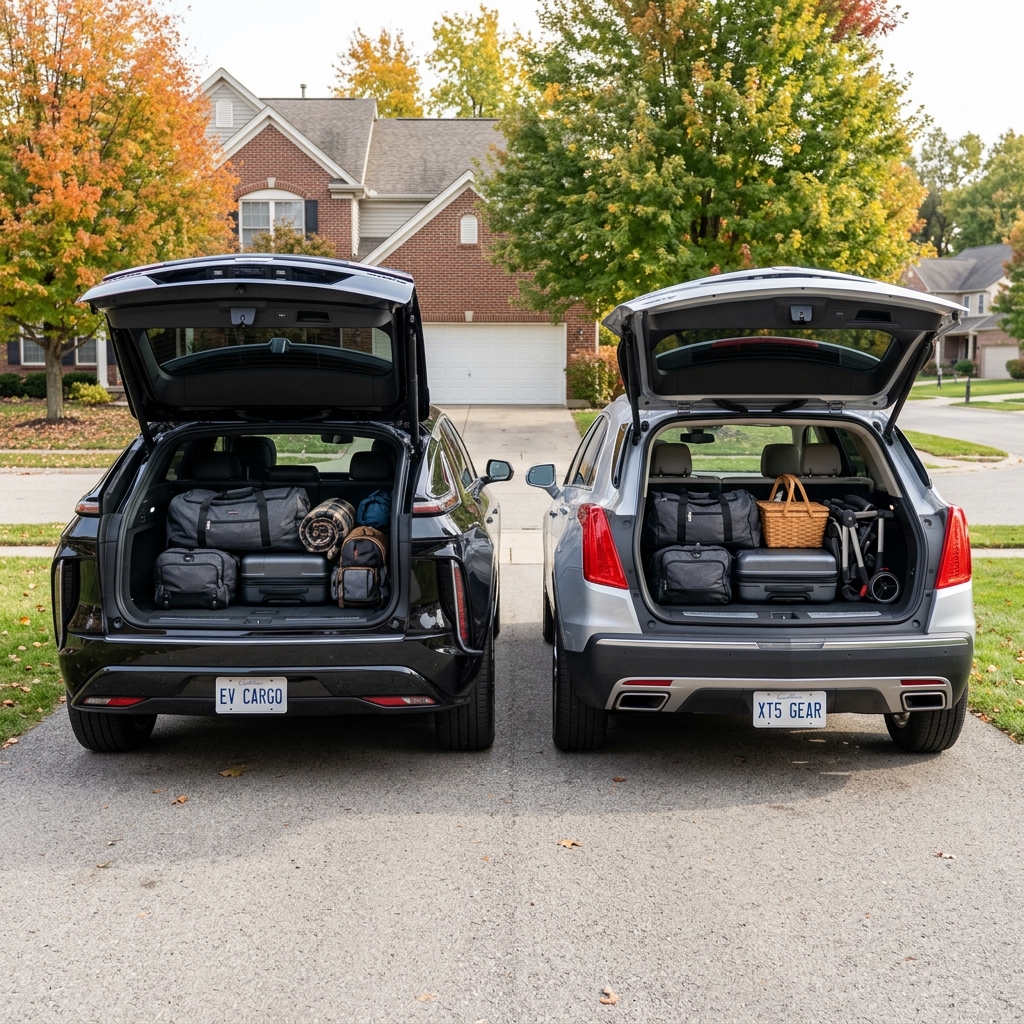
Seasonal family travel in Northern Illinois—whether loading up golf clubs and luggage for summer road trips or packing skis, heavy winter coats, and ice fishing gear in January—requires ample, flexible interior cargo space. Comparing the all-electric 2026 Cadillac LYRIQ against the popular gas-powered 2026 Cadillac XT5 reveals tailored spatial advantages for both luxury midsize crossover choices.
The Cadillac LYRIQ features 28 cubic feet of cargo volume behind the second-row seats, expanding to 61 cubic feet with the rear split-bench folded flat. Its longer EV wheelbase offers generous rear passenger legroom and a wide flat cargo load floor. In contrast, the Cadillac XT5 offers 30 cubic feet behind the second row and up to 63 cubic feet max capacity, featuring a slightly taller rear roofline ideal for bulky vertical luggage.
Protecting these pristine luxury interiors from winter slush, mud, and summer sand requires genuine GM equipment. Custom-fitted Cadillac OEM all-weather floor liners and cargo tray mats snap precisely into floor anchors, containing spills and melted snow. You can Order Genuine Cadillac Parts directly through Hawk Cadillac to equip your cabin for seasonal protection.
What Seasonal Maintenance Packages Does Hawk Cadillac Offer in Joliet, IL?
At Hawk Cadillac in Joliet, IL, seasonal care is streamlined into tailored, multi-point service packages designed to save time while maintaining complete vehicle protection. Rather than scheduling separate appointments for individual services, bundled seasonal packages combine essential preventive maintenance into single, convenient service visits.
Essential Care Package
Includes full synthetic DEXOS1™ oil and filter change, 4-wheel tire rotation, pressure adjustment, brake lining thickness inspection, battery conductance health test, and top-off of all vital engine bay fluids. Ideal for routine quarterly service intervals.
Winter Protection Package
Adds winter tire mounting and high-speed wheel balancing, sub-zero wiper fluid upgrade, heavy-duty battery load test, heater core output test, rubber weatherstripping silicone treatment, and chassis rust-proofing undercarriage seal checks.
Spring Renewal Package
Combines computer-guided 4-wheel laser alignment, high-pressure undercarriage salt residue neutralizer wash, cabin air filter replacement, suspension ball joint and damper inspection, and brake rotor resurfacing. Keeps your luxury ride smooth.
What Information Should I Have Ready When Booking Seasonal Cadillac Service in Joliet?
To streamline your service experience when reserving a appointment online or over the phone, having accurate vehicle details readily available ensures our service advisors prepare the exact OEM parts, specialized diagnostic tools, and certified technicians required for your specific 2026 Cadillac model.
Key Information Checklist: • 17-Digit Vehicle Identification Number (VIN) — found on driver's door jamb or registration. • Current Odometer Mileage — helps determine exact factory service interval requirements. • Dashboard Warning Indicators — mention any Check Engine, ABS, or Tire Pressure lights. • Specific Seasonal Concerns — note any unusual steering vibrations, cold-start delays, or HVAC blowing lukewarm air. • Recall Status — service advisors check GM factory databases for open software or safety updates.
Why Certified Cadillac Service Matters for 2026 Electronics and Warranty Coverage
The 2026 Cadillac model lineup represents some of the most technologically advanced luxury automobiles ever produced. Featuring sweeping 33-inch diagonal curved 9K LED displays, Super Cruise™ hands-free driver assistance, AKG Studio audio architectures, and high-voltage Ultium battery electronics, modern Cadillacs are supercomputers on wheels. Independent neighborhood repair shops or quick-lube chains simply lack the GM-exclusive diagnostic equipment, specialized software programming tools, and factory service bulletins required to work on these high-tech systems.
Servicing your vehicle at Hawk Cadillac guarantees that work is performed by GM Factory-Certified Master Technicians who undergo rigorous ongoing training. Moreover, using genuine GM OEM parts and factory-approved service procedures maintains full compliance with your Cadillac 4-Year/50,000-Mile Bumper-to-Bumper Limited Warranty and 6-Year/70,000-Mile Powertrain Warranty (or 8-Year/100,000-Mile Ultium EV Component Warranty). Non-certified repairs or improper fluid usage can compromise warranty protection and diminish performance.
Schedule Your 2026 Cadillac Seasonal Maintenance at Hawk Cadillac in Joliet Today
Don't wait for seasonal weather extremes to affect your driving comfort, performance, or safety. Whether your 2026 Cadillac requires winter freeze protection, spring pothole suspension alignment, summer cooling maintenance, or fall pre-freeze prep, Hawk Cadillac in Joliet is ready to serve drivers across Joliet, Plainfield, Naperville, and surrounding Will County communities.